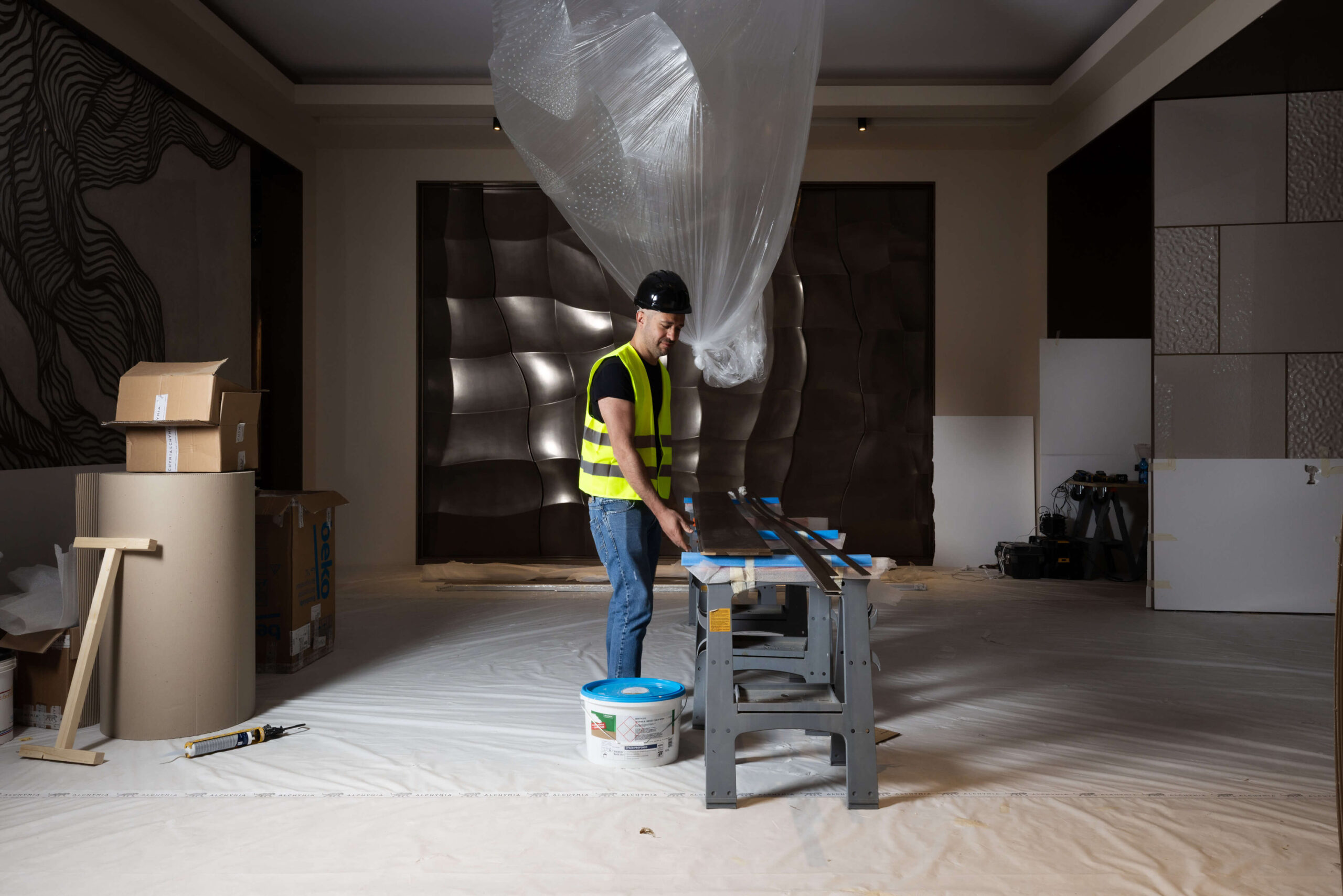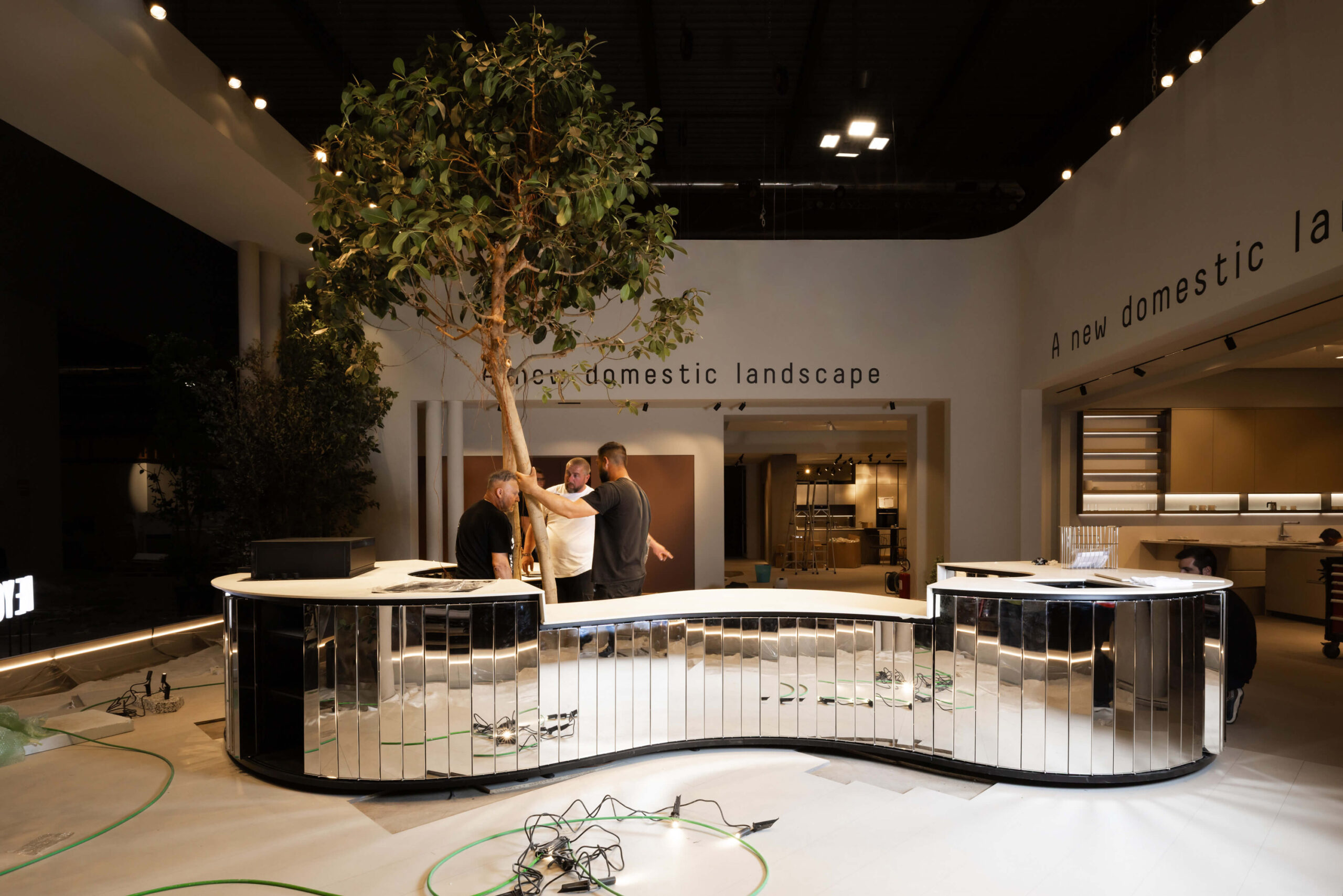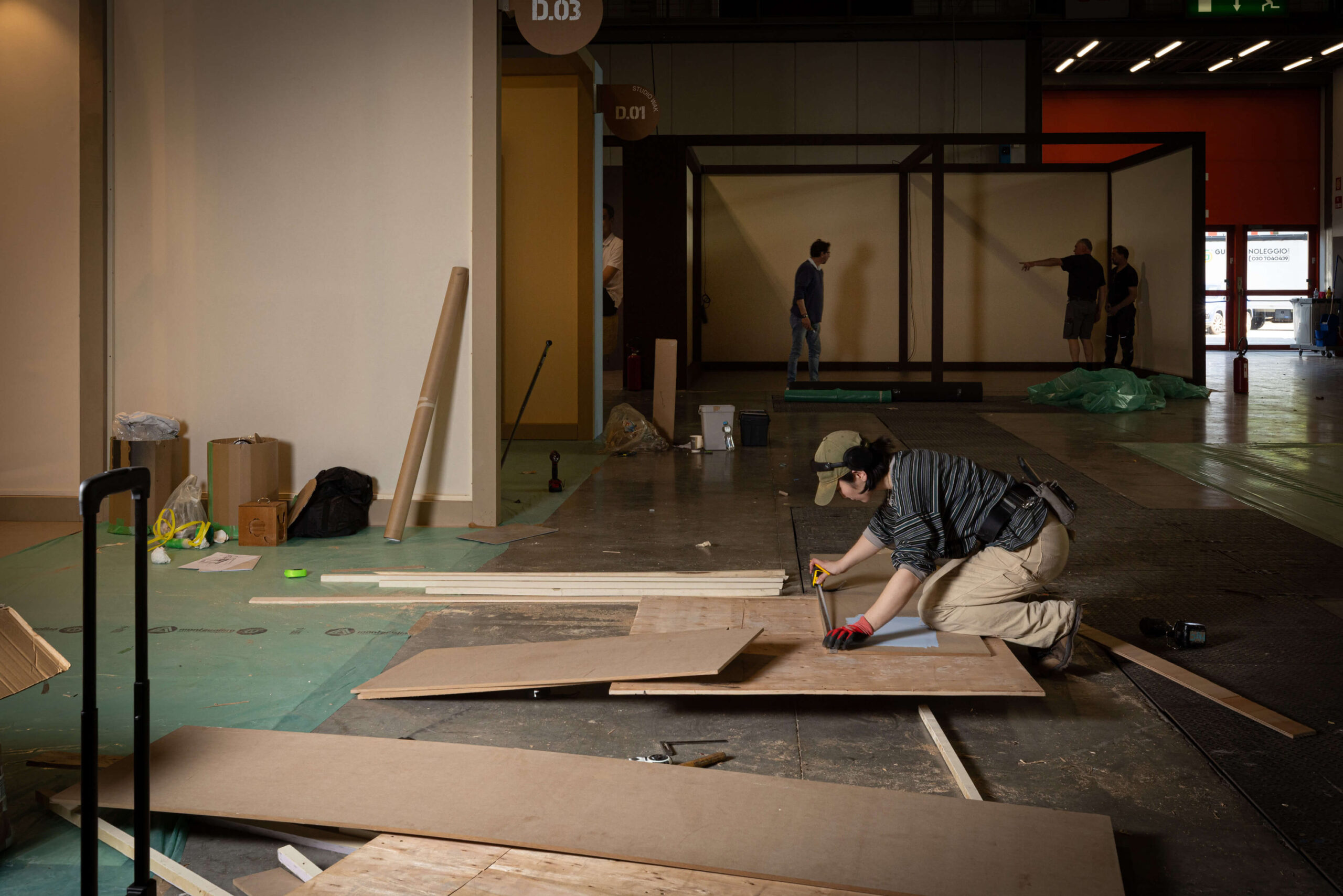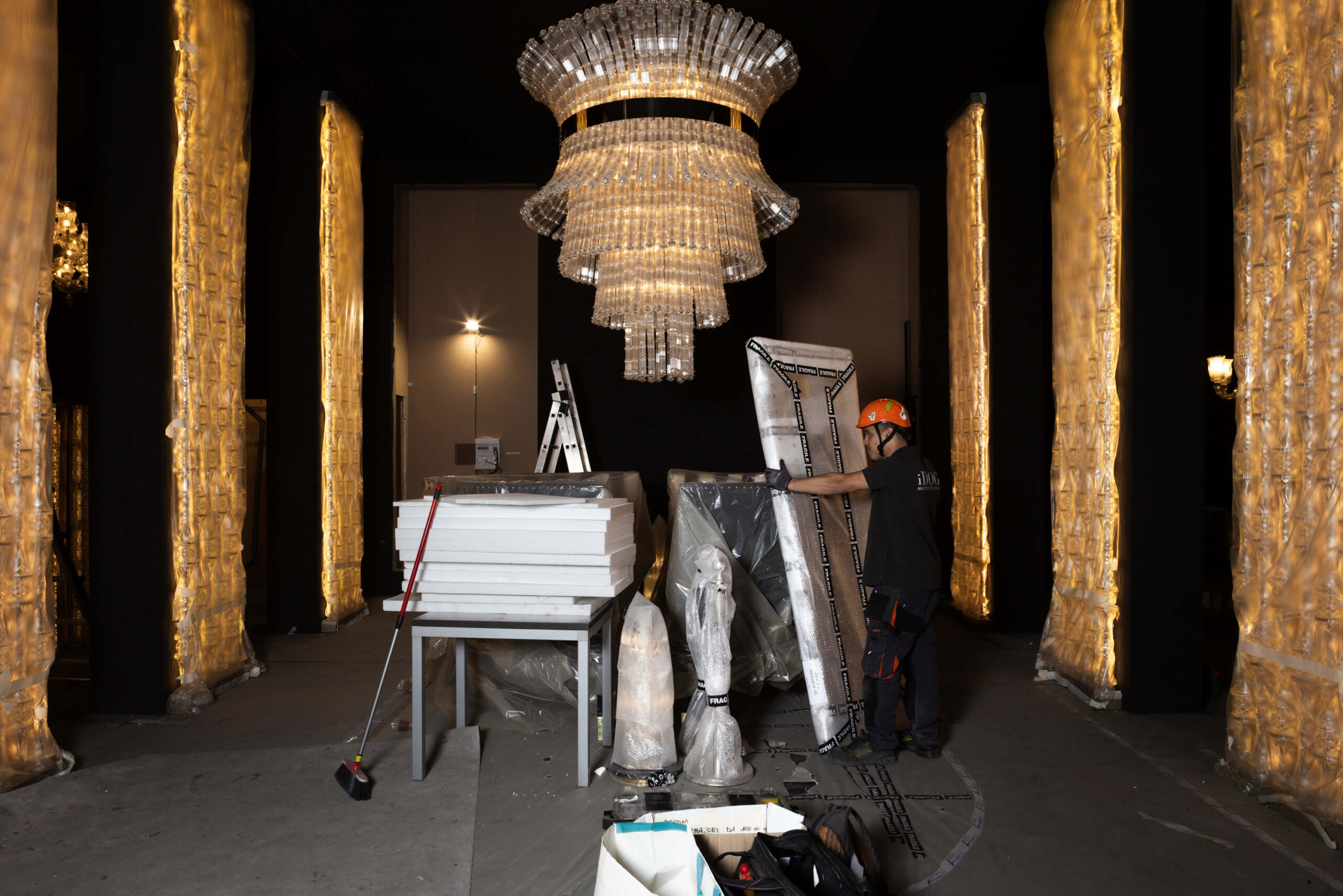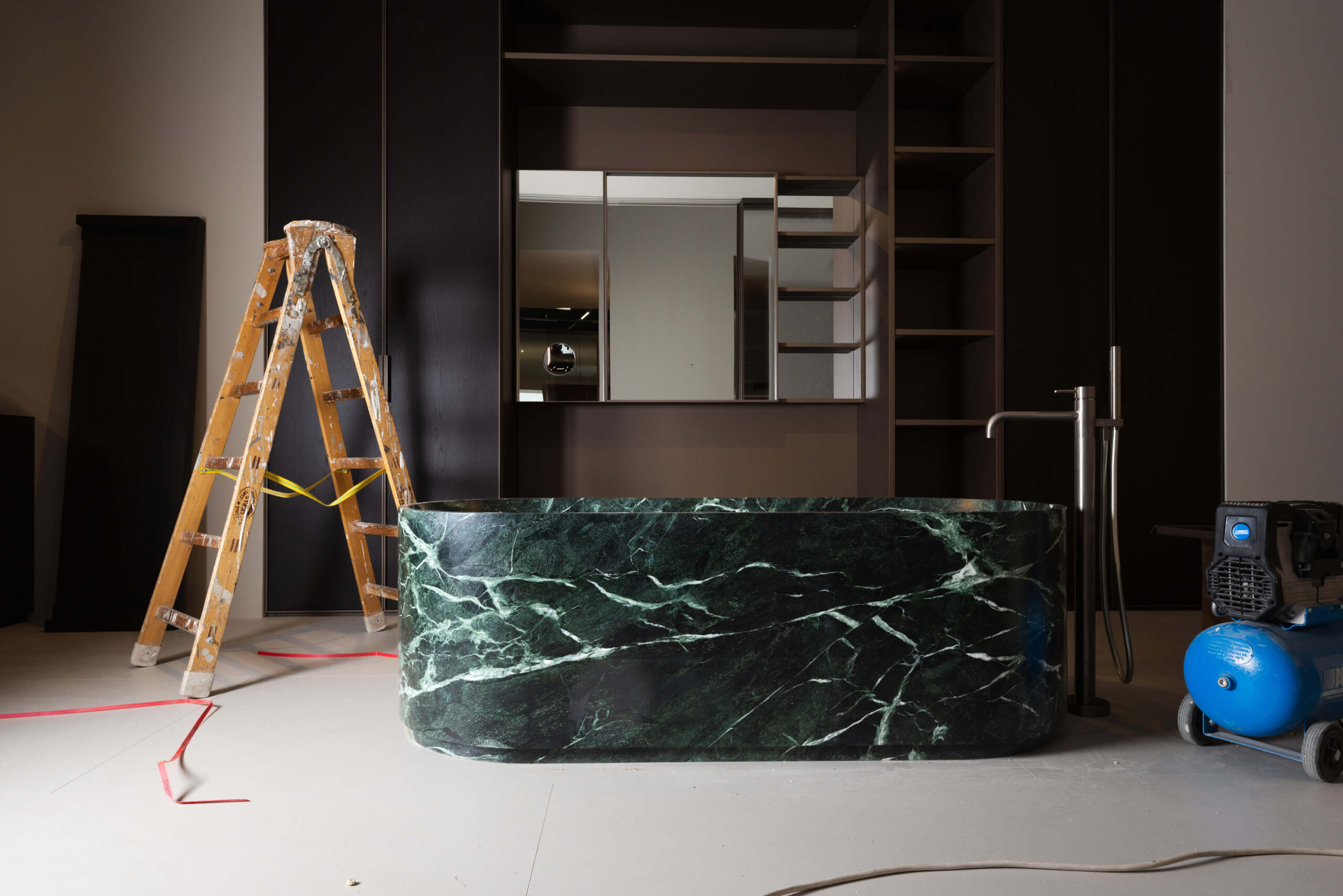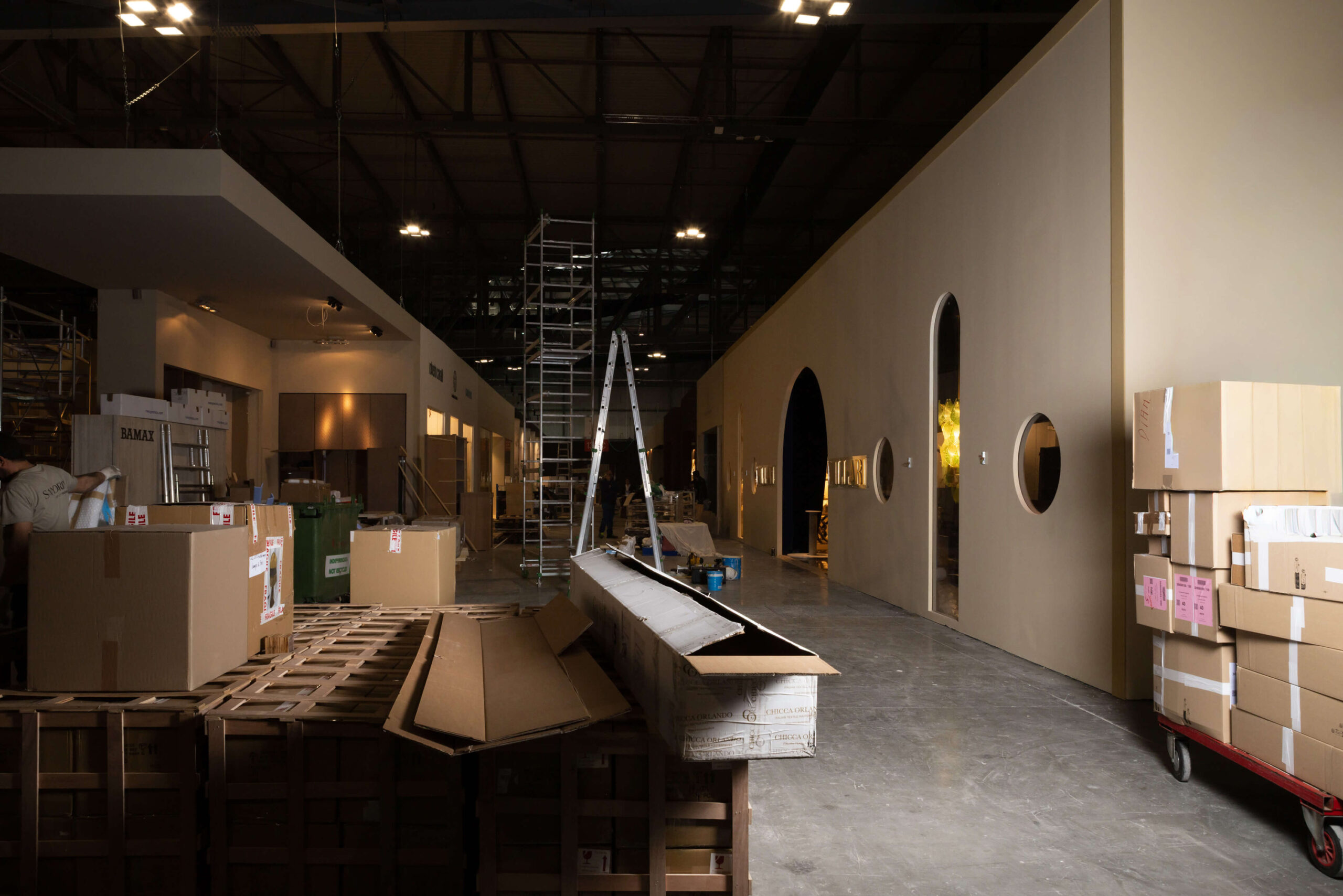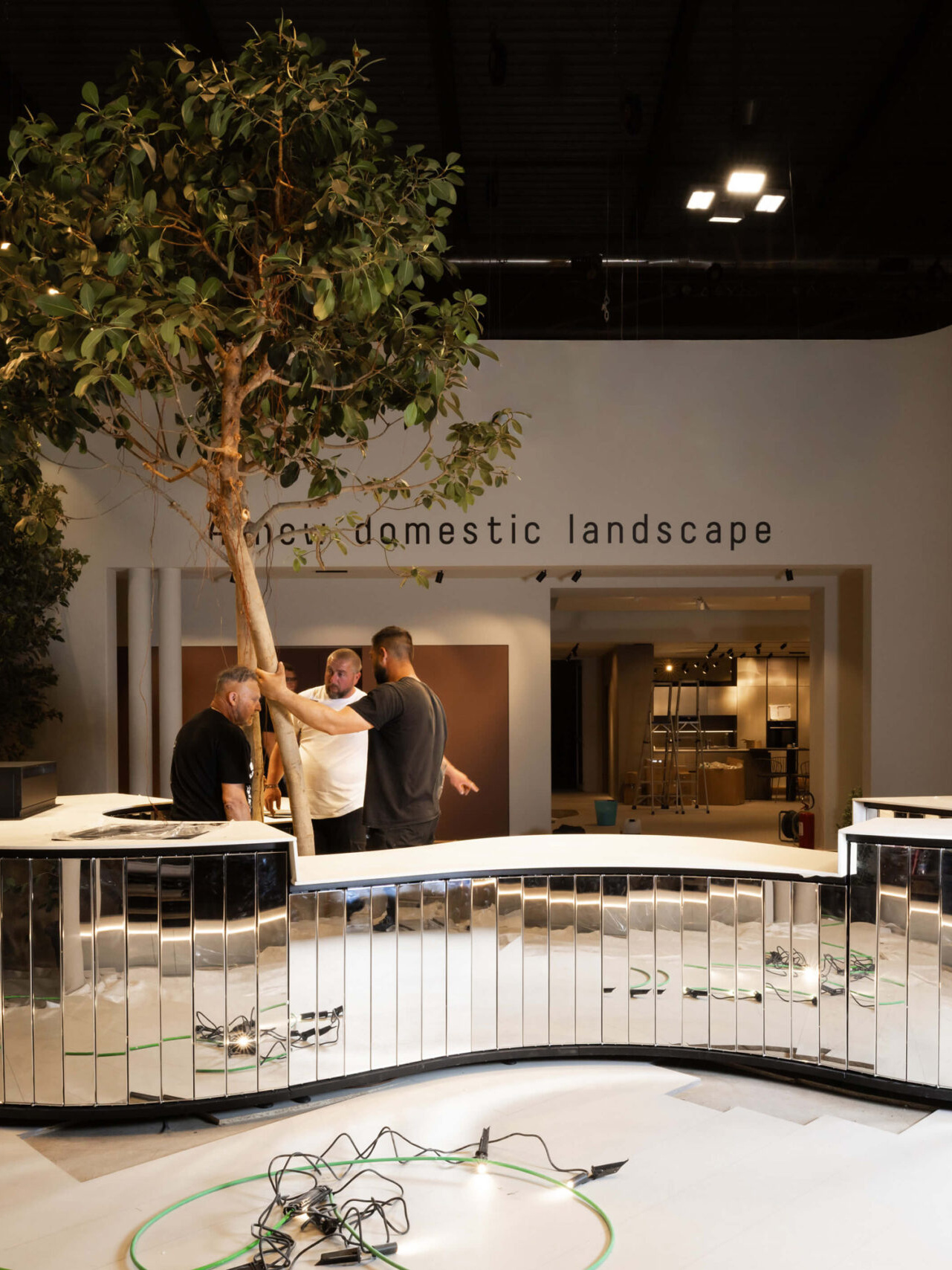
The day before Salone del Mobile opens in Milan does not look like design. The space at Rho feels unfinished and operational, more like a large logistical environment than a setting where aesthetics, trends and experience will soon be presented.
Structures are in place, but without their final layers. Materials are positioned, but not yet part of a coherent whole. People are working continuously, focused on deadlines rather than impression. What will soon appear as a clearly defined environment currently functions as a series of parallel processes without an obvious order.
More than 1,900 exhibitors from 32 countries are completing their installations at the same time, across over 169,000 square metres. At this stage, there is no single image of the event. There is only a process in which plans are adjusted in real time, and solutions emerge as responses to specific conditions, often under time pressure.
It is precisely in this phase that the logic of design becomes most visible. Not as a finished result, but as a sequence of decisions made in real time. What will later be presented as concept is, at this point, often simply the most efficient solution available.
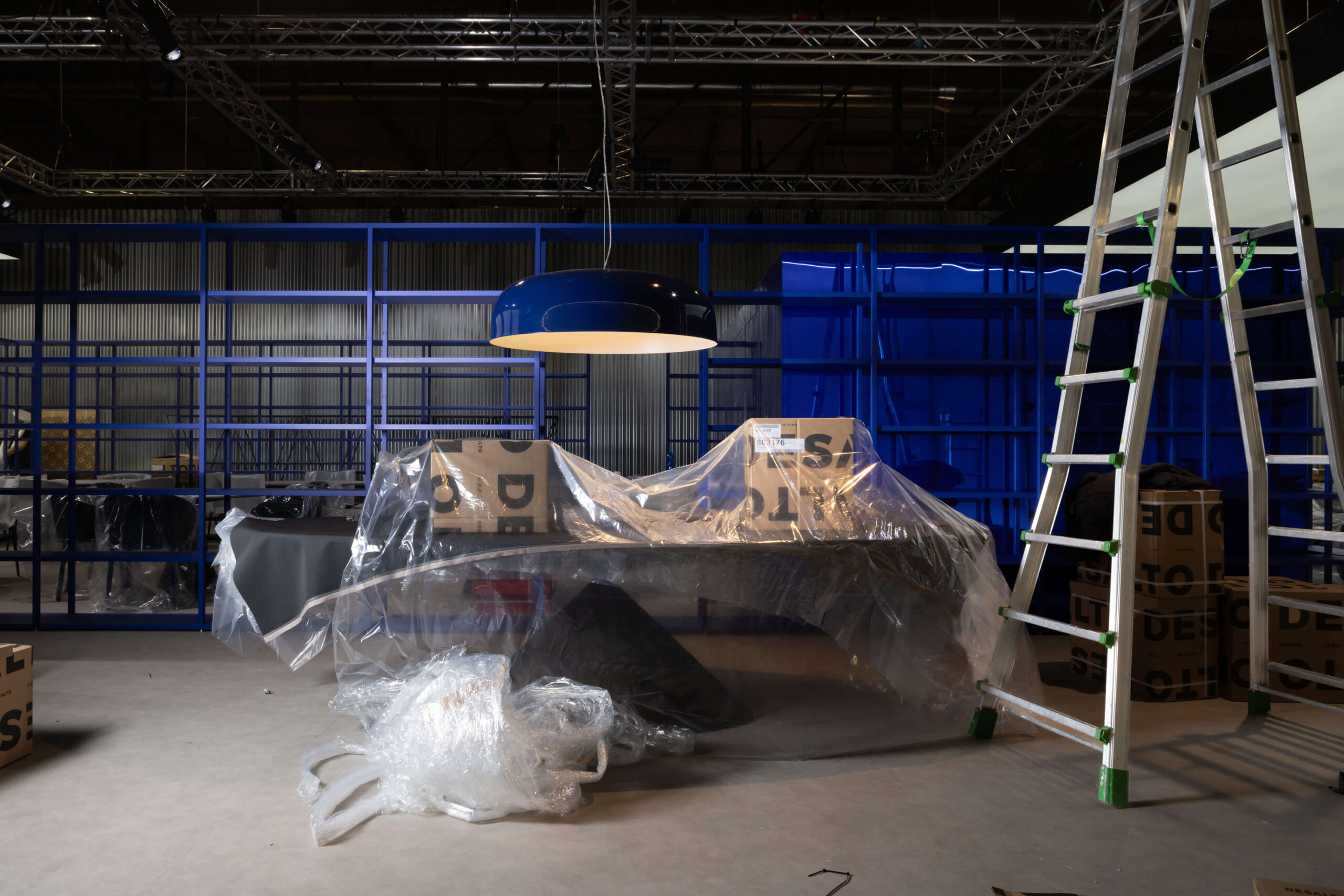
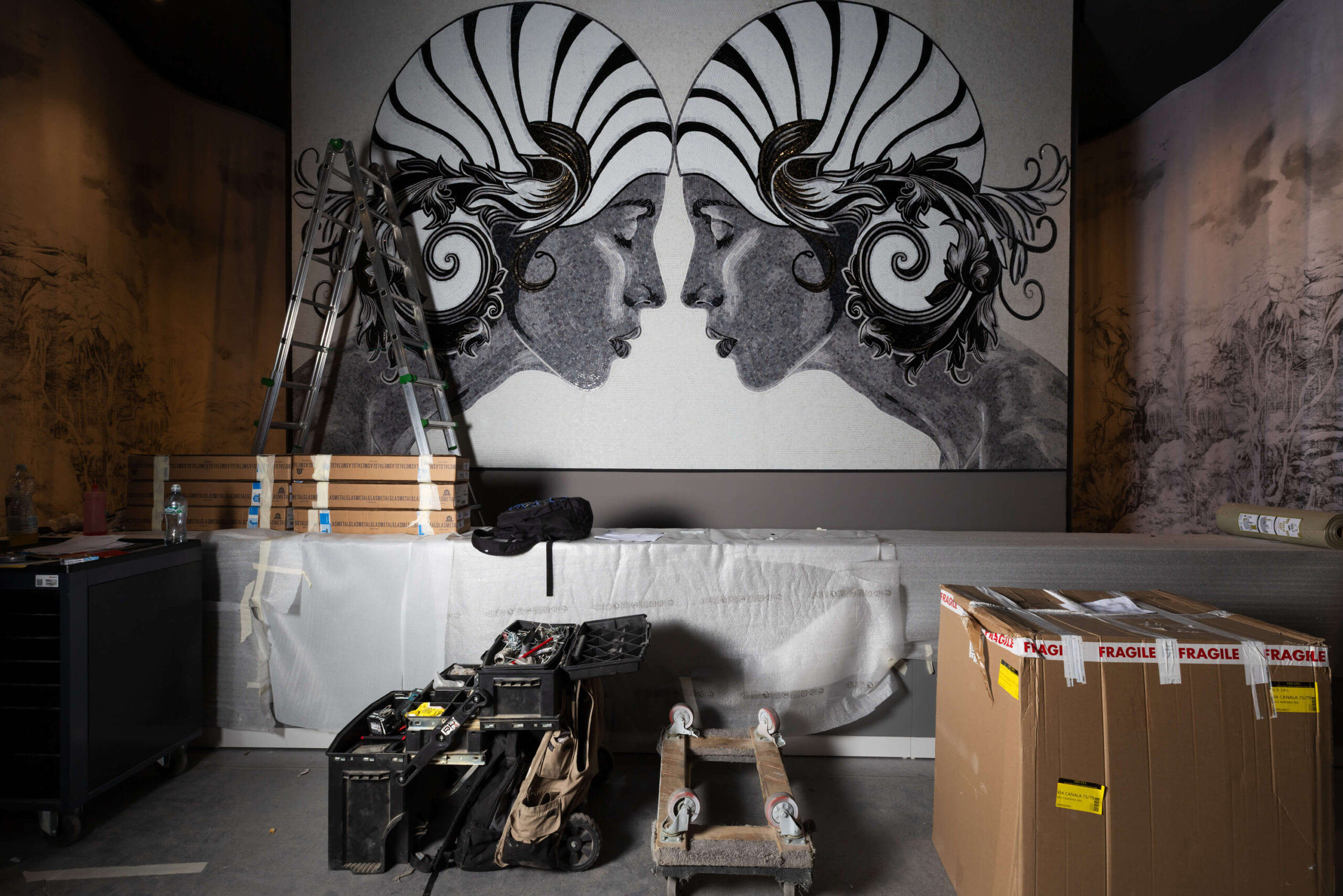
“Making of” is usually understood as an introduction to a final product. Here, it serves a different role. It is the only moment in which the space is not shaped for an audience, and where there is no need for narrative. The focus is entirely on execution.
Once the doors open, everything will appear coherent and complete. The space will have a clear structure, defined circulation and recognisable segments. This is the version that gets documented and communicated.
However, that version is the result of selection. It shows only the elements that support the final image, while the processes, adjustments and compromises that preceded it are removed from view.
For that reason, the phase before the opening is essential for understanding what is later presented. It reveals design as collective work, as organisation, and as a system of decisions that must align within limited time and space.
When a visitor enters, they encounter a finished environment. What remains unseen is the way in which that environment was produced.
It is precisely in that unseen part that design is most exact.