It wasn’t always like this.
Mozart, Napoleon, and Marchesa Acerbi have all been issued QR codes, while Maria Theresa holds a press pass. The Empress, however, has cancelled her visit to Milan. You already know why. In this city, things have always been resolved through presence, not announcements. They stood and observed, not because they fail to understand Milan in 2026, but because none of these palaces were ever built or visited in the way they are now being explained. The people at the entrance seemed more serious than court ladies, and the lines, which they briefly mistook for the plebs, appeared more organized, and perhaps even more important than the aristocracy itself.
That’s where the comedy of errors begins.
A fair is a simple thing, and maybe that is precisely the problem. Simple things are the easiest to forget once we bury them under meanings they were never meant to carry. The word fair, whether we call it foire, messe, fiera, bazaar or market, means the same thing: a meeting between seller and buyer, a place where an object comes before a person with a clear purpose: to be chosen and to begin a life beyond that space. It is not a romantic definition, but it is a precise one, and that is exactly why it matters to say it out loud before entering Milan during the week when that simplicity almost disappears.
Milan Design Week is a name that allows this clarity to dissolve. It contains everything, and today that “everything” truly exists: fair, exhibition, installation, architecture, fashion, brand activations and nightlife. That breadth feels open and seductive, but in practice it erases the differences between things that serve entirely different purposes. Once everything is placed under the same elegant parasol, one that conceals more than it protects, everything begins to behave as if it were the same, and what used to be the center becomes just one option among many.
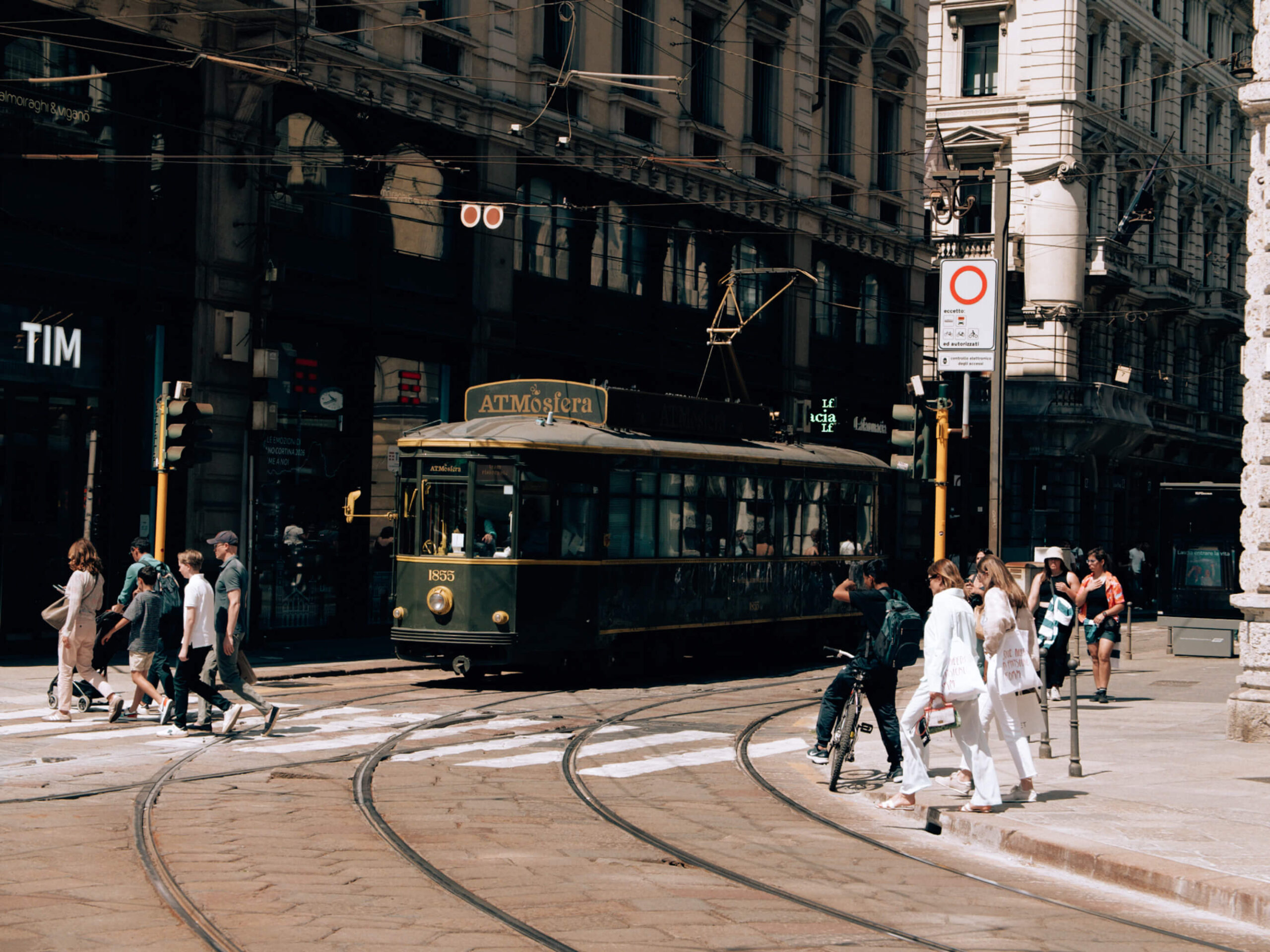
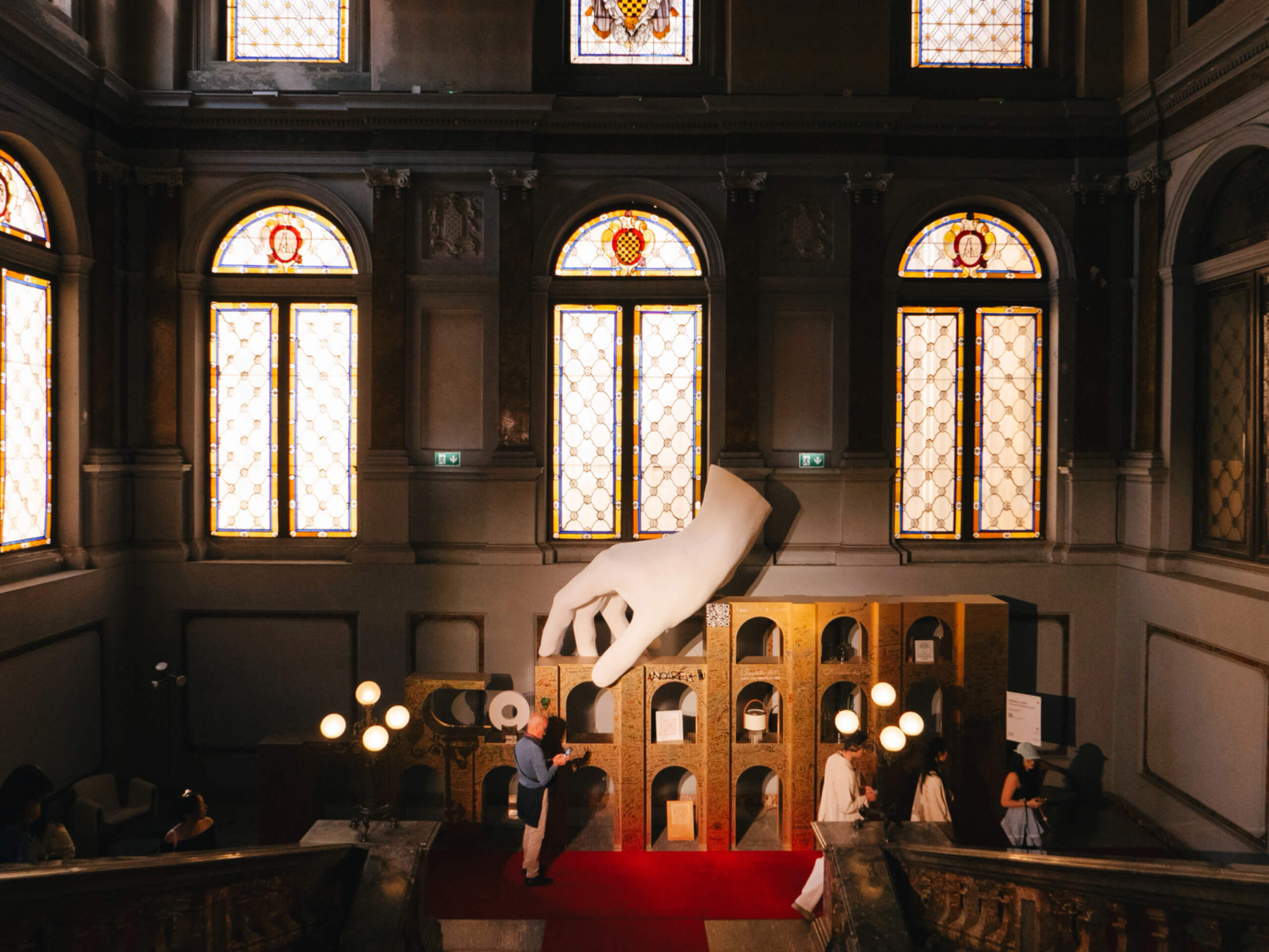
Milan does not ignore this. It remembers. Palazzo Litta is not a space that tolerates superficiality without consequence. Built in the mid-17th century as the residence of Count Bartolomeo Arese, it was a place of presence and encounter, not spectacle. Here, a young Mozart worked and performed during his Milan years, while Napoleon later used the same city as a political platform to establish an order meant to outlast the moment. In other words, people came to Milan with purpose.
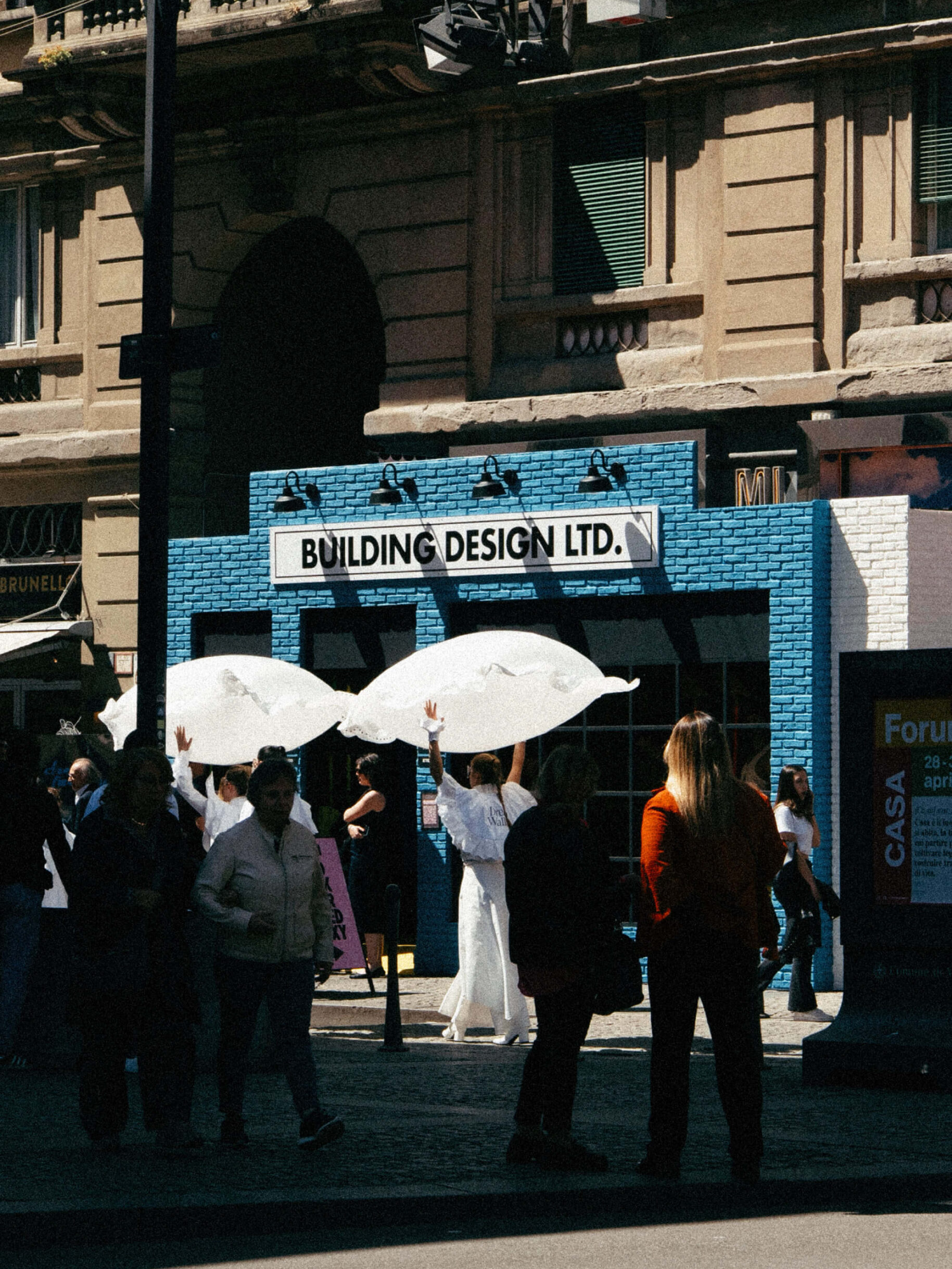
Today, in front of those same entrances, conceptual tributes to the fashion industry unfold, often through carefully constructed collaborations that online audiences already understand and accept as a desirable form of life. In front of those same spaces, lines form. Long, precise and disciplined, they wrap around façades and courtyards like a temporary architecture whose only function is to organize waiting. People stand looking at their phones, checking the next location and planning their movement. The space around them becomes a backdrop, and entering stops being a result of interest and becomes a consequence of the fact that everyone is already inside.
That shift reveals how much the underlying logic of this event has changed.
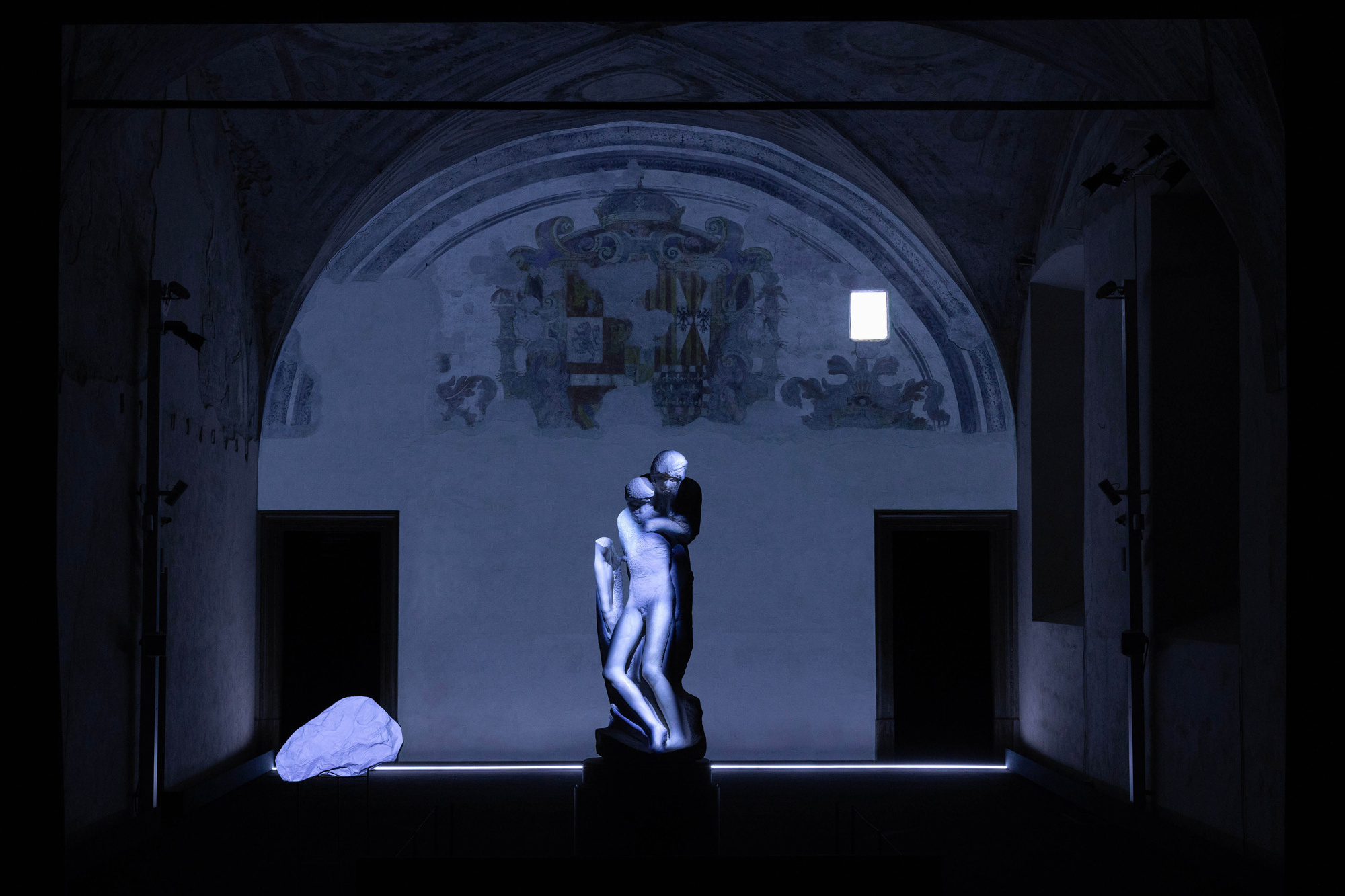
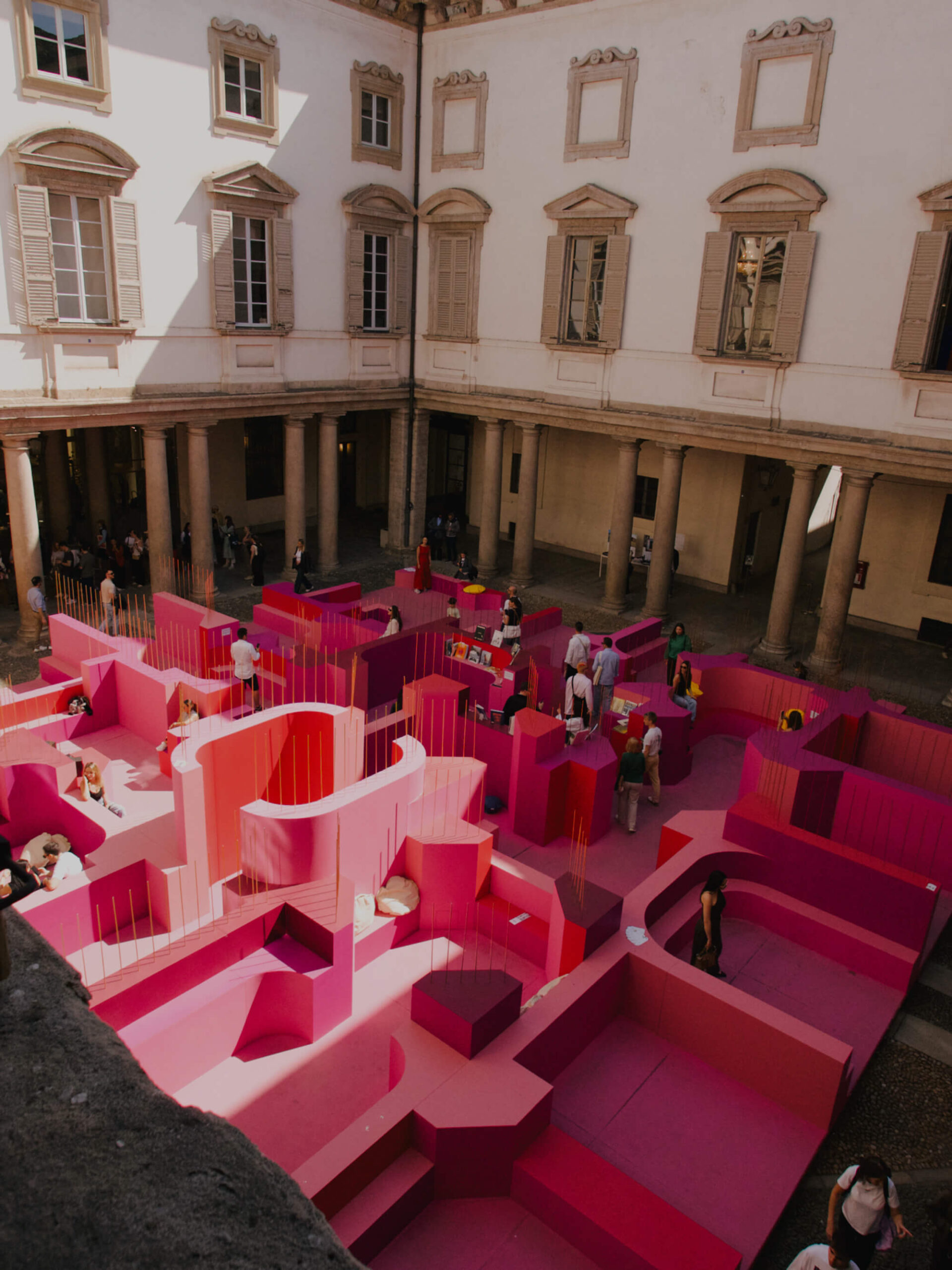
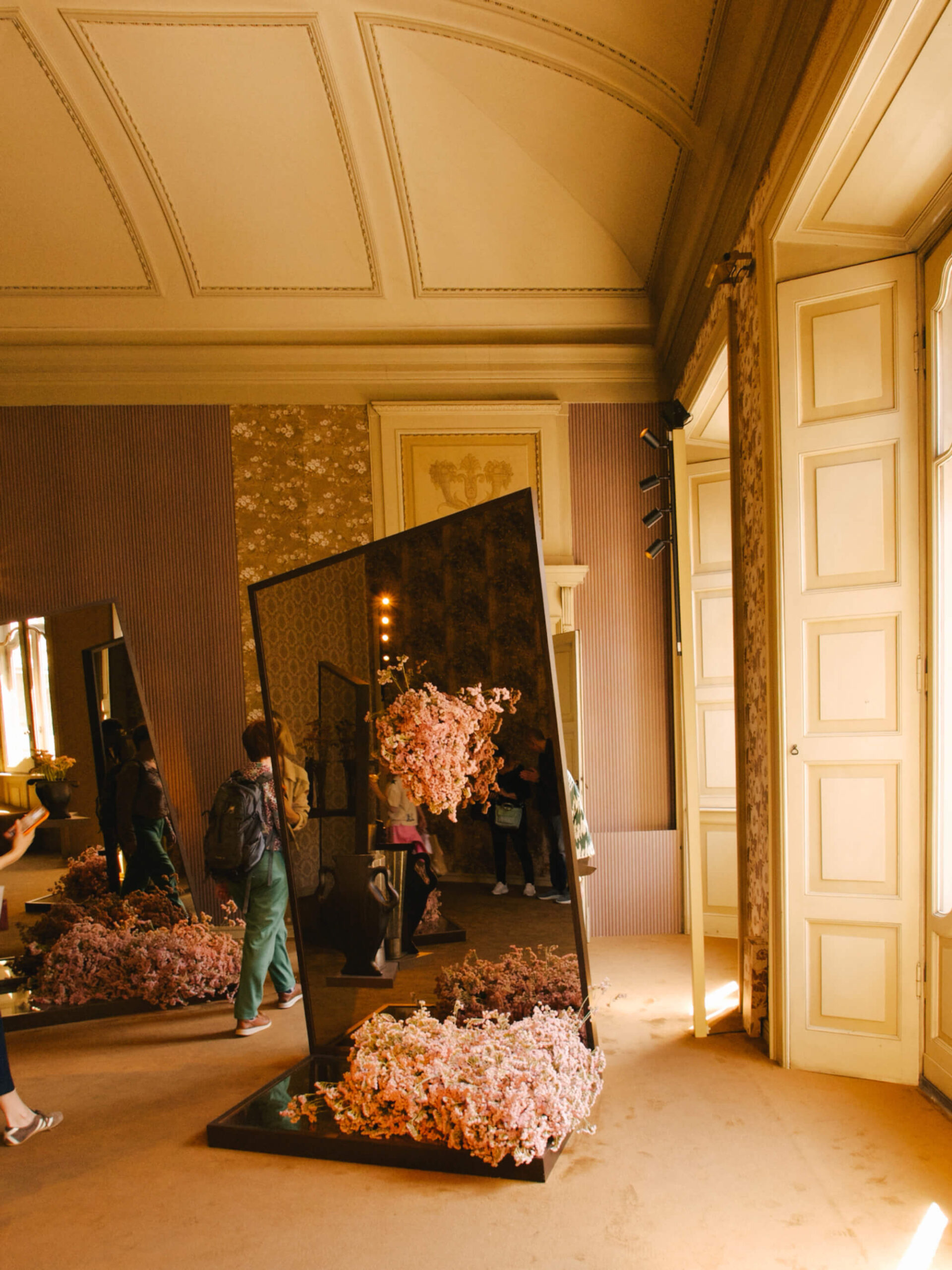
Inside Palazzo Litta, Line Ghotmeh’s installation attempts to return the space to its original function. It does not add a layer, it removes excess, almost biennial in its restraint. Materials are quiet, movement is clear, and light works without needing to impress. In such a space, staying happens naturally. At one point, you come across students from Politecnico di Milano standing next to their work, without the need to explain it or sell it. The scene feels unusual precisely because it shows a relationship between work and space that does not depend on immediate attention.
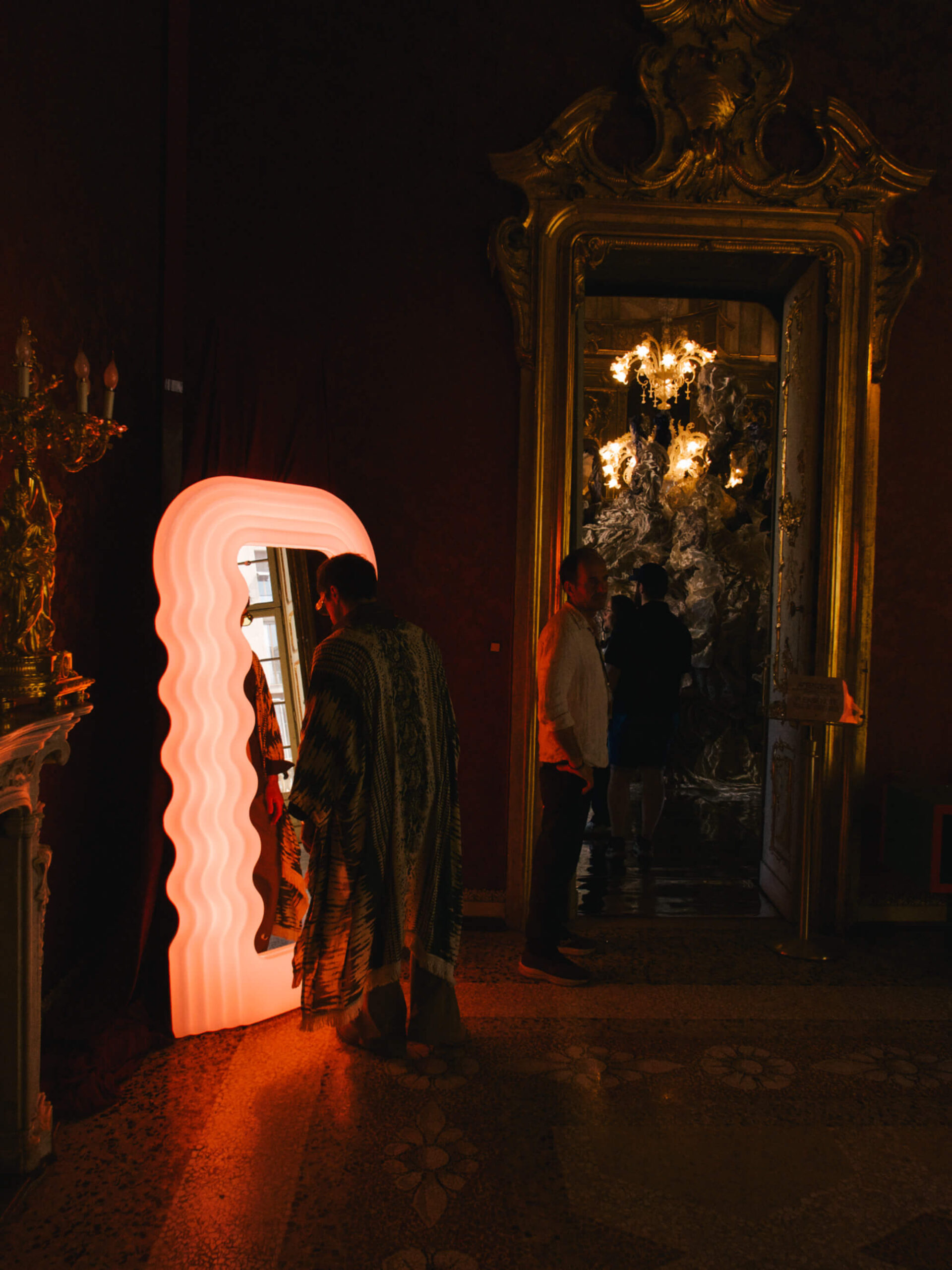
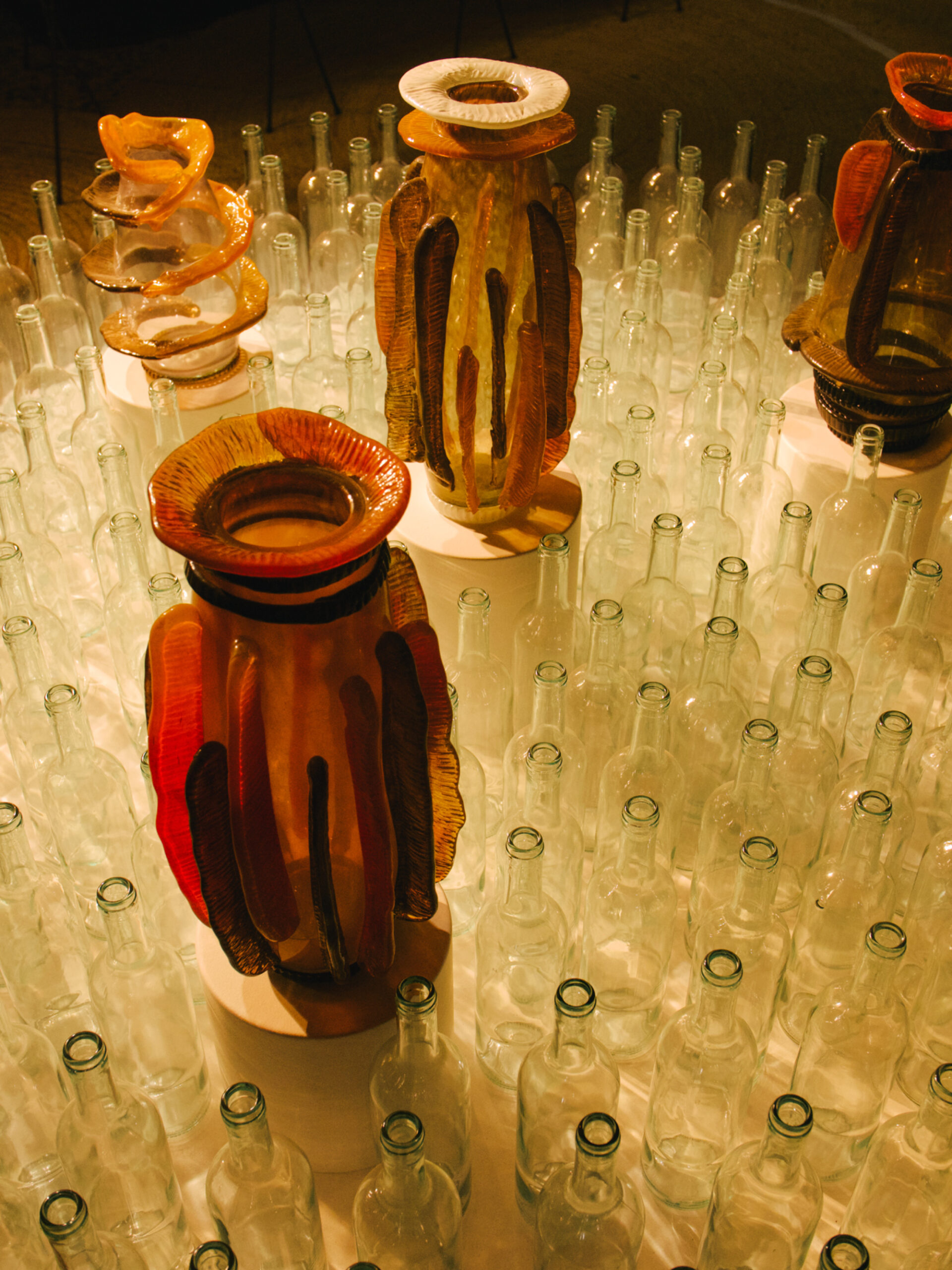
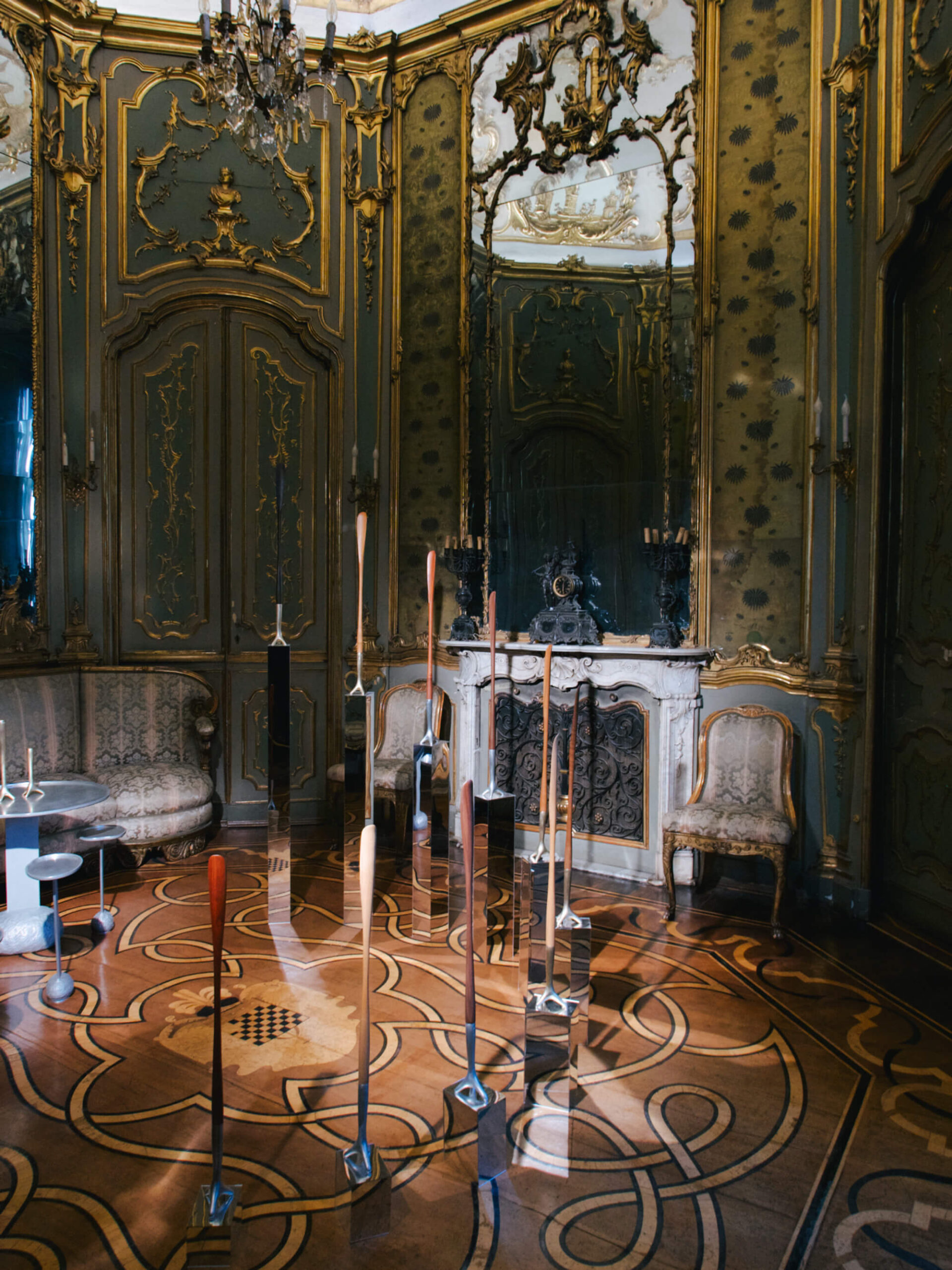
A few minutes away, in what Milan has long called the Devil’s House, the rules are different. Palazzo Acerbi, tied to Ludovico Acerbi, the aristocrat who continued hosting lavish dinners during the plague while the city was dying, carries a story that still feels exaggerated today, but was entirely real at the time. His behavior was not just excess, it was a complete rupture with reality. Over time, the public turned him into a devil-like figure, a man who did not belong to the same rules as everyone else.
Today, in that same space, you encounter a new version of the same logic. Kelly Wearstler’s installation for H&M home works perfectly on the level of image. The space is precisely styled, the composition controlled, the materials aligned, but the essential action is missing. You cannot sit. I tried. It is not allowed. At that moment, the object stops being an object and becomes scenography, an idea that lasts exactly as long as the frame in which it is captured.
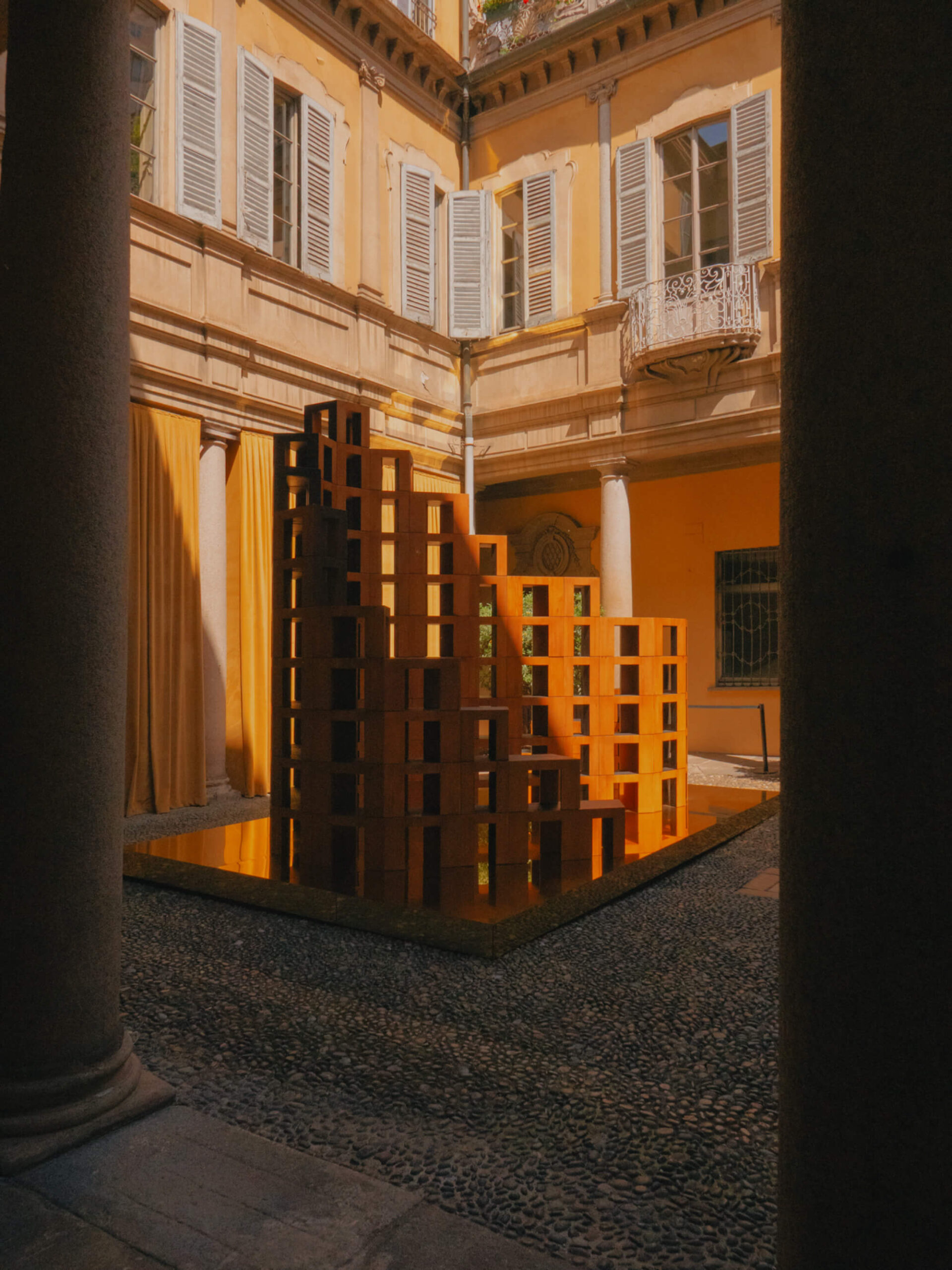
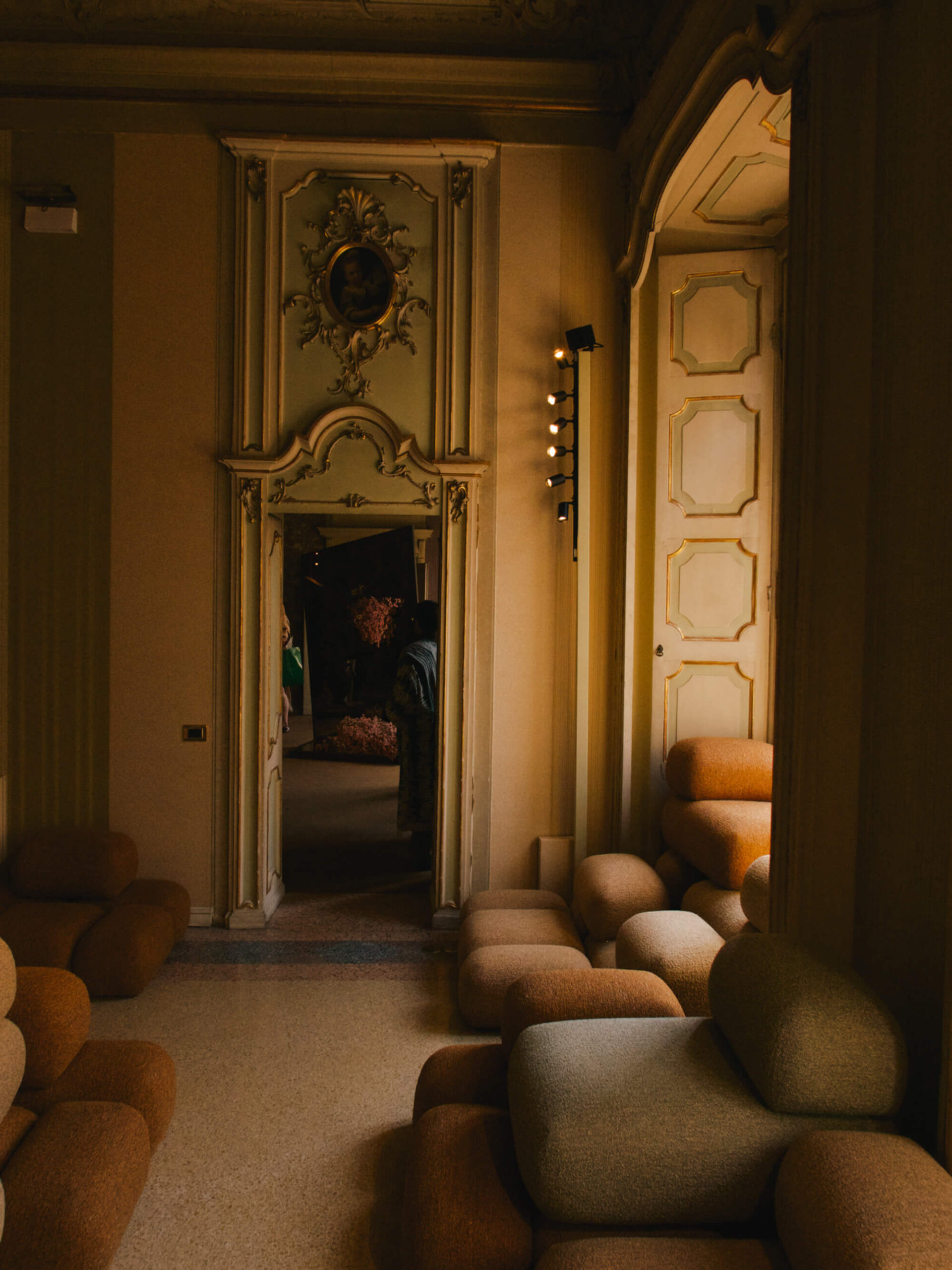
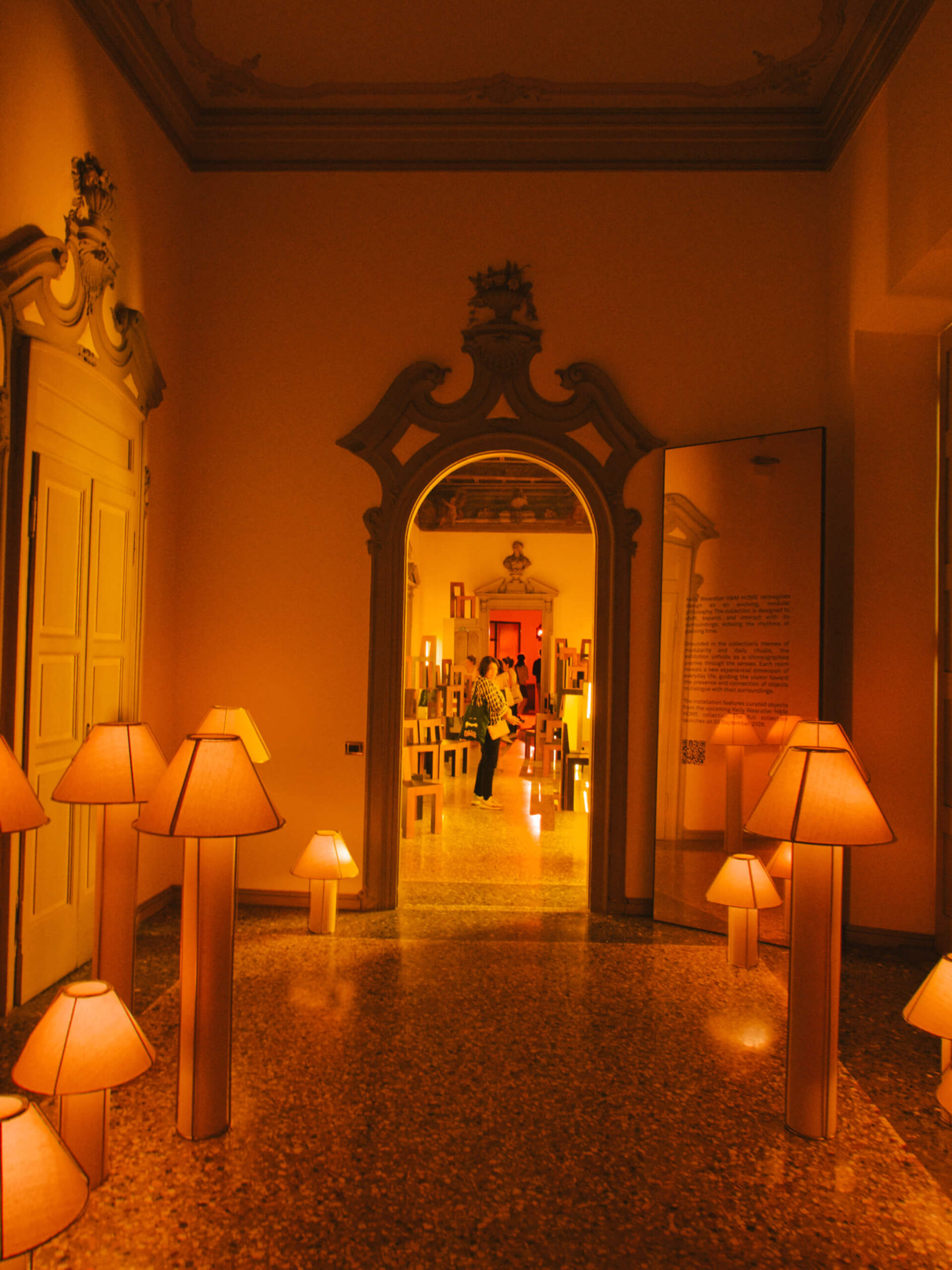
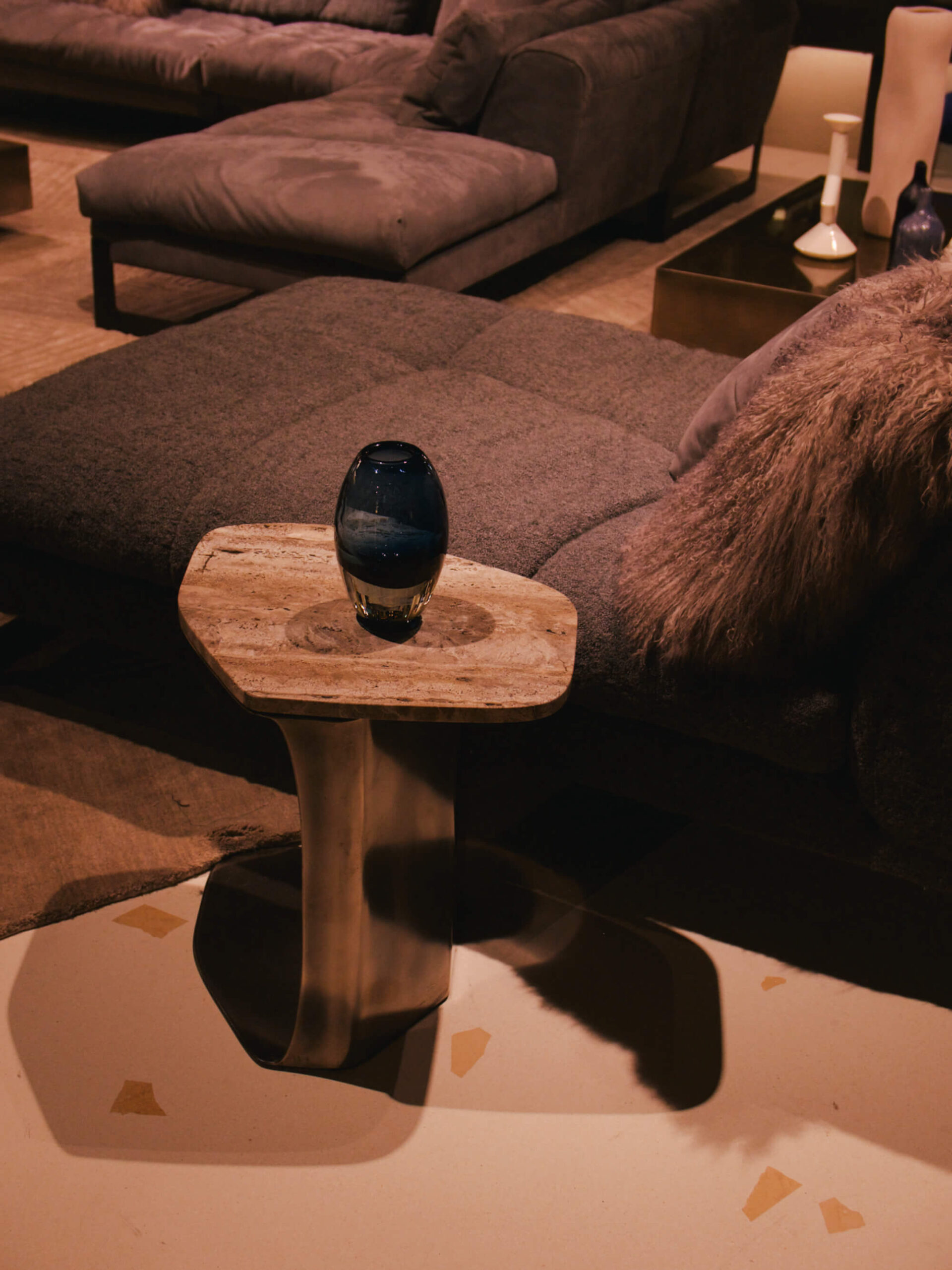
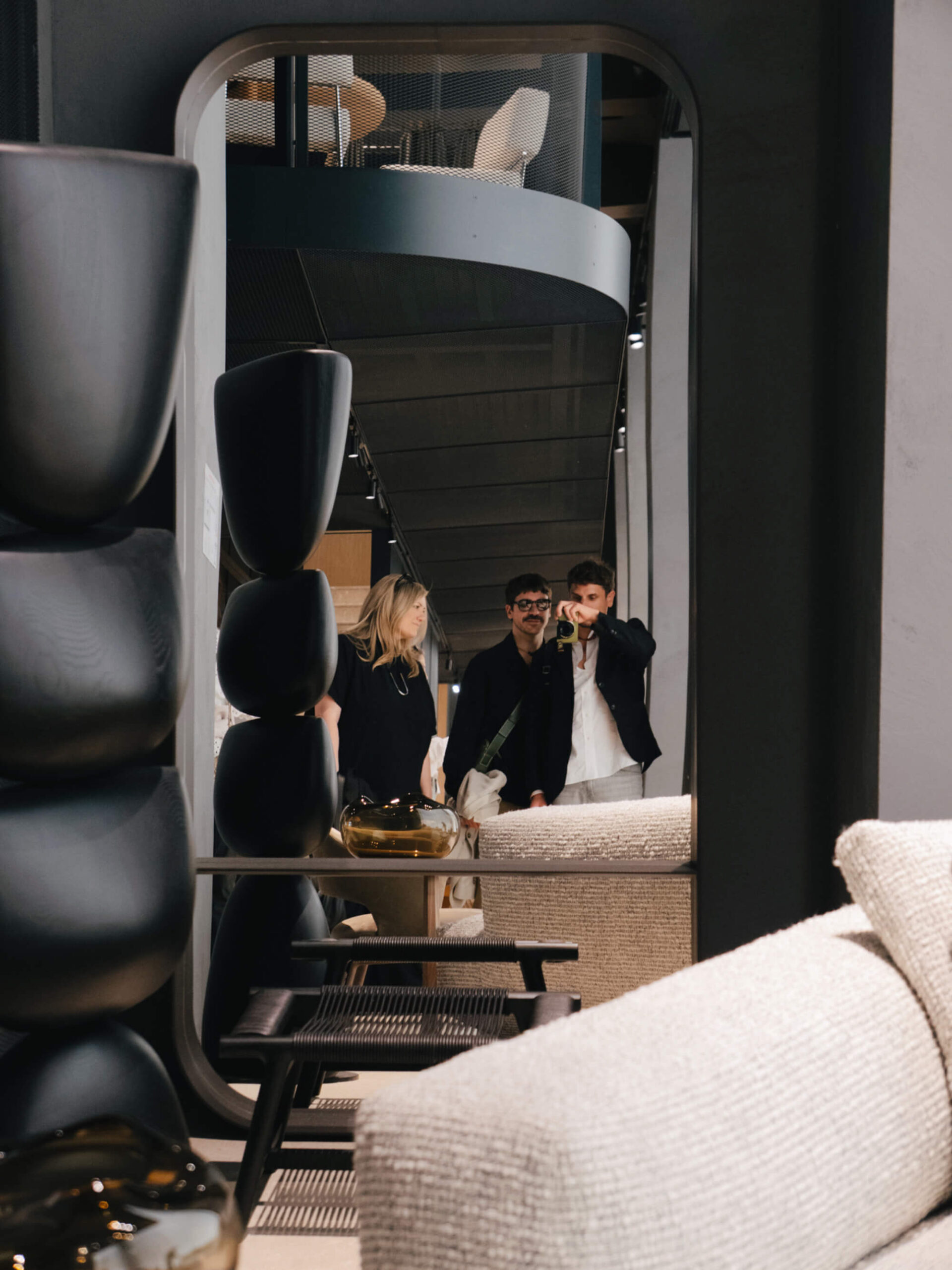
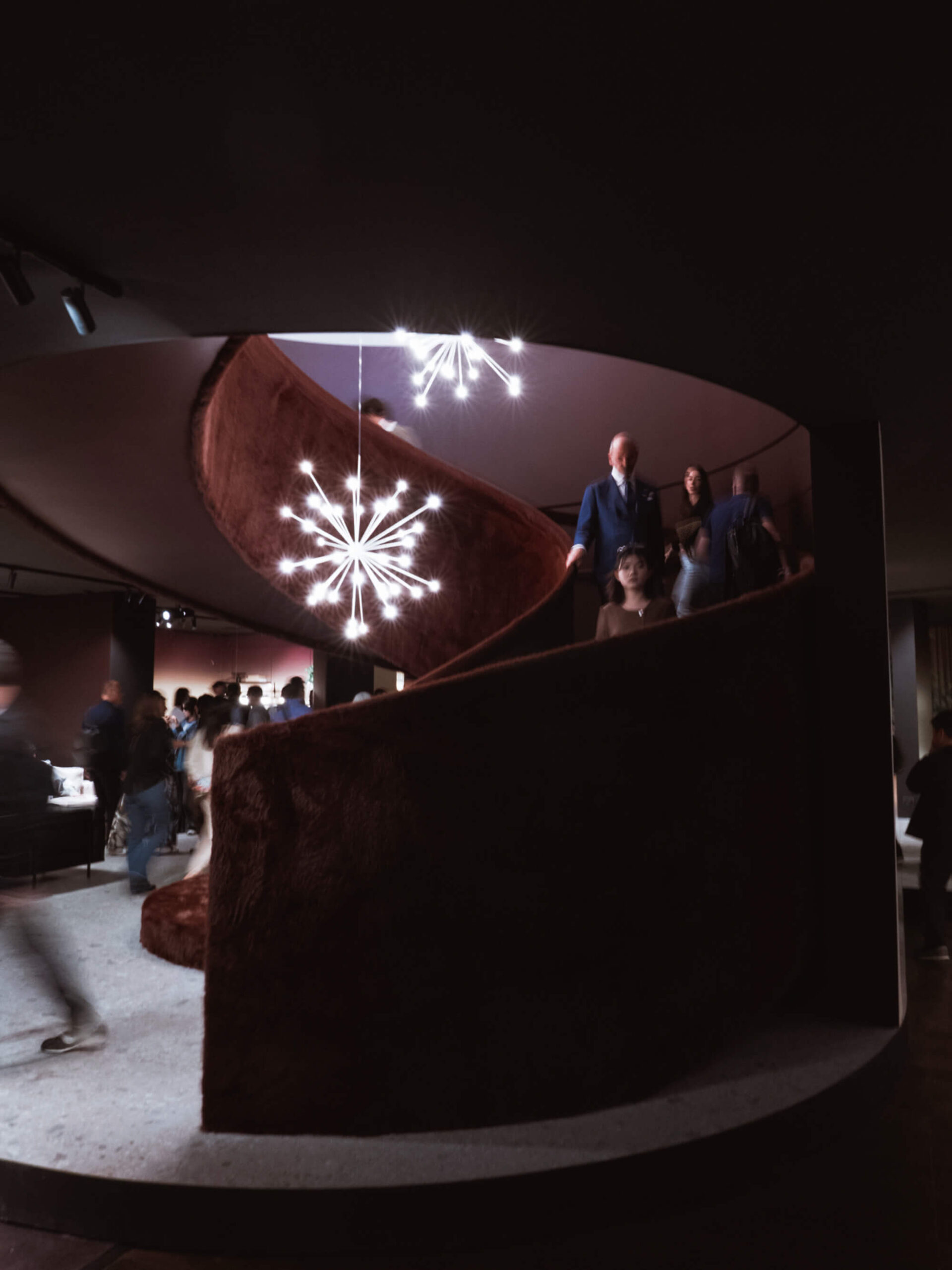
That is why showrooms like Cassina and Flexform, among the key names of Salone del Mobile, feel almost subversive. At Cassina, people sit without needing to justify it, testing proportions, leaning into materials and checking how an object performs in real contact with the body. The need for spectacle is deliberately absent. Sometimes, it is enough just to walk up and down a set of fur-covered stairs.
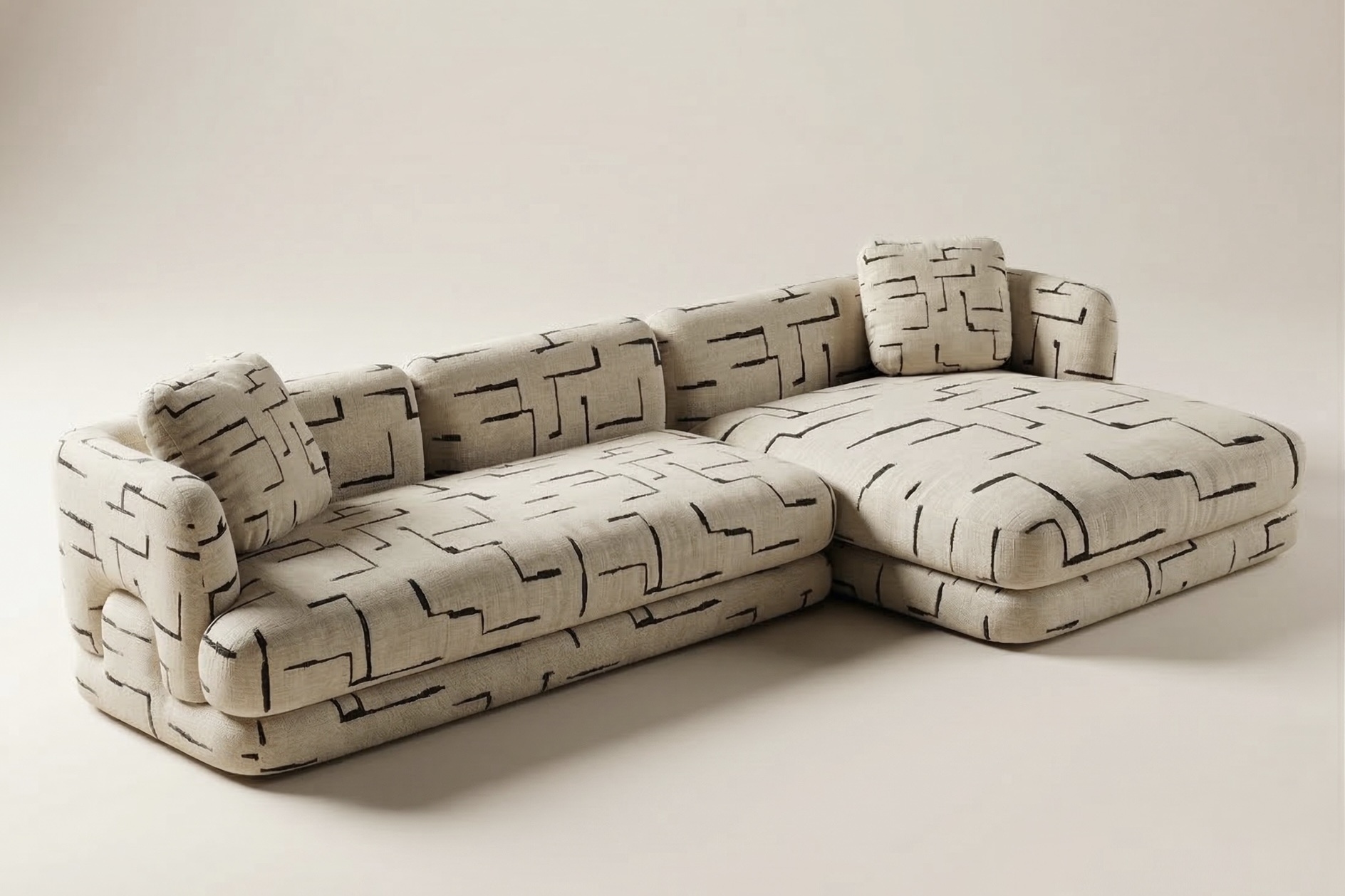
The Private Life of Objects, through Flexform’s concept, further reinforces this logic by placing objects in a way that asks for time rather than an immediate reaction. Their sofas and other elements don’t rely on first impressions, but prove their value through use.
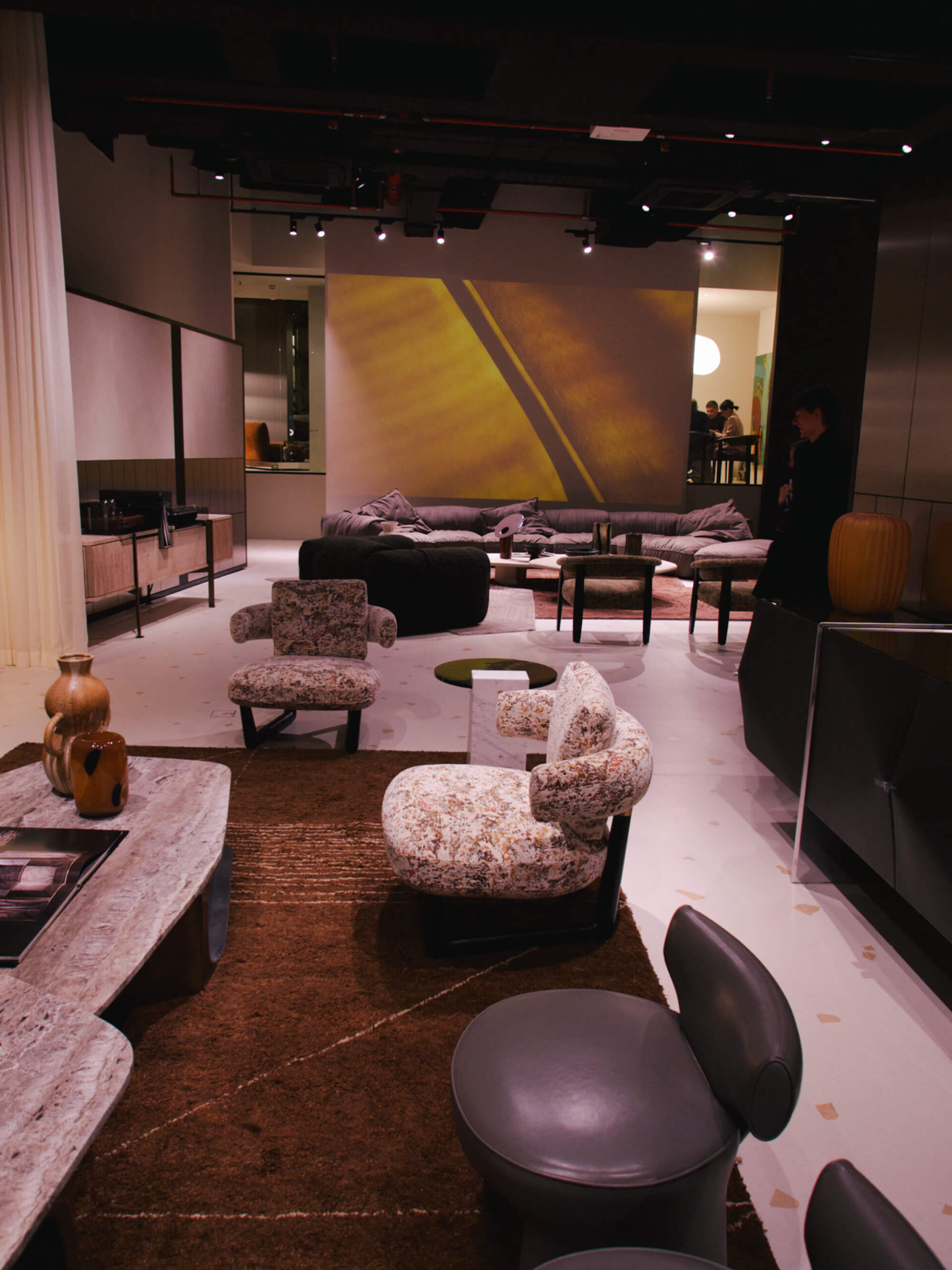
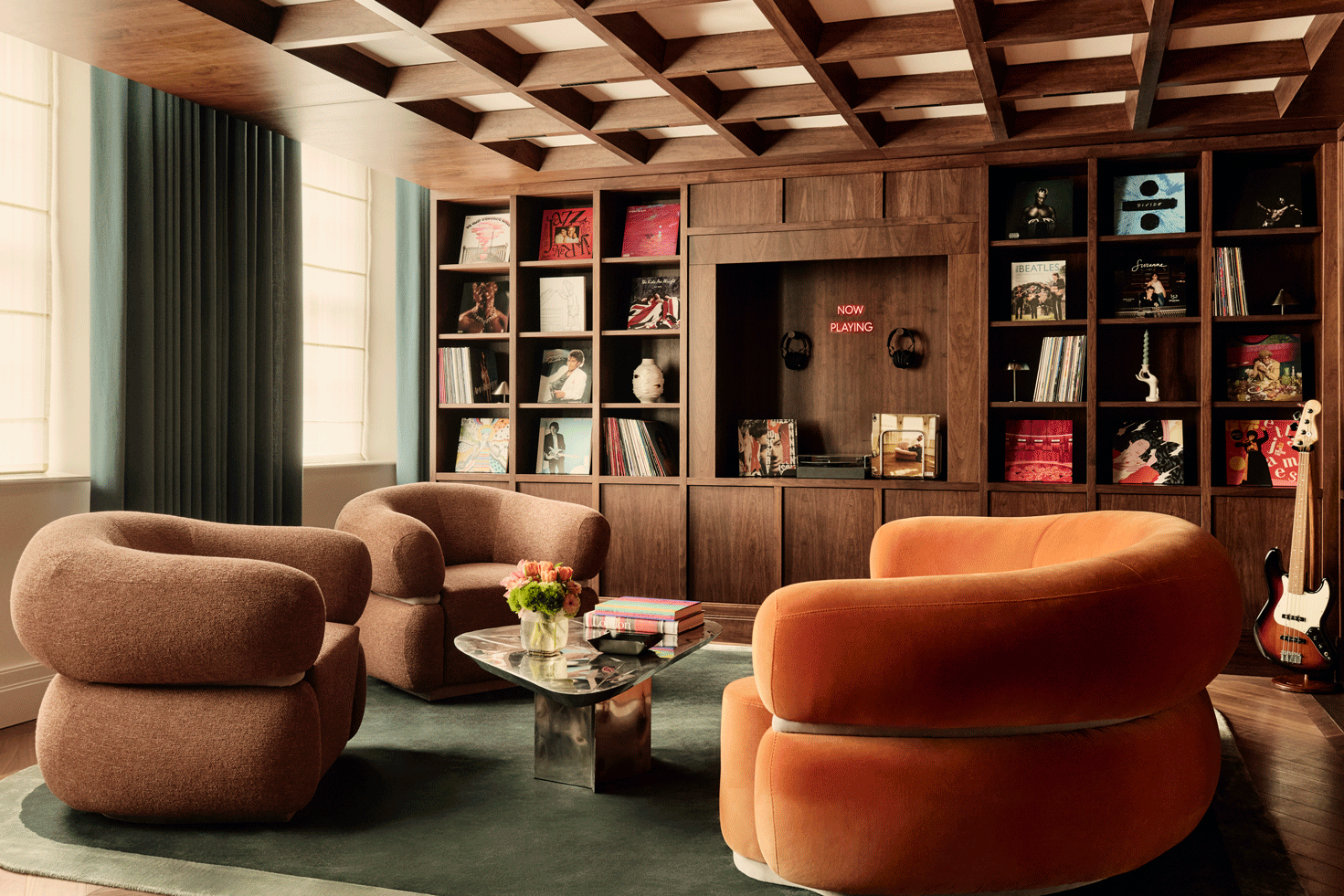
Baxter, one of the brands redefining contemporary luxury at Milan Design Week in recent years, takes a different approach in the space of Baxter Cinema. It does not erase the existing interior, it continues it. The collection rooted in the seventies does not feel like a reference, but like a natural culmination of a space that was always meant for experience, not observation. You linger the longest around the console with the turntable. Everything leads you there. When I played Daft Punk, the space clicked. Suddenly, you are no longer looking at things, you are part of them.
That is the difference. It does not try to please you. It holds you. And it succeeds.
Jaipur Rugs, in collaboration with Japanese architect Kengo Kuma, translates architecture into textile in a way that does not demand explanation, but time. Here, I am intentionally subjective, because my experience of Jaipur, the “Pink City,” allows me to read the logic of this brand more precisely. There is a move toward the contemporary, but never at the expense of identity. That is why the people behind this story in Milan feel different. Their work appears where it should, from museums to some of the most notable installations across the city, without the need to impose itself, because it is simply visible. Perhaps this is where what design should do is most missing elsewhere — creating a relationship that lasts longer than a single visit
Outside these spaces, the rhythm accelerates again. Phones become the primary navigation tool, QR codes dictate movement, installations follow one another like sequences, and people move from one space to another without stopping. It is as if there is an unspoken agreement not to check whether an object works, as long as it looks like it might, and not to question what is being seen, as long as everyone is looking at the same thing.
Our historical guests from the beginning understand this quickly and step out of the line. Only someone else continues forward instead of the Empress, thanks to a press pass. The system continues to function without interruption. Seamless. Almost too efficient.
In the evening, the scene moves to Bar Basso, one of the iconic spots of Milan Design Week. The lines form again, the same pattern, only now with ice in a glass. At that point, it becomes clear that the problem is not influencers or fashion. They are doing their job precisely and efficiently. The problem is that design has accepted the same rules and begun to measure itself by the same criteria.
While all this is happening, what benefits the most is what comes before and after: the market. During these days, it functions better than ever, not by accident but by design. The rules are simple. The greater the demand, the shorter the stay. The faster you move, the more you spend. Someone might call it a side effect. Here, chance does not feel convincing.
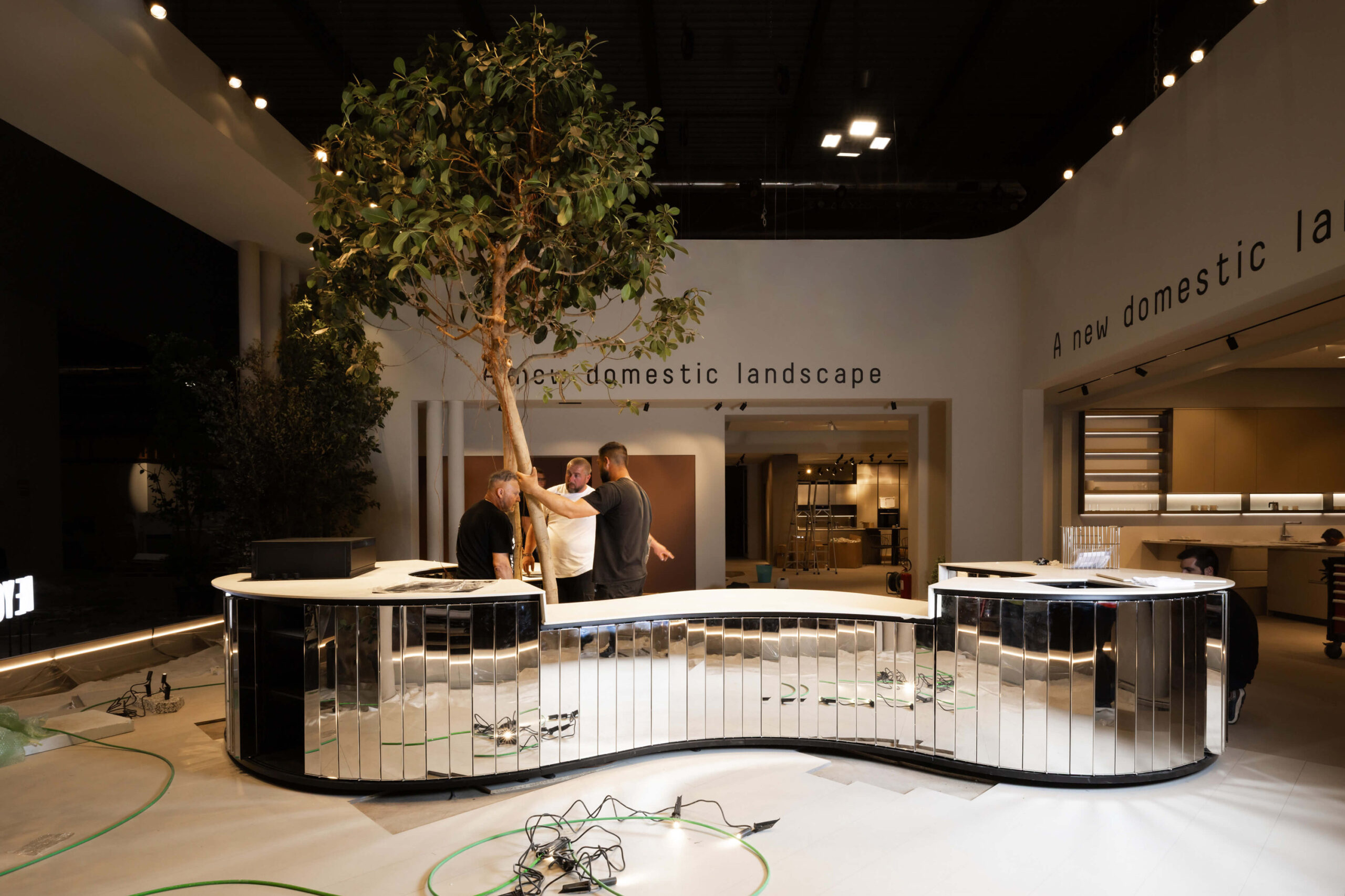
In that context, Salone del Mobile feels like a separate part of the city. It is farther away, it requires time, and you pay to enter, but precisely because of that it retains a clarity that the rest of the week often loses. It is the most precisely structured part of the event, a place where experience is not accidental, but constructed. The object returns to the center. It can be tested, understood or rejected, and brands do what makes them relevant and sustainable. They position themselves through what they are, not how they look.
Within that space, something emerges that the rest of the city has started to imitate: fair-like, almost museum-like moments, tributes to authors, and a clear emphasis on the designers behind the work. If we want younger designers to have greater value and visibility, this is the part of the week that cannot be ignored. Criticizing it without taking responsibility, while pretending we are all part of some abstract event, becomes less a stance and more bad taste.
If the city is a cult of brand, Salone is a cult of authorship. And that is its greatest strength. Here, you know who stands behind the work. And this time, structure did not suffocate content. On the contrary, it allowed it to exist.
In the end, the guests left. The lines dispersed. The music stopped. The lights stayed on a little longer than they should. Someone closes the door. Someone checks if everything is finished. There is no one left in the spaces. Only the objects remain, still there, waiting for someone to actually use them.