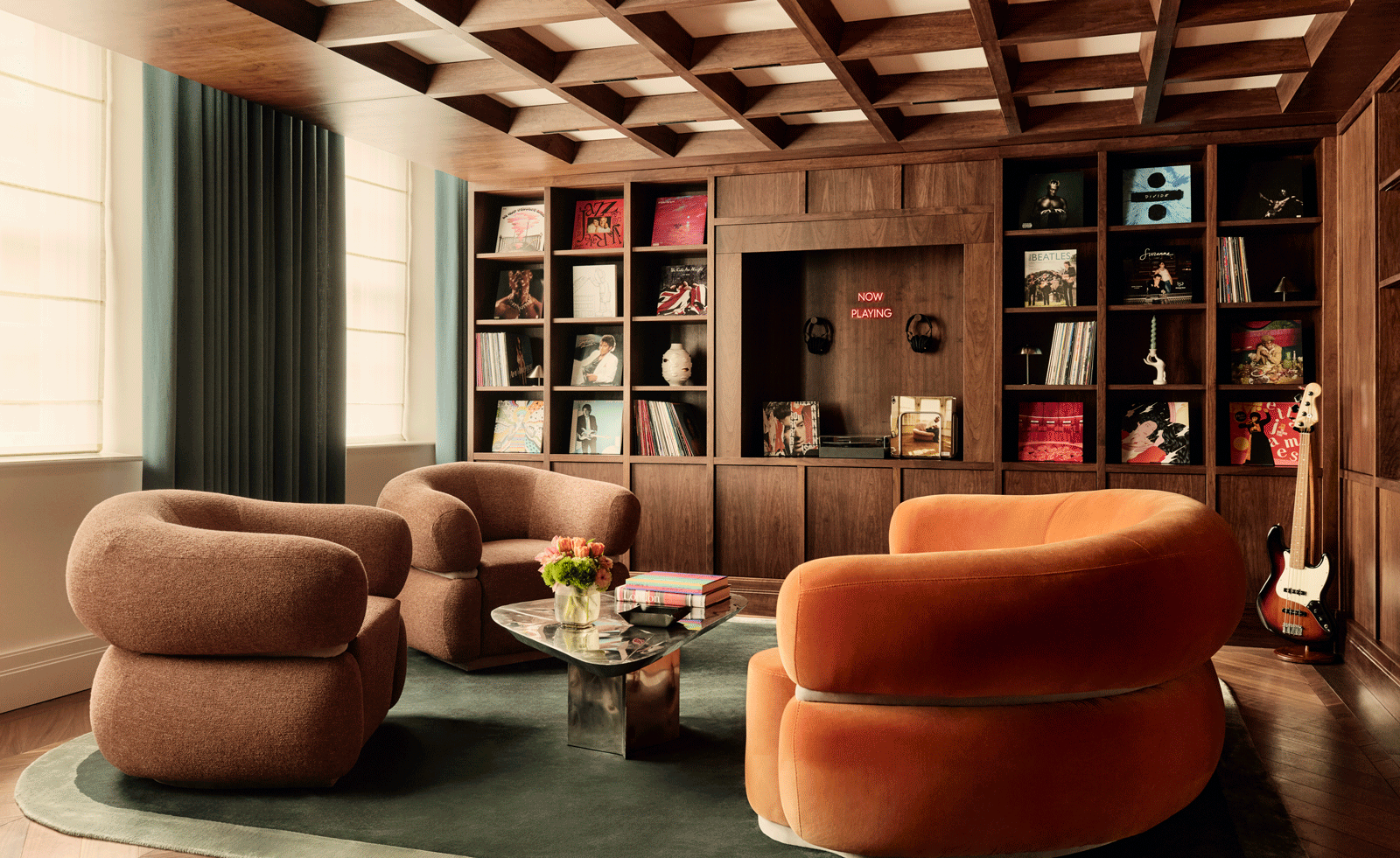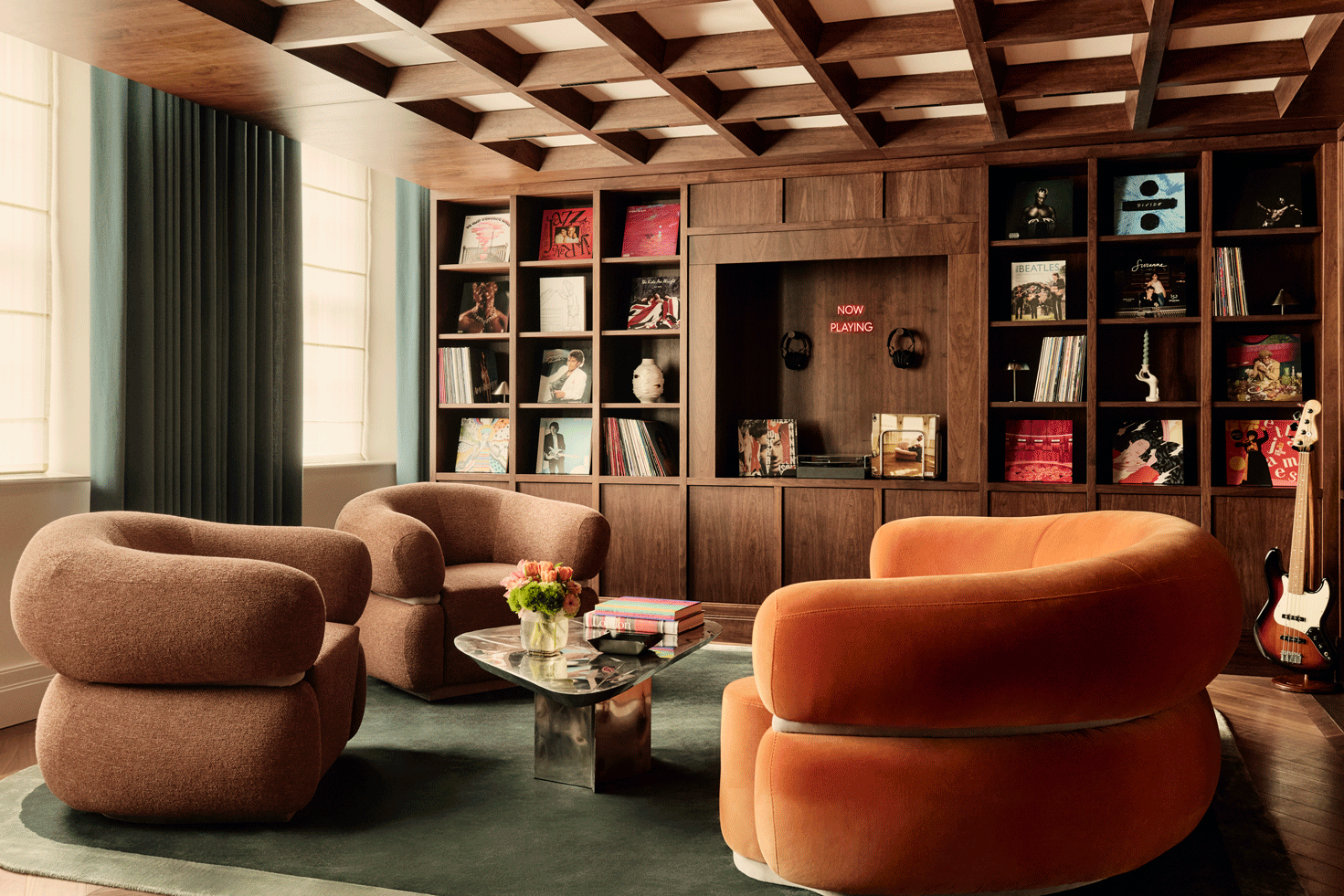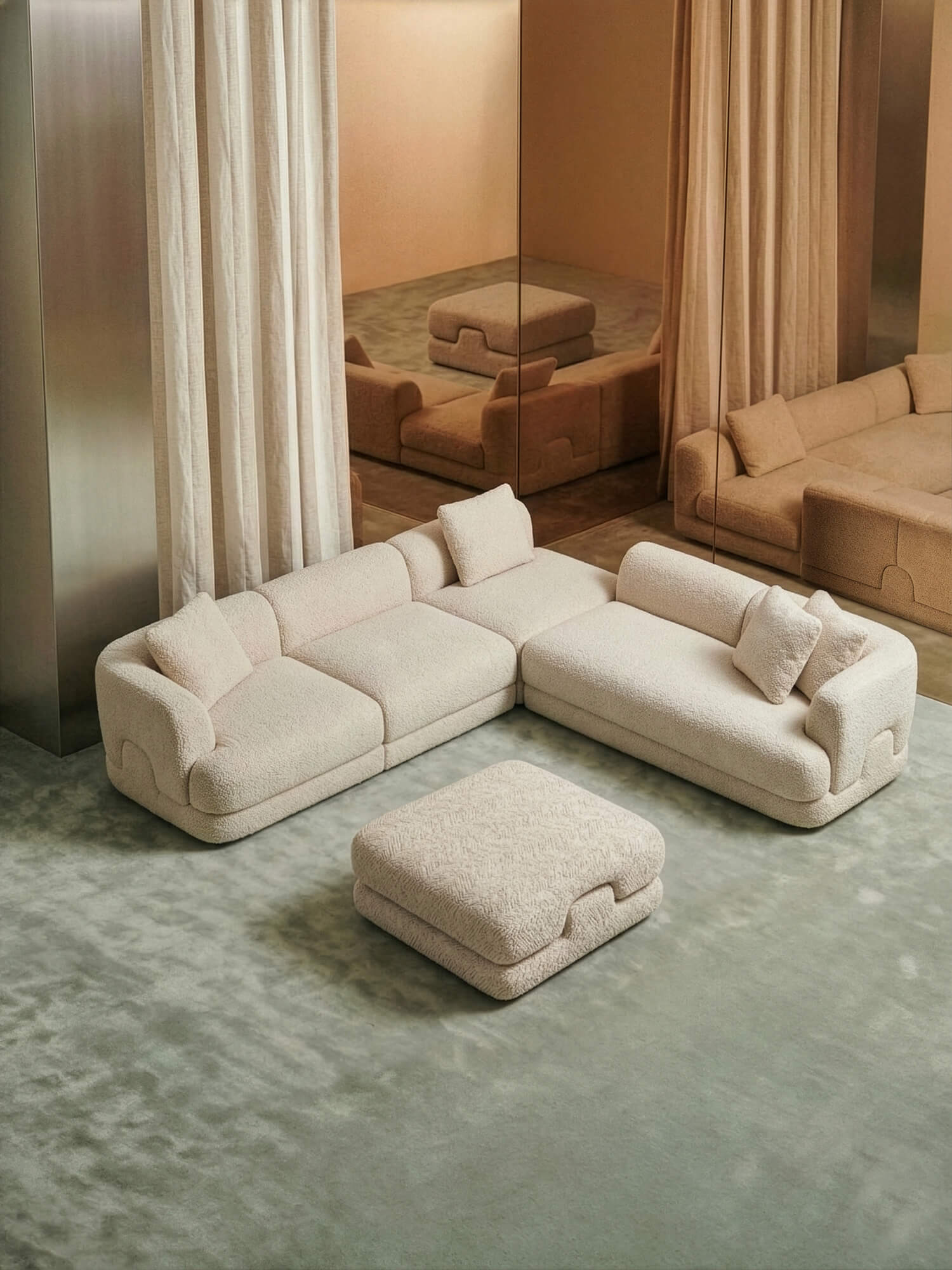
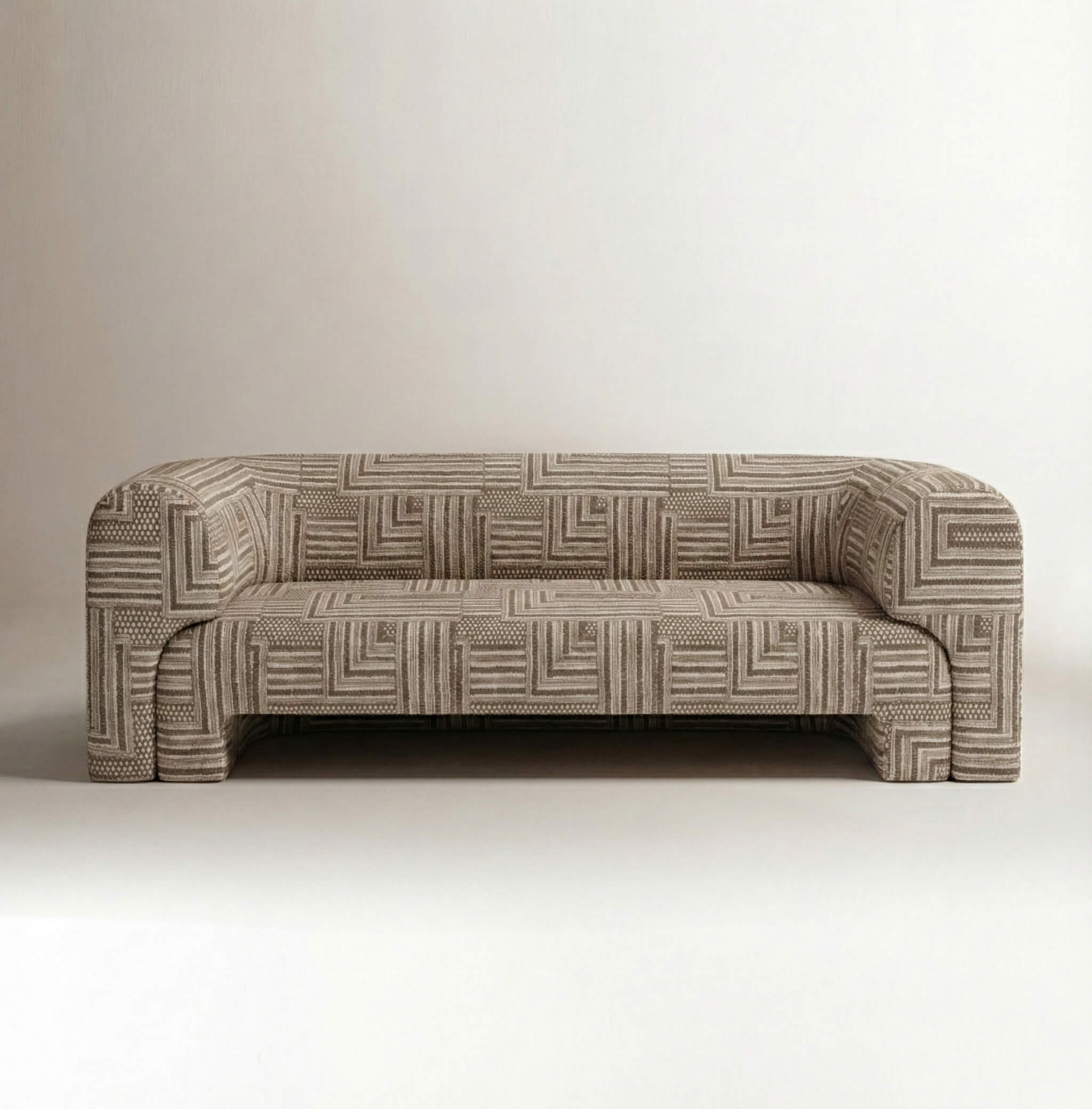
Mosaico sofa by Studiopepe
Portugal has been attracting the attention of the interiors world for years, for reasons that go well beyond the new hotels and restaurants of Lisbon and Porto. Behind the image most people now recognise sits a much older network of factories, workshops, stone and wood specialists, metalworkers, ceramicists and generations of makers who understand how an object is put together from the inside out. Portuguese design may have reached a wider international audience relatively recently, but the skills and production culture behind it have been there for far longer.
DOOQ grew out of that environment, and its collections are difficult to place within a single school or decade. The 1970s surface in the volumes, Art Deco appears in the geometry and polished metal, Italian design in the proportions, while some pieces recall old hotel interiors where stone, dark wood and one very good armchair could hold an entire room together. The references are there, but they remain loose enough to let the furniture belong to the present.
PORTUGUESE MAKING BEHIND CONTEMPORARY DESIGN
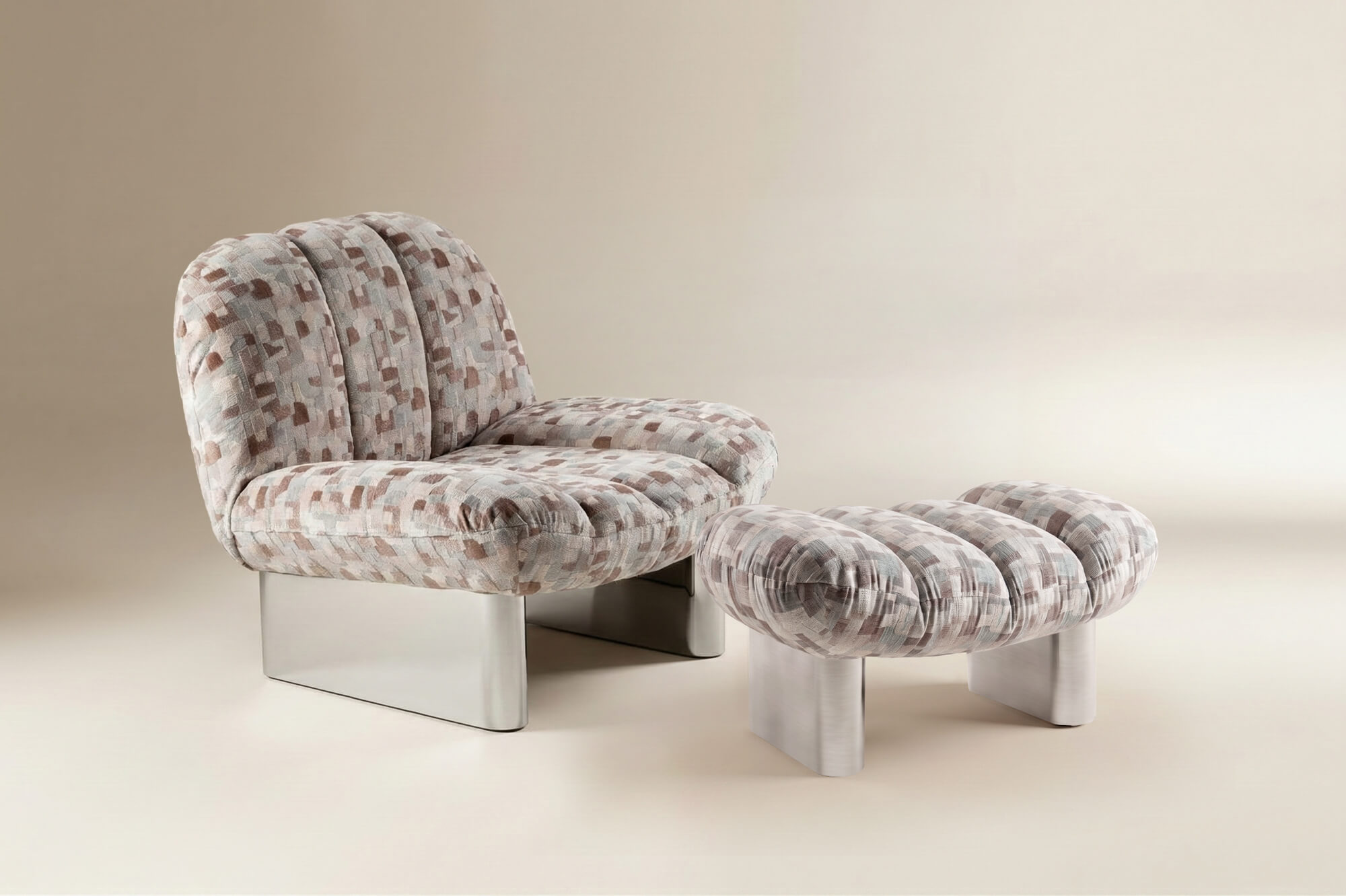
Pliè tables and consoles, Mosaico modular sofas, armchairs and poufs, Twin benches and poufs, Slide sofas, armchairs and chairs, Nest and Cubu chairs, the Nouvelle Donne dining table, the Colin armchair and Milano tables and consoles offer a clear view of the range. The pieces differ in scale and purpose, while proportion, material and detailing create continuity across the collection.
Much of DOOQ’s appeal comes down to material. Wood, metal, stone, glass and ceramics are built into the structure of the pieces, influencing their weight, balance and the way they change under different light. Portuguese production becomes most apparent at close range, in the treatment of an edge, the junction between two surfaces, the scale of a metal detail or the way a stone element resolves a line.
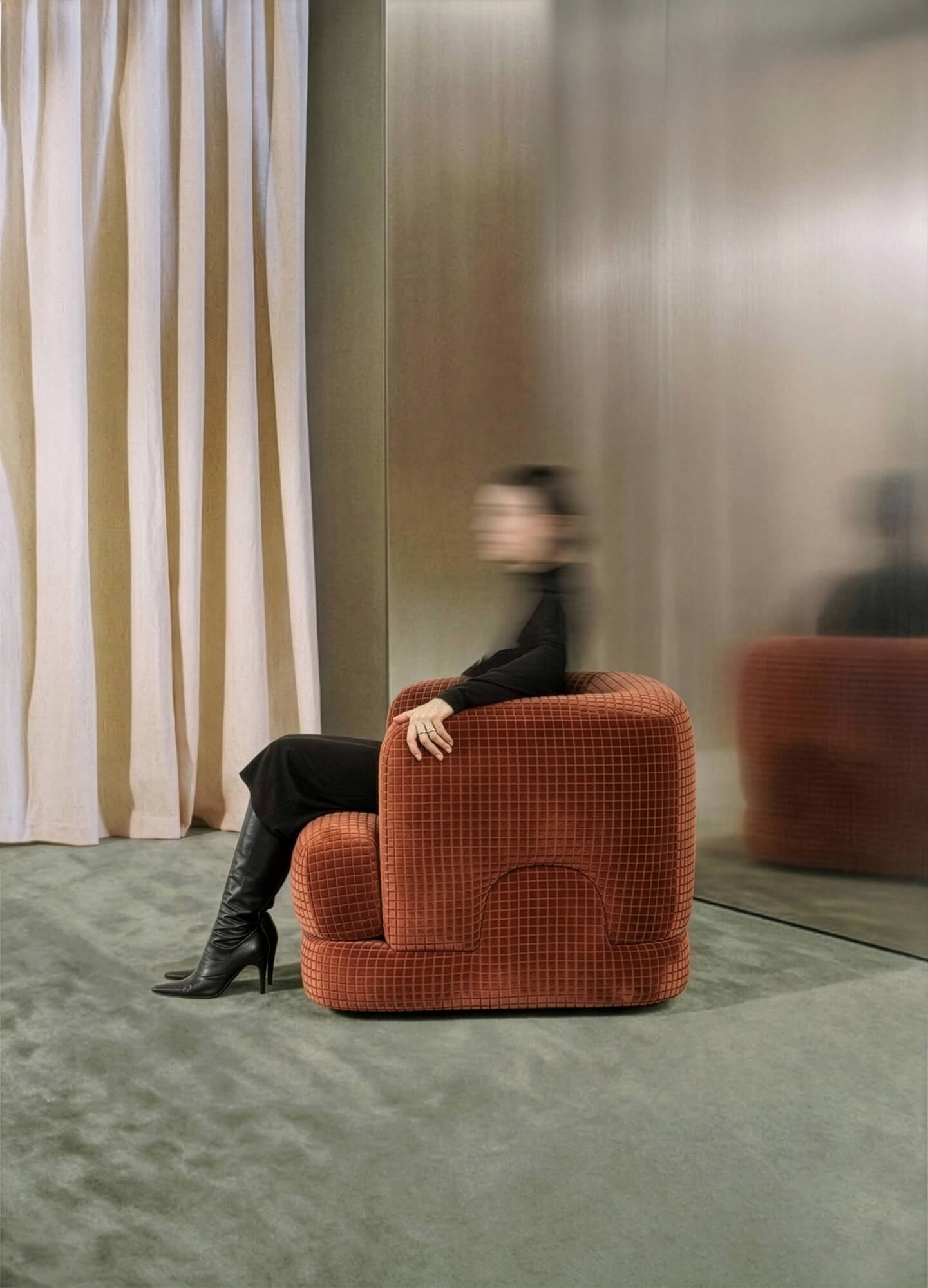
Mosaico armchair by Studiopepe, Dooq
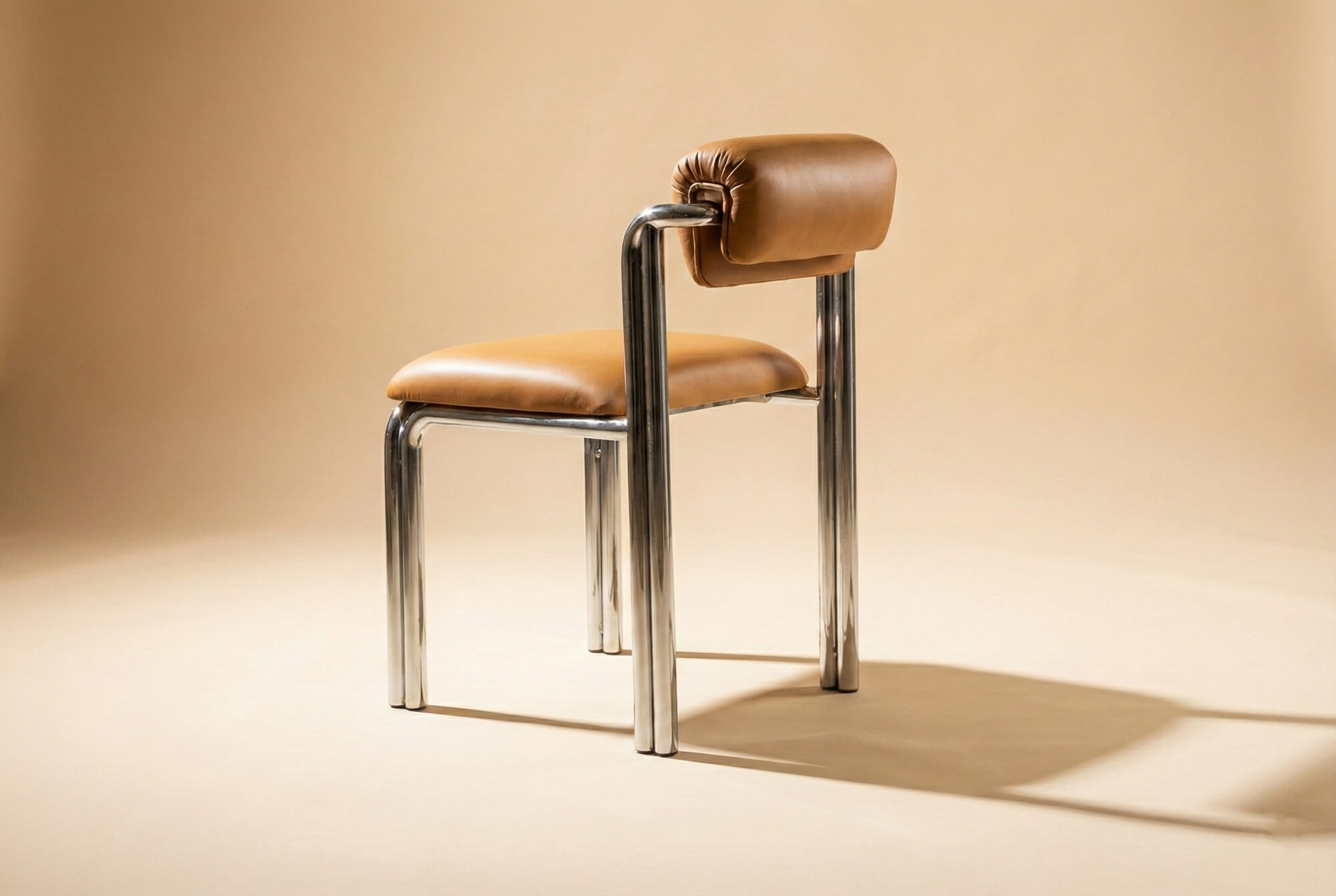
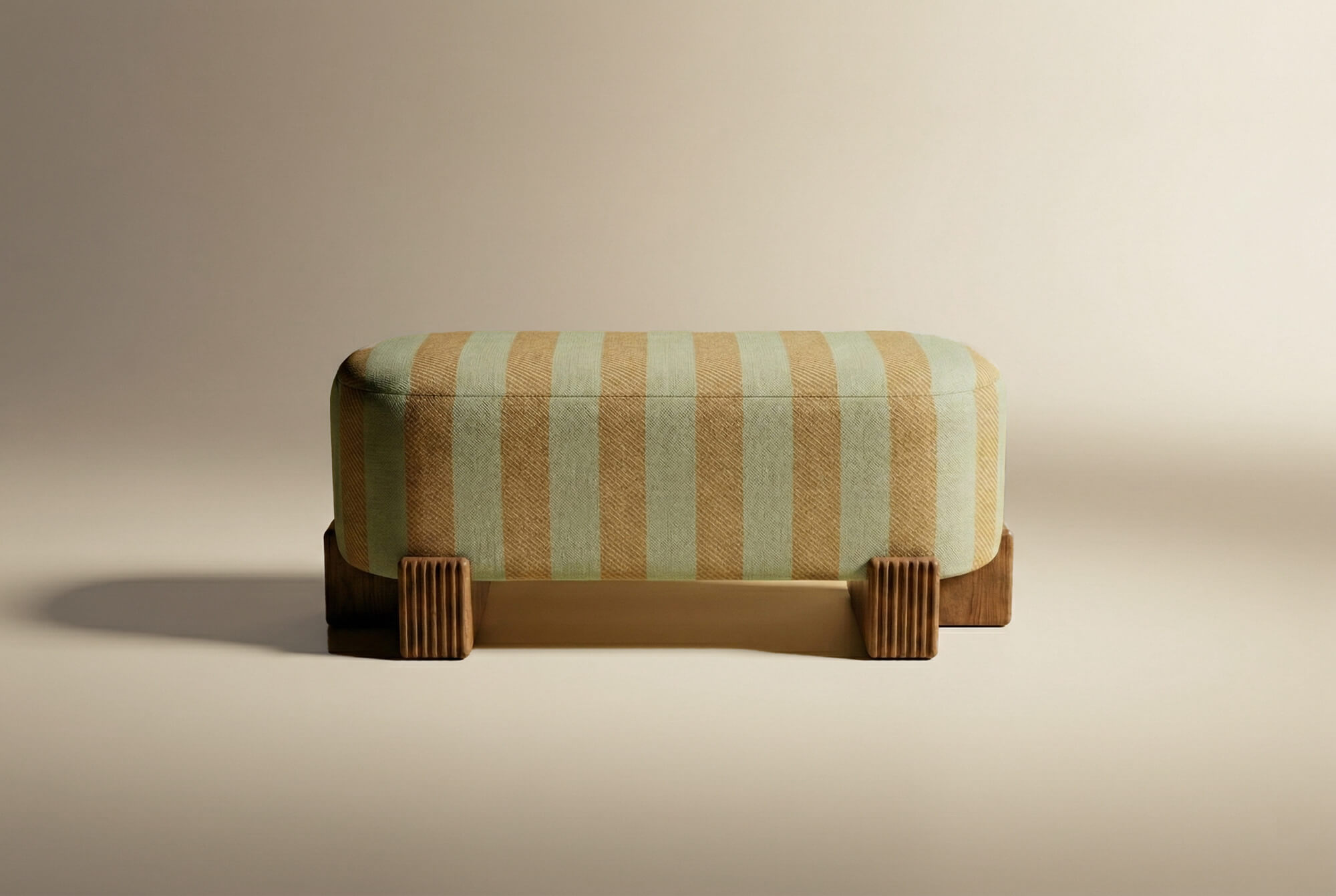
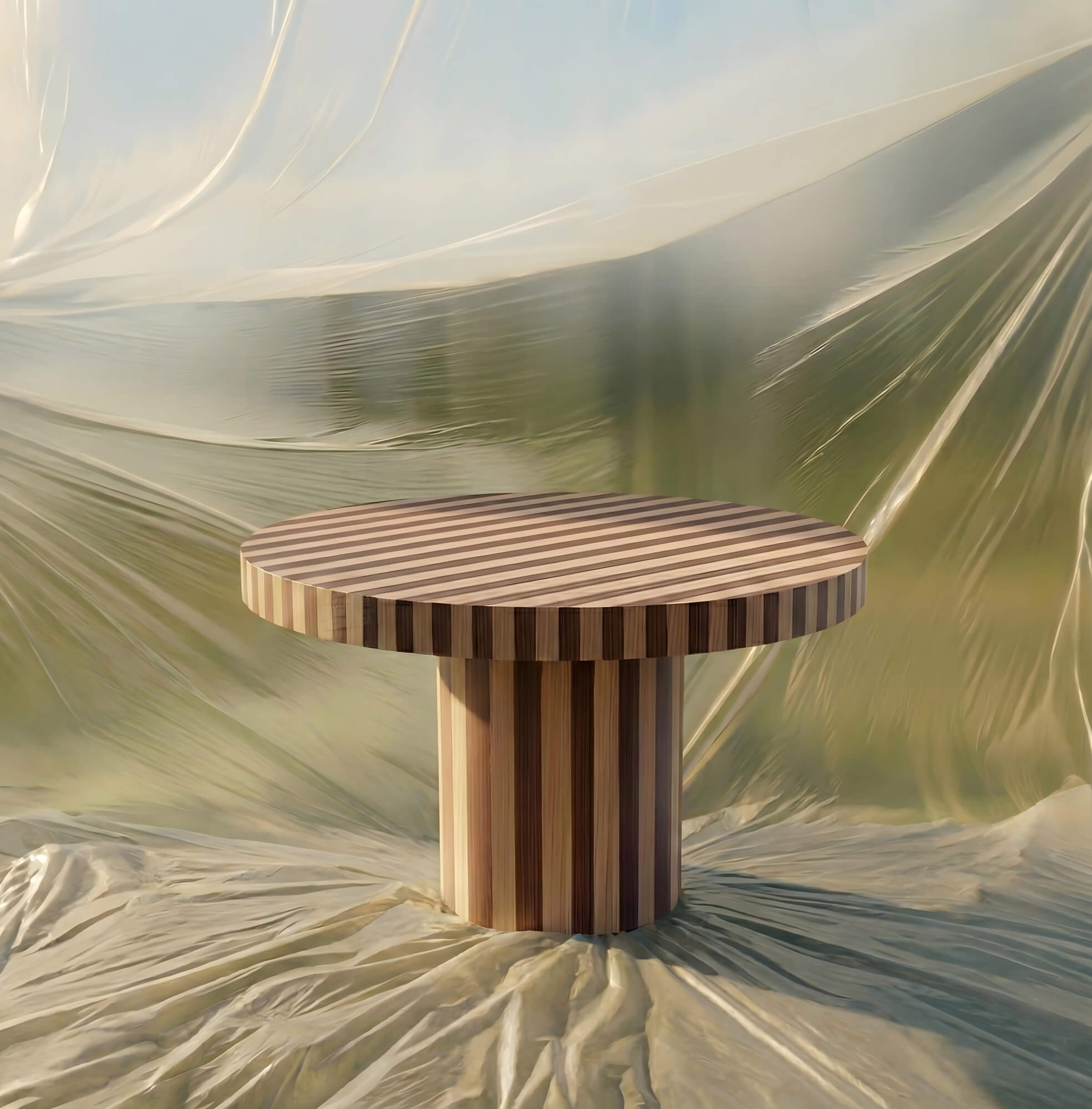
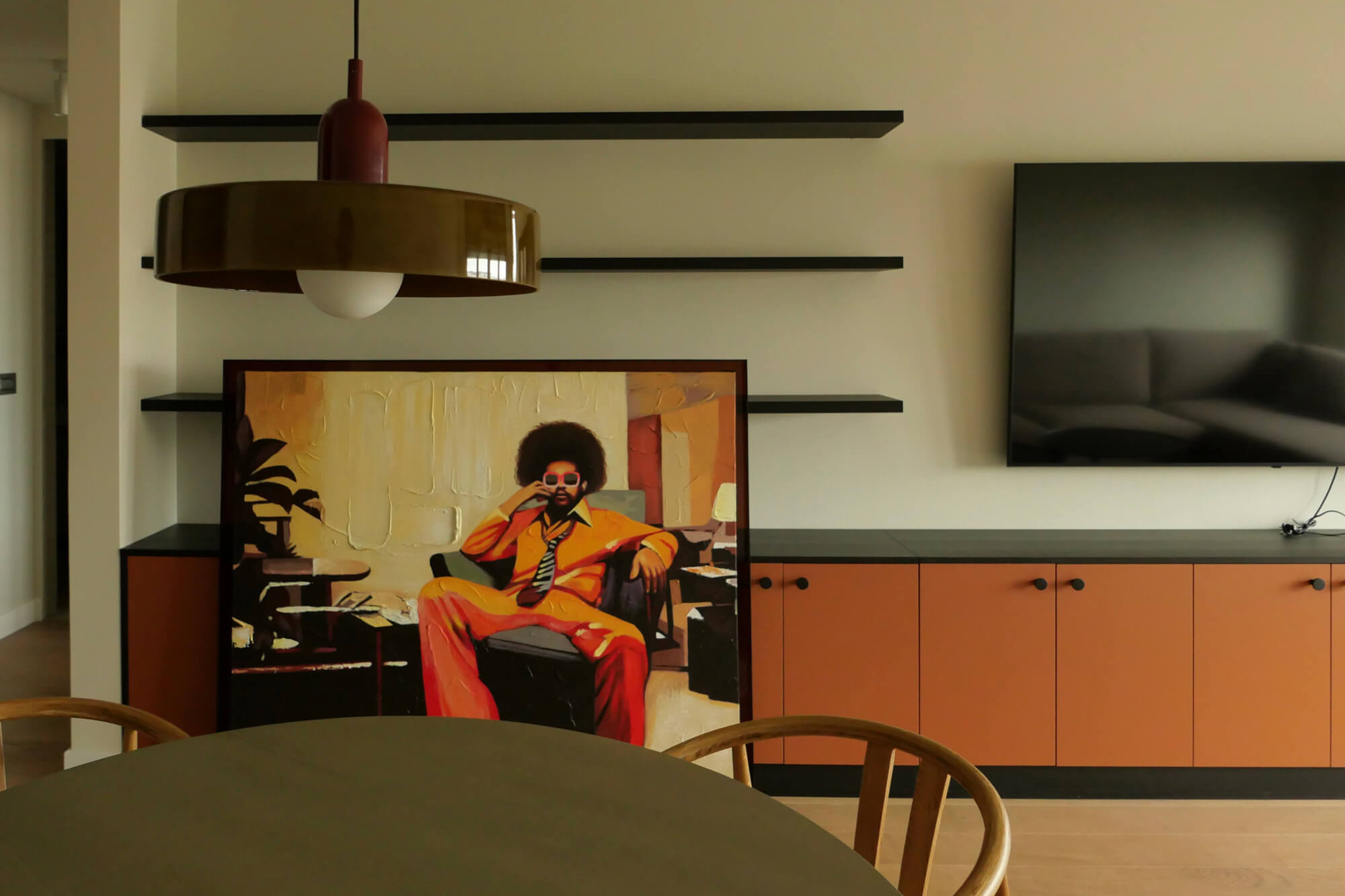
Cubu chair, Colin armchair, Twin bench, Nusa Dinning Table
MOSAICO, PLIÈ AND SLIDE: FURNITURE AS PART OF THE ROOM
Mosaico makes the changing relationship between furniture and architecture particularly clear. Its broad modules can divide a large room, redirect movement or establish a new centre within a space, moving well beyond the old assumption that a sofa belongs against a wall. The proportions remain composed even at a larger scale, which makes Mosaico easy to imagine in a private home, a hotel or a lobby where furniture plays a genuine role in organising the plan.
Pliè works with fewer elements. Its consoles, side tables and centre tables are built from slender planes, curved lines and carefully judged relationships between metal and form, which allows them to sit easily beside art, stone, textured walls or an old wooden chair from a completely different period. Those combinations tend to create more interesting rooms than trying to furnish everything from one series.
Slide develops across modular and conventional sofas, an armchair, chairs and poufs, while Nest and Cubu remain more compact through their dining and bar chair formats. Twin appears as a bench and in two pouf variations, giving these pieces enough independence to work on their own without pulling the rest of the family into the room.
That independence matters even more when a piece enters an interior that already has a history. Mosaico beside something inherited, Pliè beneath a large painting or Cubu next to a table made several decades earlier can produce a richer setting than a room furnished from one programme. Interiors rarely come together all at once. They accumulate art, things brought back from travel, gifts, inherited objects, furniture that has already lived somewhere else and, every so often, one new piece that changes the balance of everything around it.
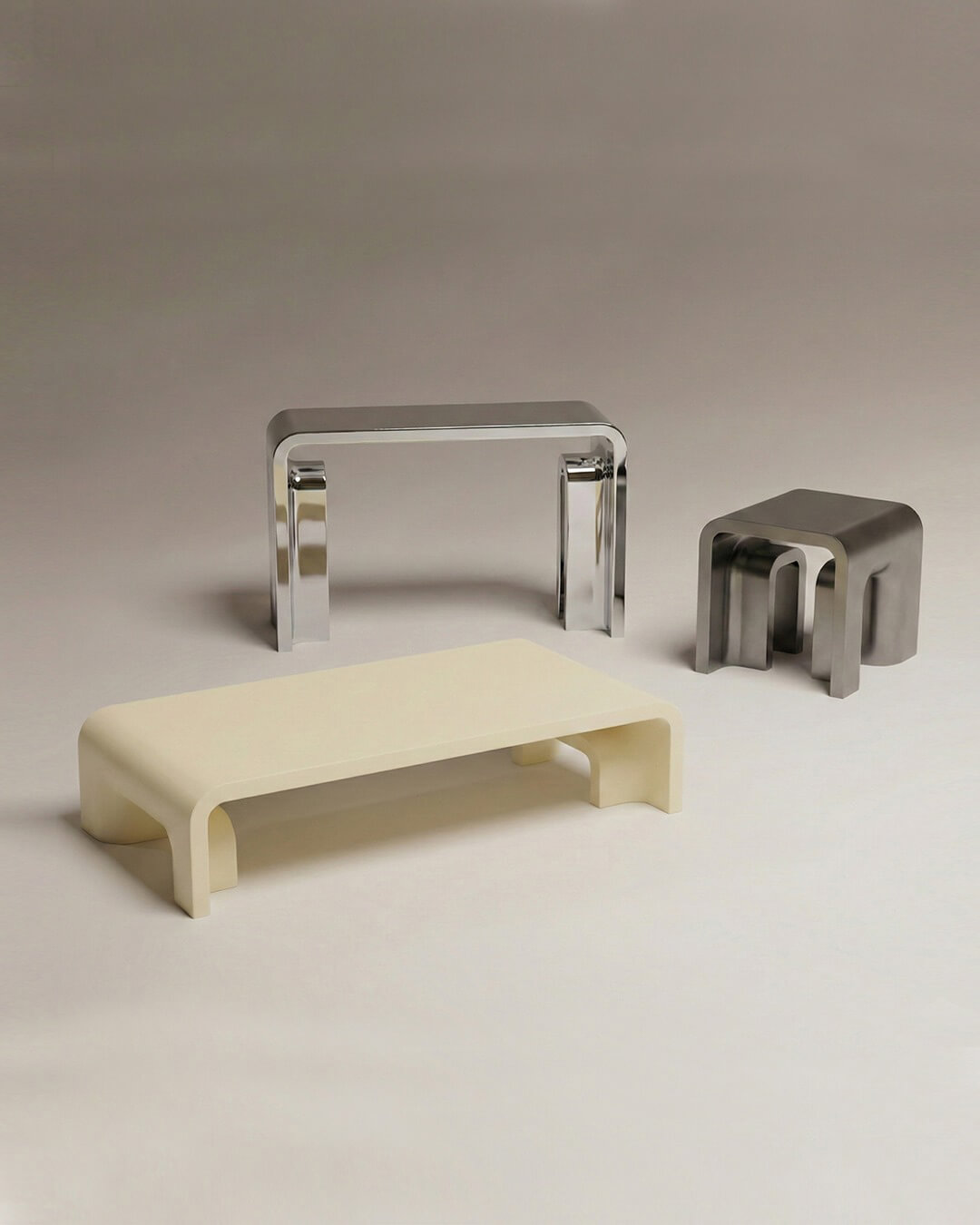
Pliè Collection, Dooq
Slide Couch
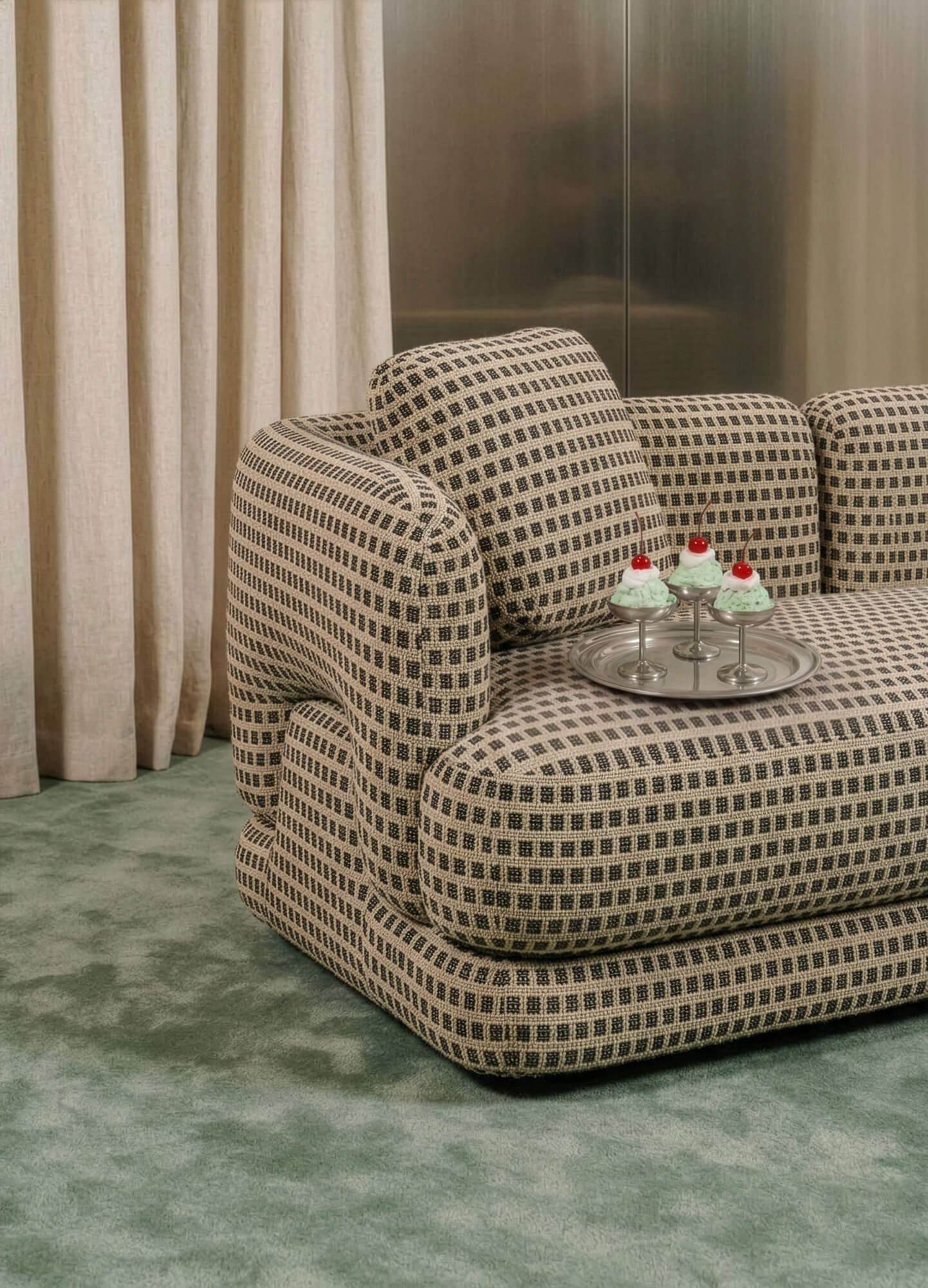
Mosaico sofa by Studiopepe
DOOQ IN DISCOVER: SELECTION AND PROCUREMENT FOR ARCHITECTURAL PROJECTS
The collaboration between DOOQ and not a studio. begins from that same idea. Discover will present a considered selection of pieces, while the partnership extends into specification and procurement for individual projects, alongside interiors and editorial content that place DOOQ in a lived architectural context. The brand’s regional presence can therefore develop through real rooms and real applications, with each project drawing from the collection according to what it actually needs.
The current collection opens that collaboration and makes clear why DOOQ belongs in Discover. The differences between the pieces are substantial enough to make individual selection the most rewarding way to approach them, with each one considered in relation to the room, the architecture and the life it will eventually become part of.
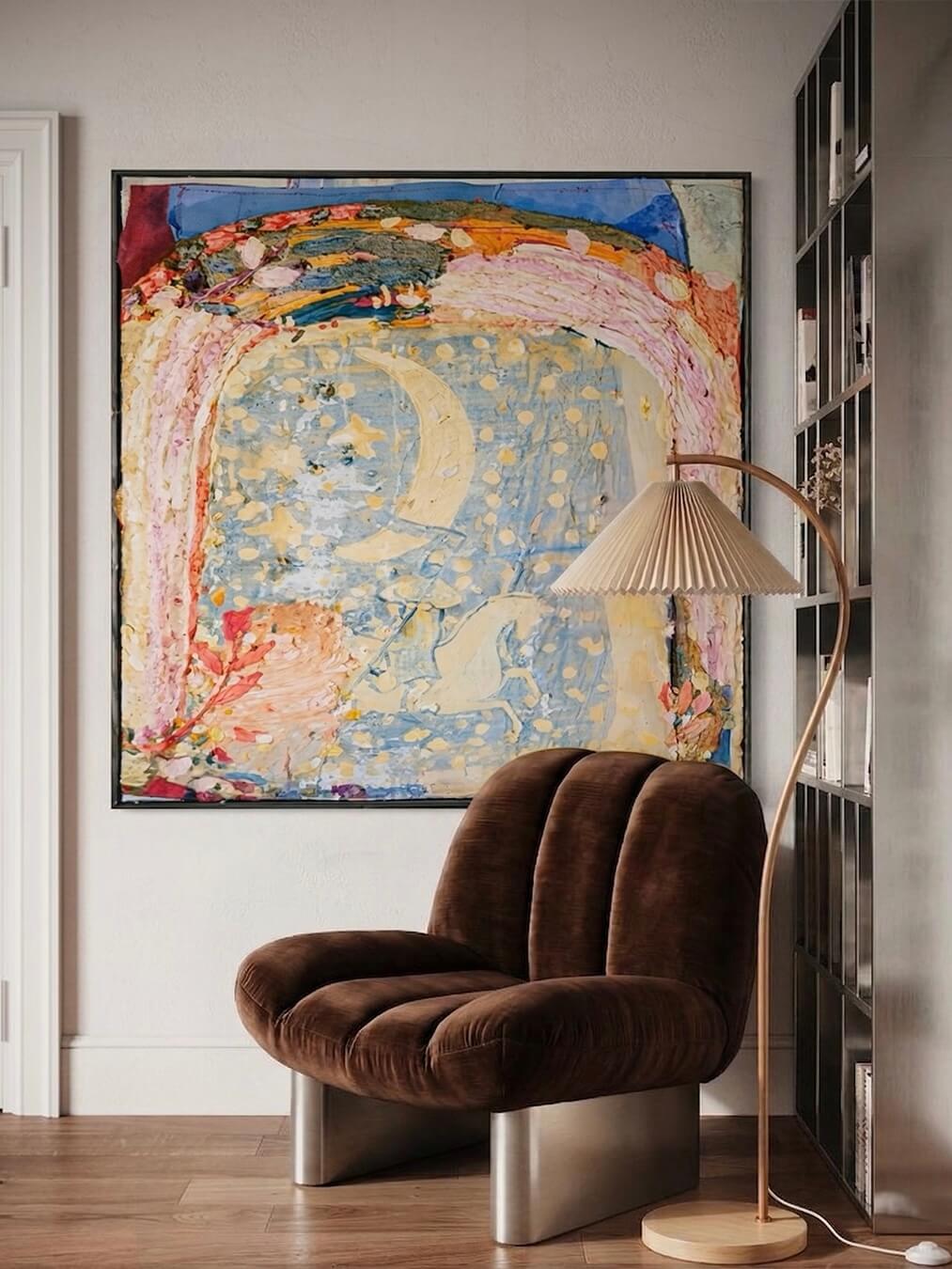
Image courtesy of DOOQ