

Danilo Mašković
MILAN IS NOT BEAUTIFUL. MILAN IS ESSENTIAL.
I remember my first time in Milan. I had no expectations, which is probably the only right way to enter this city. I walked through it as if it were a transit zone of Europe, moving between places that felt more familiar than the city itself. Everything seemed useful, functional, but not beautiful. And then I went up to the Duomo.
The moment was almost comical. Trying to capture a shot, I dropped my iPad and watched it shatter against a rooftop that looks as if it were carved out of light. I remember standing there, somewhere between tourists and stone spires, realizing two things at once. First, that I had just broken something I actually needed. Second, that Milan, seen from above, is in fact beautiful.
Maybe the problem is perspective. Maybe Milan was never meant to be seen from the street.
Milan is not Paris. It is not Rome. It does not try to seduce you at first glance. It does not rely on beauty. And that is exactly why so many people dismiss it before they understand it. Especially those arriving for their “aperitivo moment”, another photo with a glass in hand, another proof that they have been somewhere. For them, Milan often feels like a disappointment. Not photogenic enough. Not romantic enough. Lacking the clarity of Rome or the theatricality of Paris.
But Milan was never a city for first impressions. It is a city for second looks.
And maybe that is why it holds something no other city does. Something that has nothing to do with facades, but everything to do with substance. A city where The Last Supper does not exist as a tourist attraction, but as a permanent presence. An idea that is constantly revisited, reinterpreted, quoted, deconstructed and rebuilt. A city every designer, sooner or later, has to come to. Not because they want to, but because they have to. Like an unwritten metro stop on a path that is anything but easy.
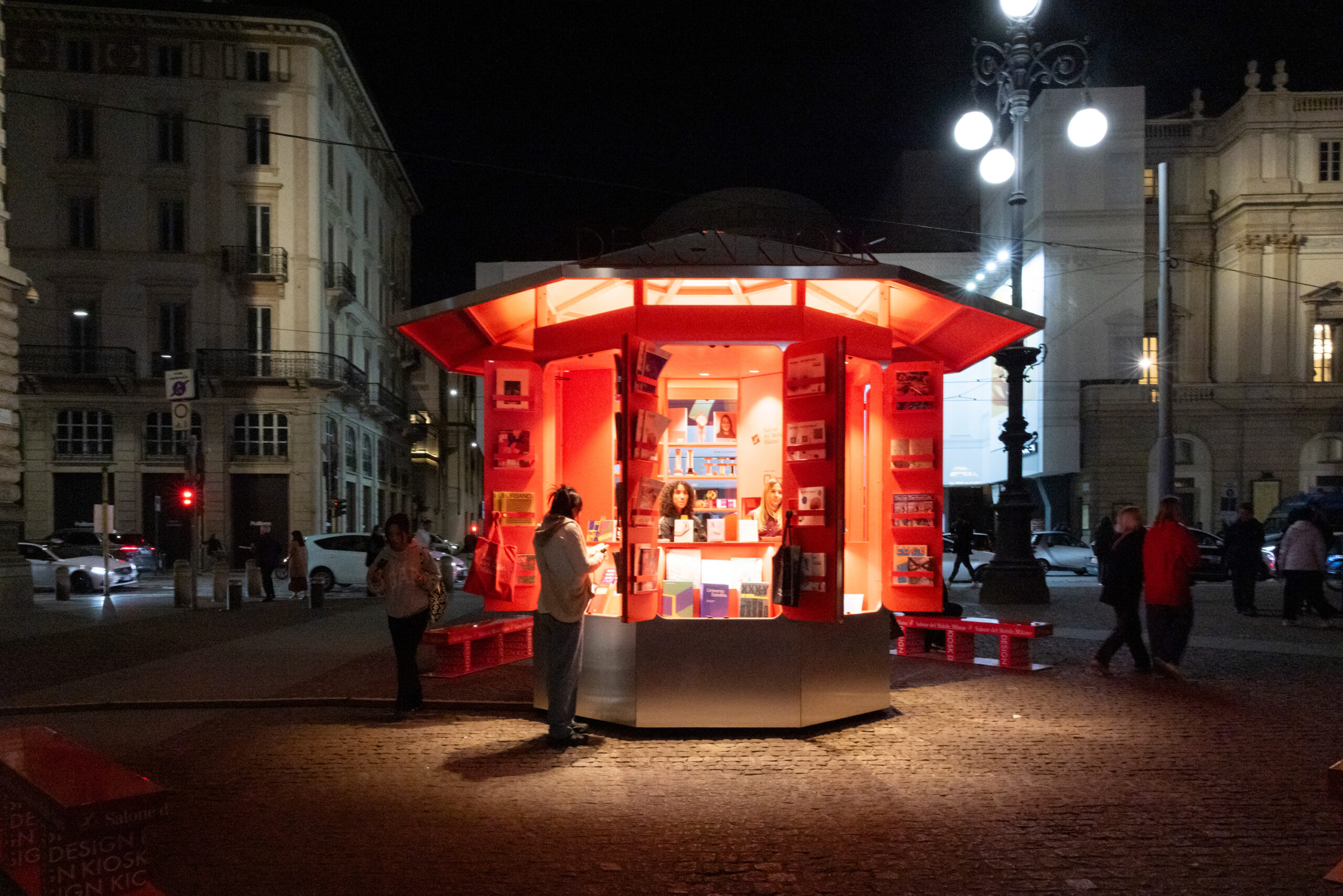
Design Kiosk, Piazza della Scala, Salone del Mobile 2025, photography: ©Alessandro Russotti
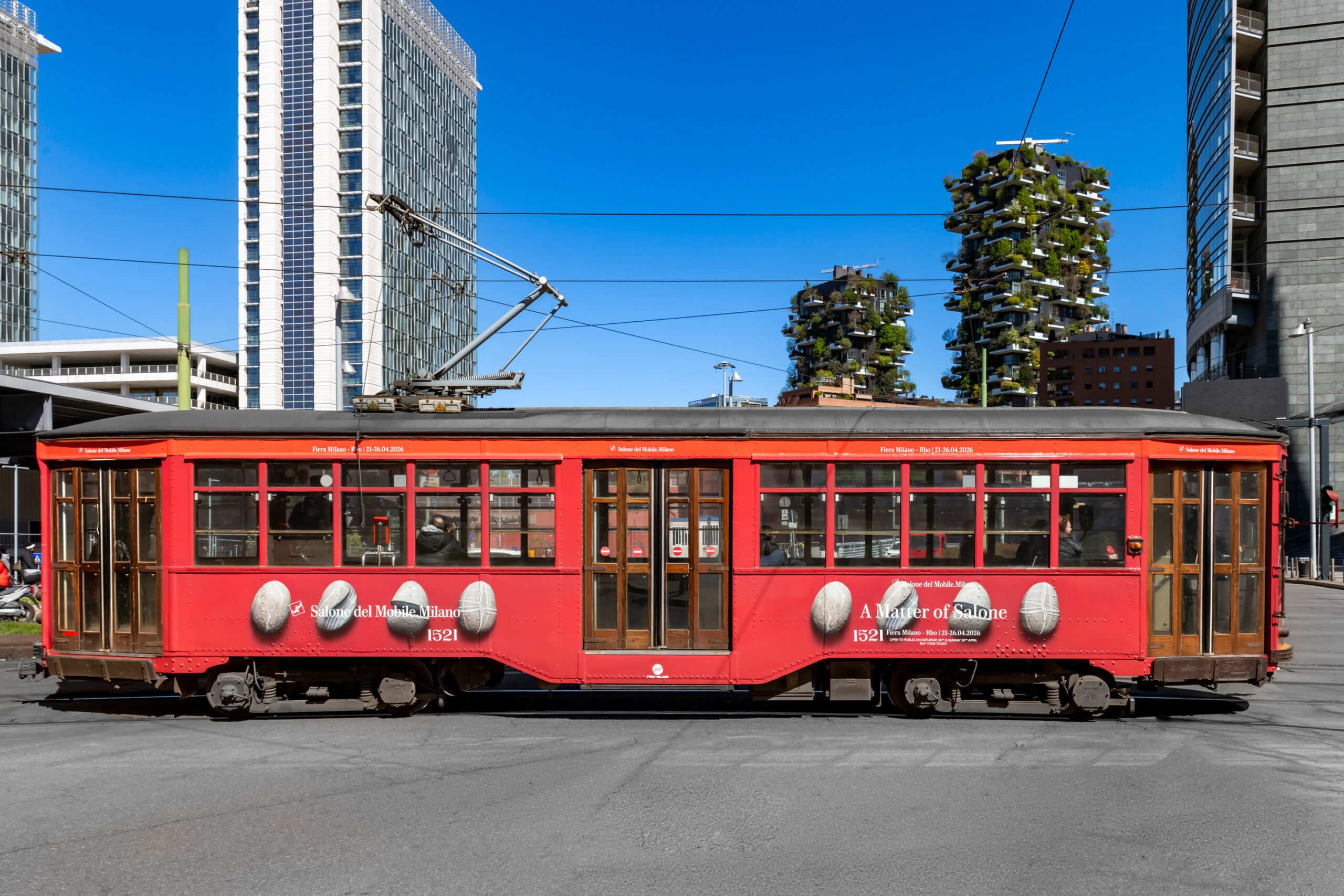
A Matter of Salone in the city, Salone del Mobile, Milano 2026, photography: ©Alessandro Russotti
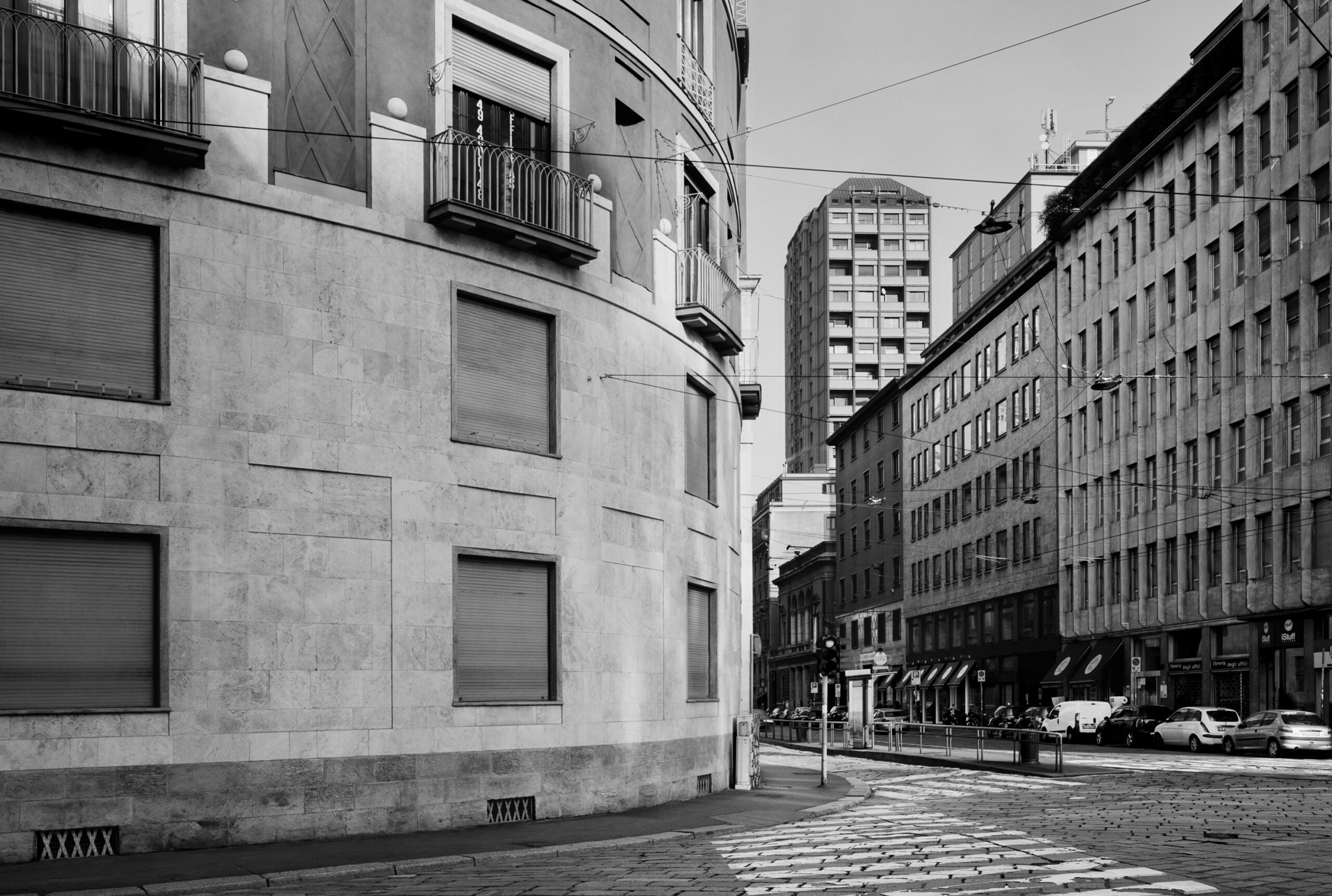
Archivio Muzio
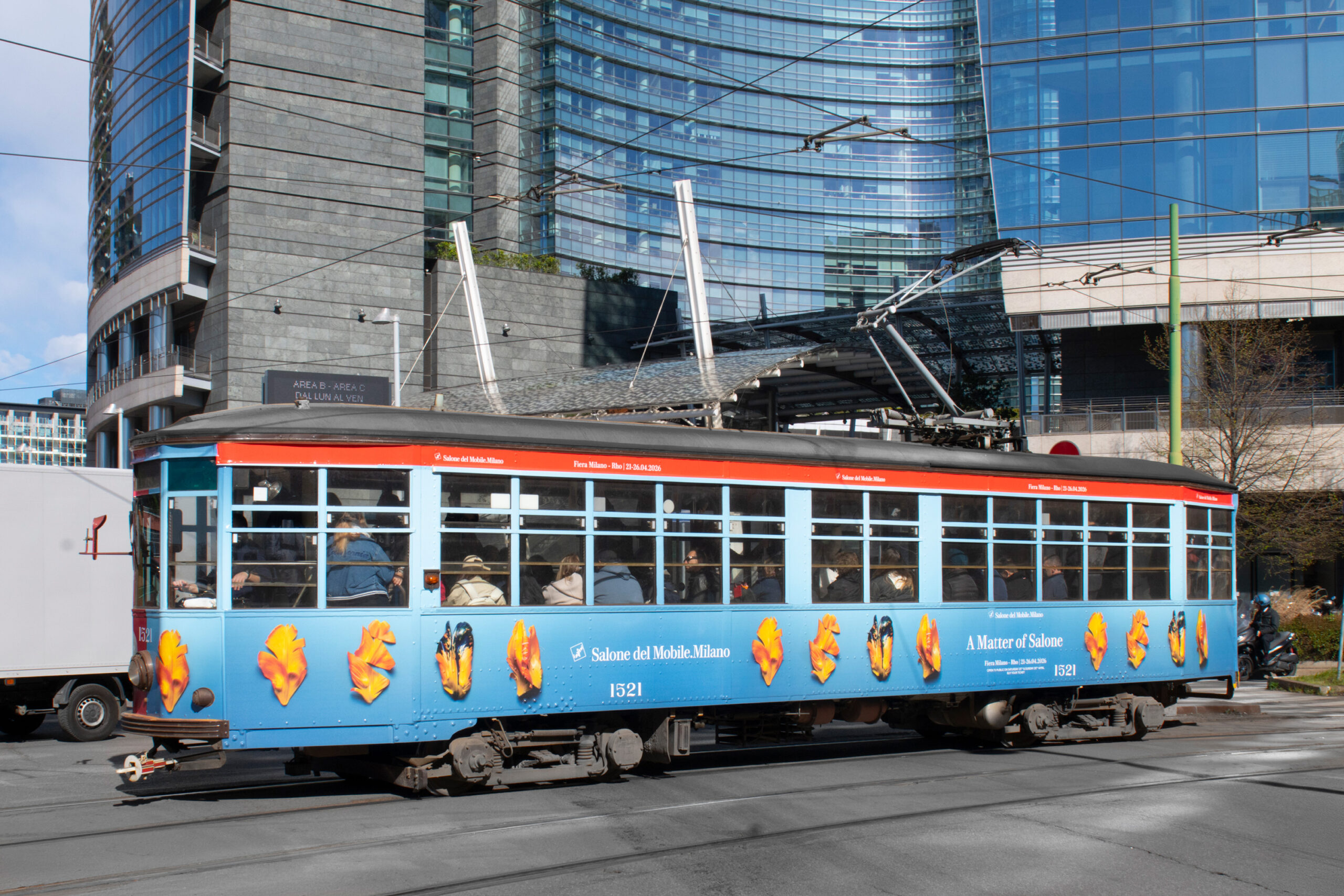
A Matter of Salone in the city, Salone del Mobile, Milano 2026, photography: ©Alessandro Russotti
Salone del Mobile is simply the peak of that logic.
During that week, Milan stops being a city and becomes a stage. Not a stage for an audience, but a stage for participants. Everything moves outward. Showrooms, galleries, courtyards, universities, abandoned buildings. The city unfolds and turns into a sequence of spaces you have to move through in order to understand what design actually is today.
This year, that shift feels especially clear.
The focus is no longer on the final product. Not on the chair, the lamp, or the object that needs to look perfect in a catalogue. Instead, everything moves toward experience. Toward process. Installations take over. Space becomes narrative. You don’t enter an interior, you enter an idea. You don’t move through function, you move through concept.
And the city follows.
Squares feel different. The light feels different. It all looks as if someone decided, just for a moment, to make Milan visibly beautiful. And that is where the paradox begins. A city that never insisted on beauty suddenly becomes a perfect backdrop. Like a render that somehow slipped into reality.
And that is exactly where you need to be careful.
Because Milan can easily become background. Something to consume, photograph and leave behind. Especially for those who arrive with pre-planned images already in mind. For the influencer-minded visitor, Milan becomes just another “aperitivo bar”, only slightly less beautiful than Rome or Paris.
But Milan does not work like that.
It does not give you ready-made images. It asks for engagement. It asks you to move through it, to get lost in it, to sit in a bar on a side street in Isola or Porta Venezia and realize that this, away from the main stage, is where the city actually exists. That Navigli is not just a canal for photographs, but a place where the city unwinds. That food is not an addition to the experience, but part of its structure. And that design, no matter how present it is, is never an end in itself.
That is why Milan can be frustrating.
Because it does not want to please you. It does not want to be easy. It does not want to be clear. And that is exactly why I love it. Because every time I think I have understood it, it proves me wrong.
It might be the only city that does not try to impress you, yet still sets the standard for the rest of the world.
And maybe that is the reason why, if you skip it, it feels like you have missed design altogether.
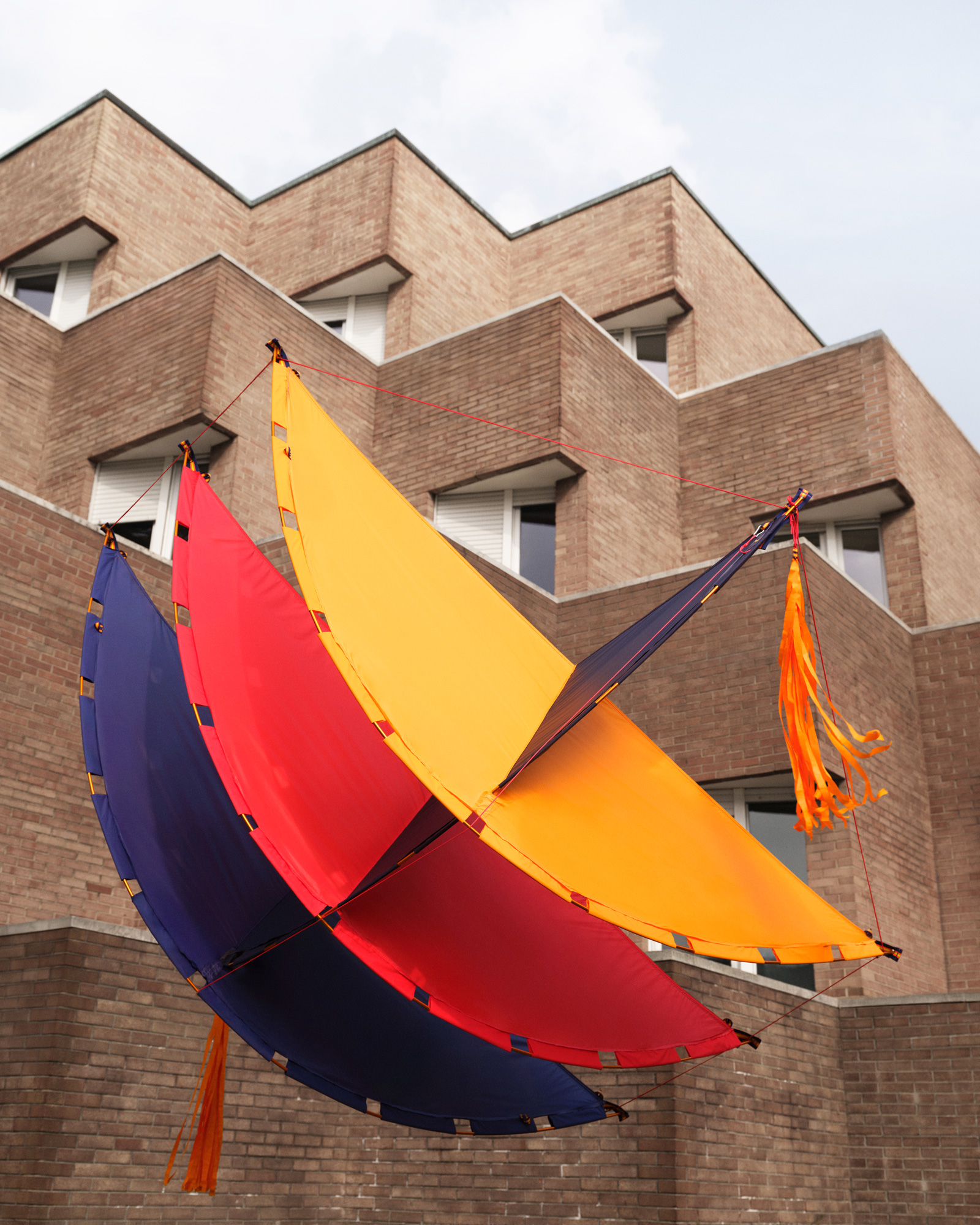
Salone del Mobile, Milano 2026, Fogotten Architecture, Collegio di Milano, photography: © Louis De Belle
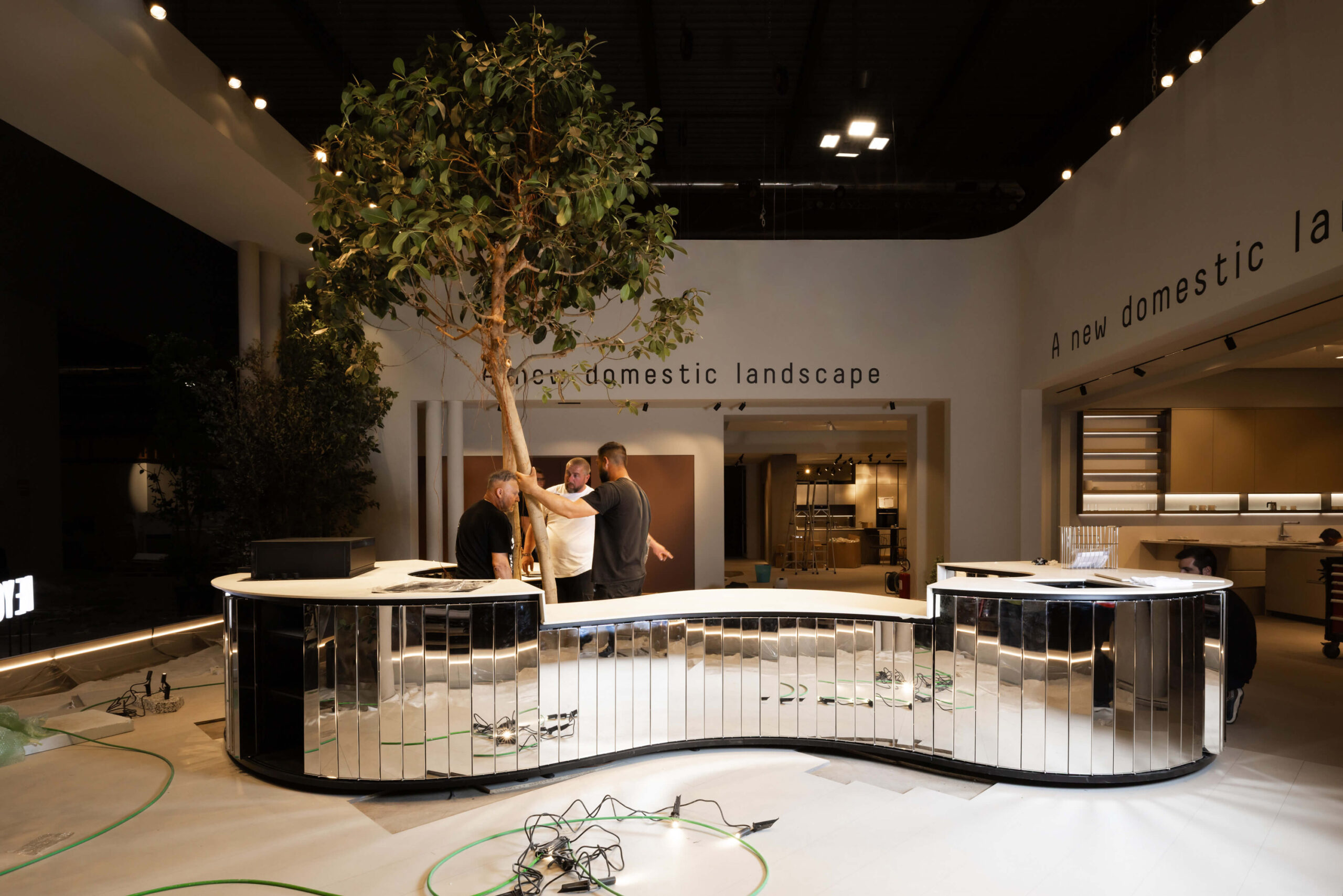
BEFORE THE OPENING
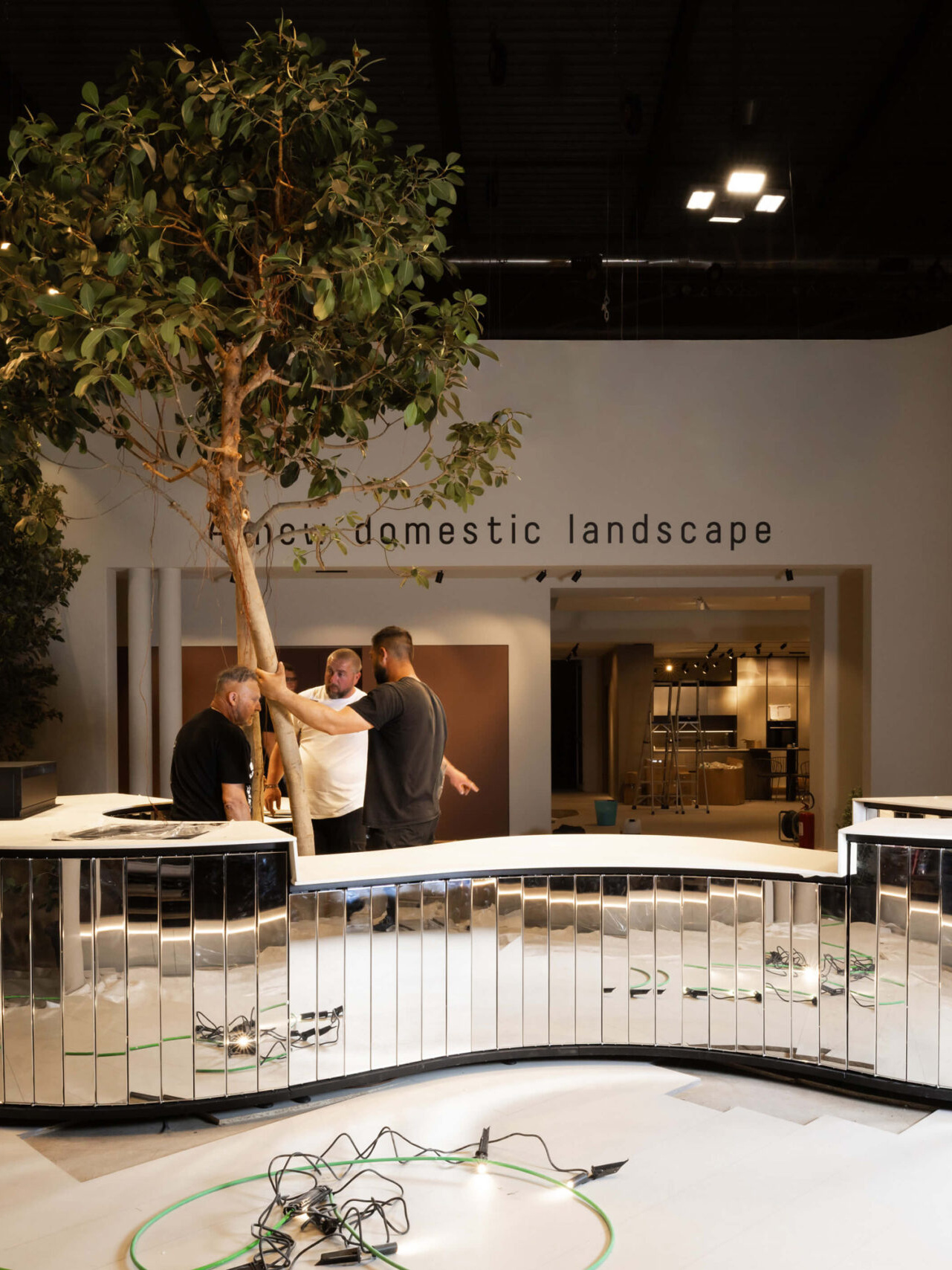
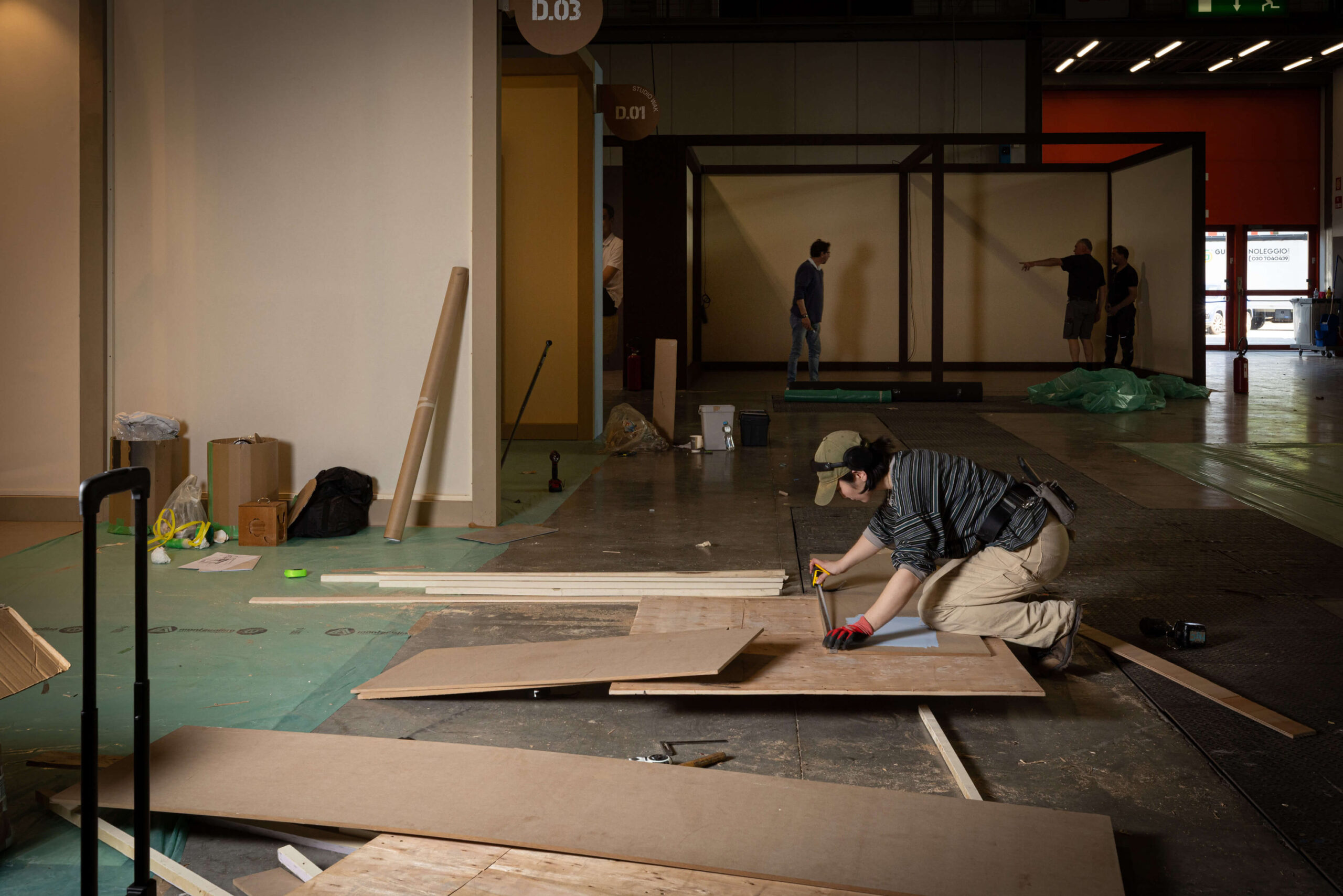
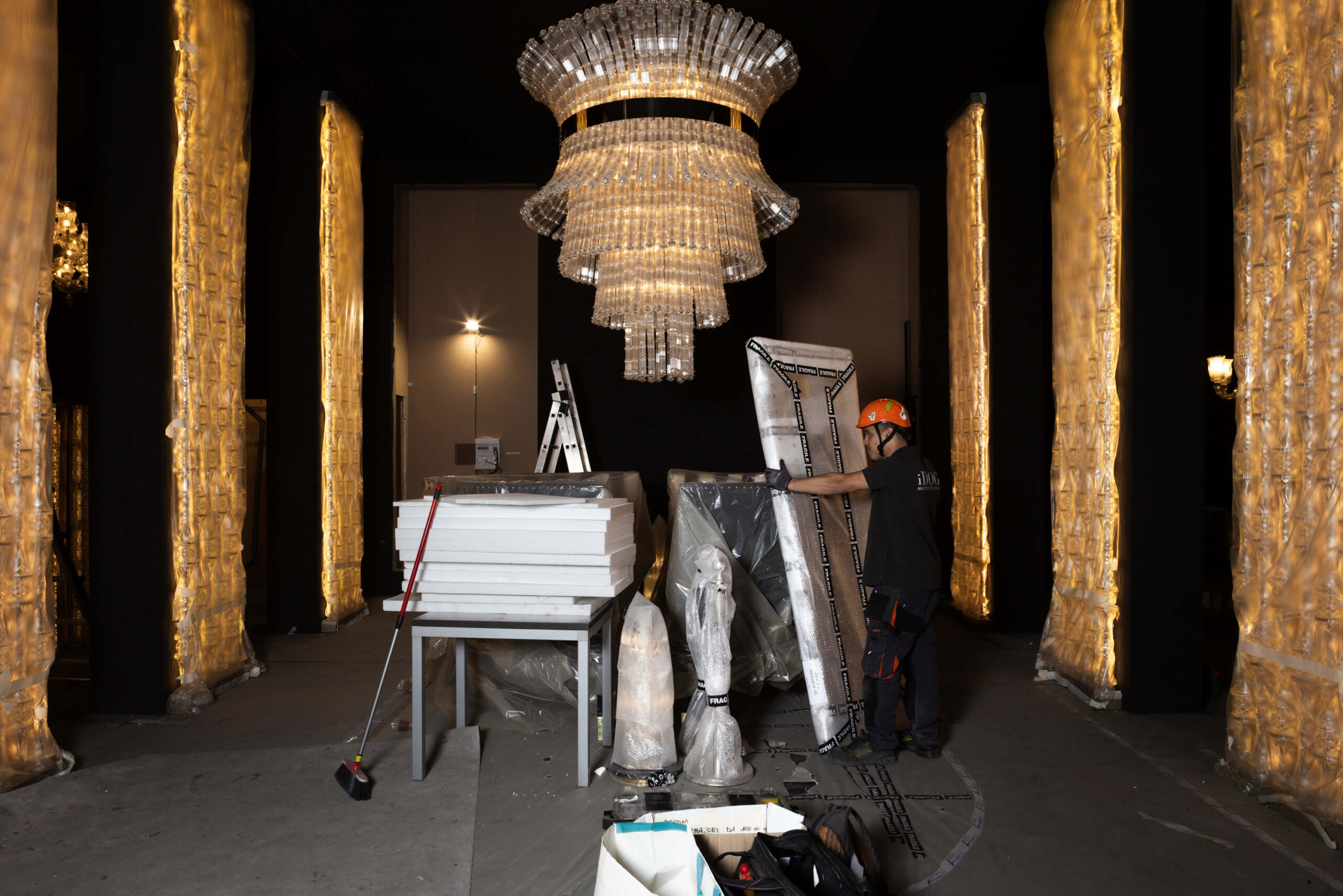
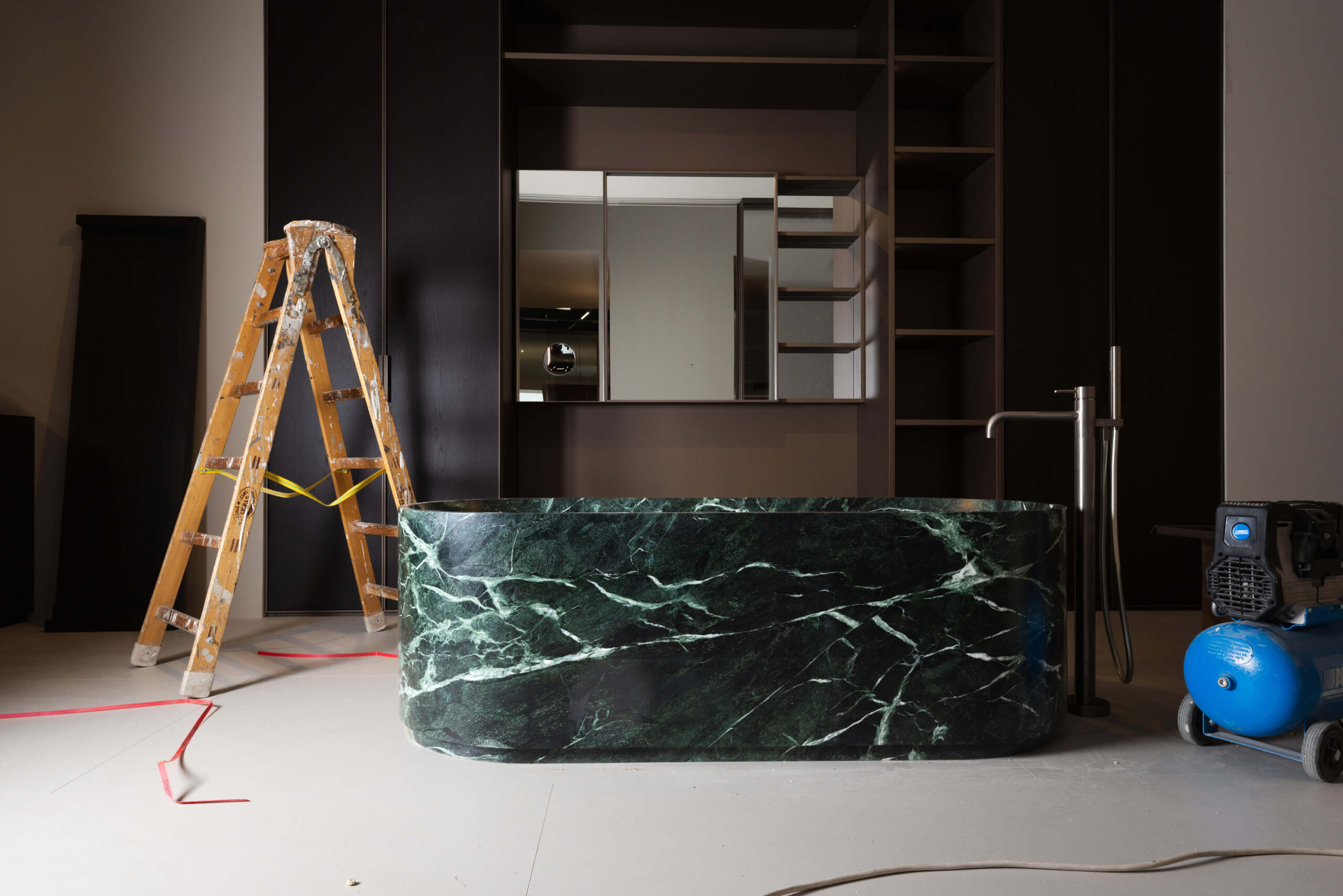
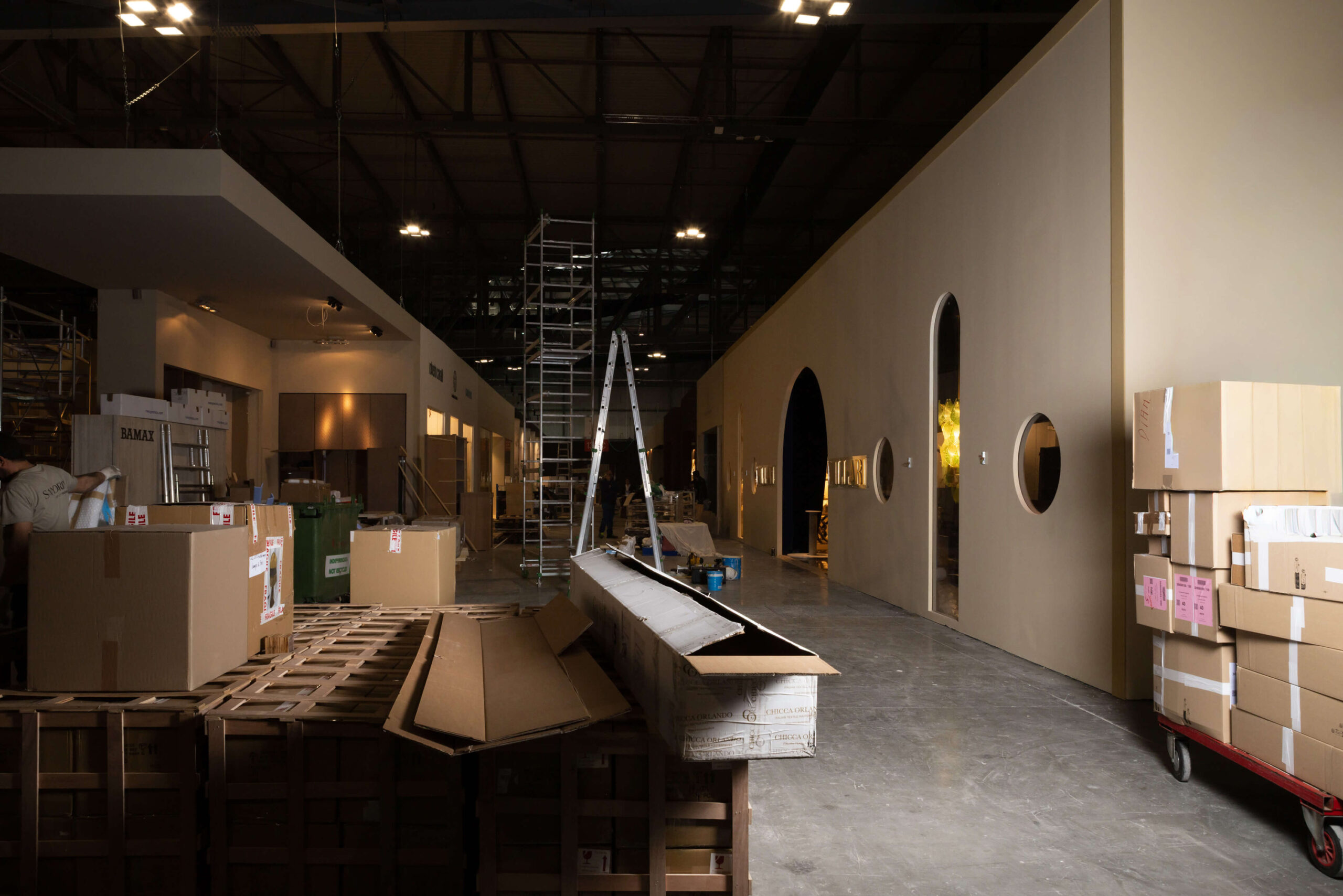
The day before Salone del Mobile opens in Milan does not look like design. The space at Rho feels unfinished and operational, more like a large logistical environment than a setting where aesthetics, trends and experience will soon be presented.
Structures are in place, but without their final layers. Materials are positioned, but not yet part of a coherent whole. People are working continuously, focused on deadlines rather than impression. What will soon appear as a clearly defined environment currently functions as a series of parallel processes without an obvious order.
More than 1,900 exhibitors from 32 countries are completing their installations at the same time, across over 169,000 square metres. At this stage, there is no single image of the event. There is only a process in which plans are adjusted in real time, and solutions emerge as responses to specific conditions, often under time pressure.
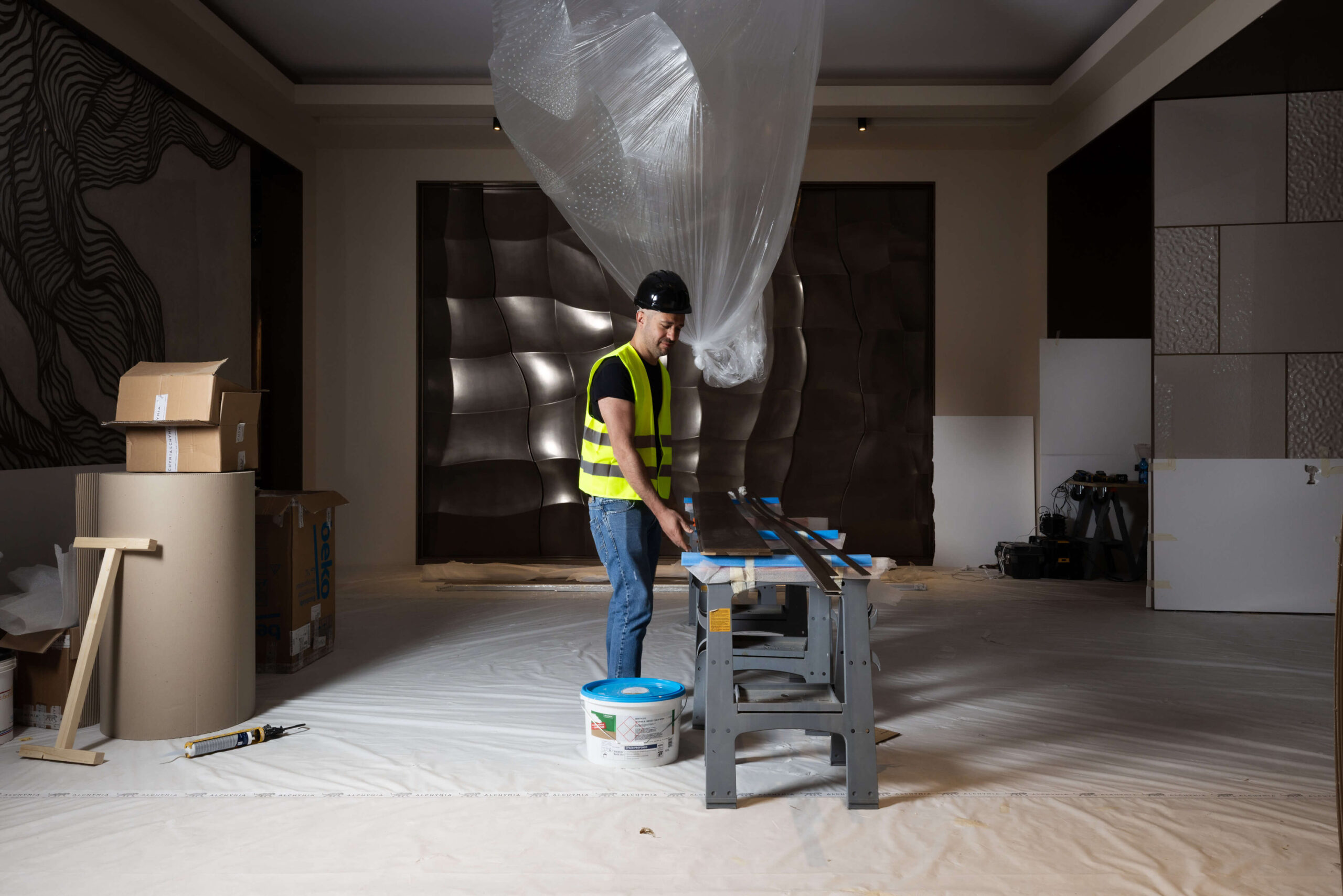
It is precisely in this phase that the logic of design becomes most visible. Not as a finished result, but as a sequence of decisions made in real time. What will later be presented as concept is, at this point, often simply the most efficient solution available.
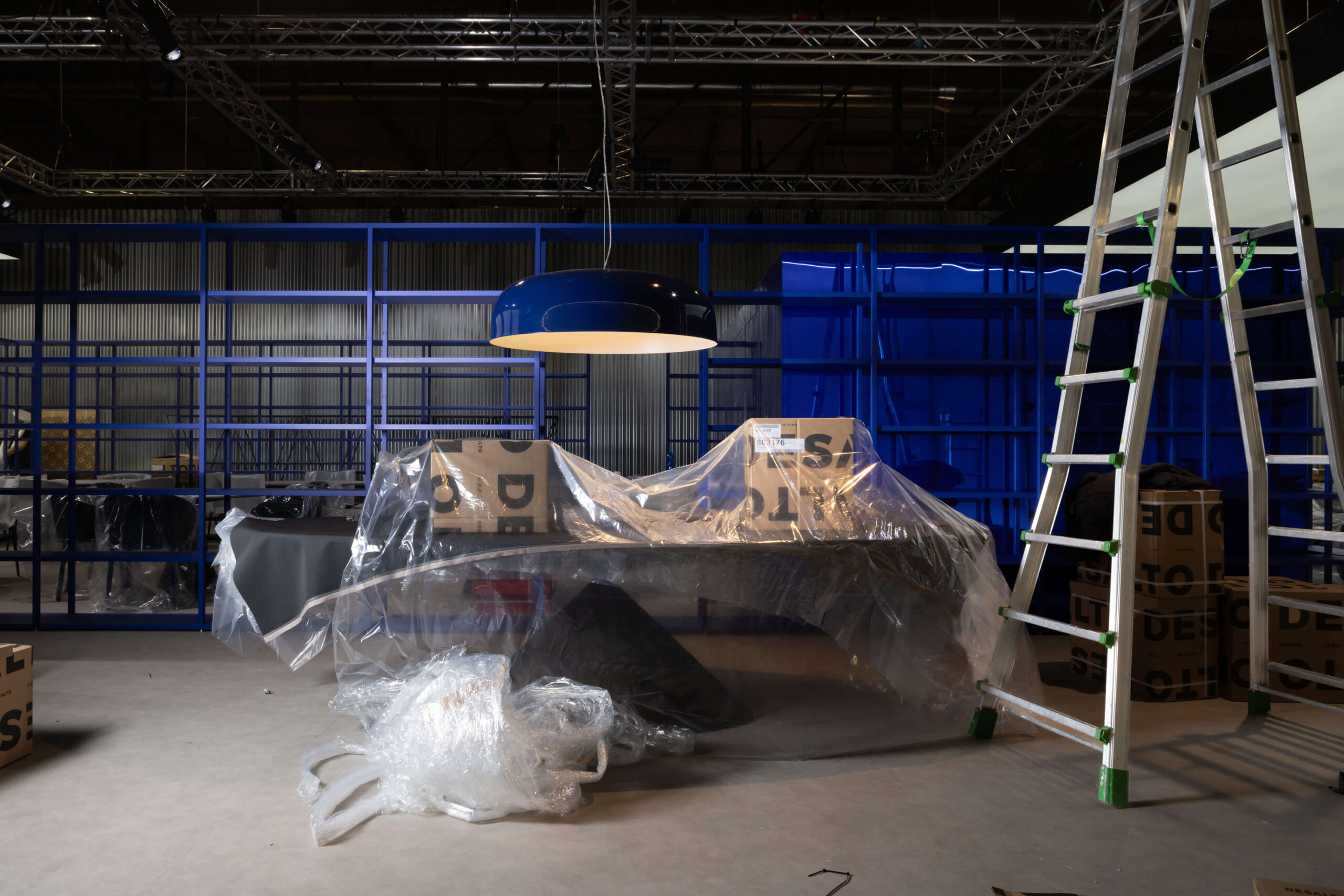
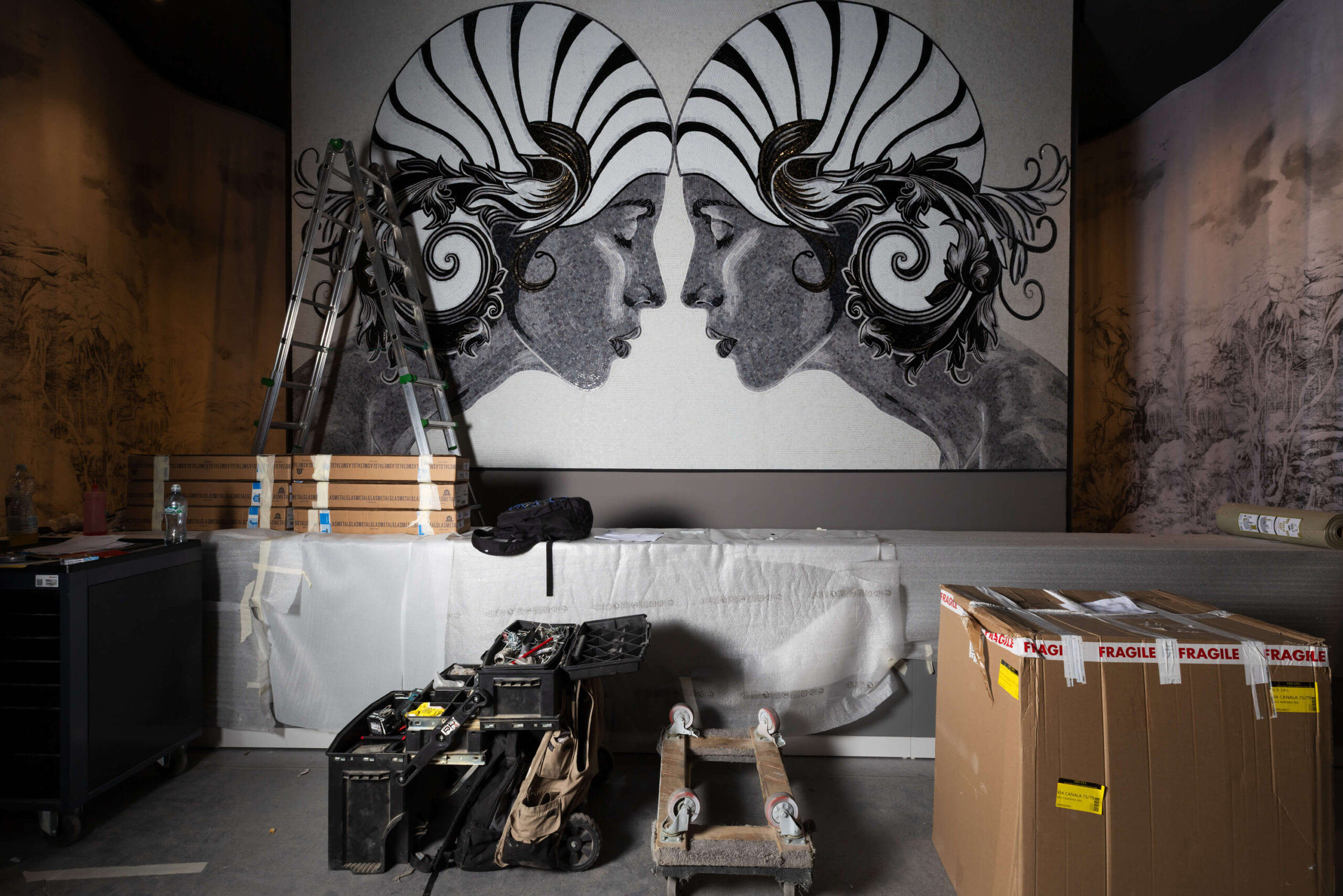
“Making of” is usually understood as an introduction to a final product. Here, it serves a different role. It is the only moment in which the space is not shaped for an audience, and where there is no need for narrative. The focus is entirely on execution.
Once the doors open, everything will appear coherent and complete. The space will have a clear structure, defined circulation and recognisable segments. This is the version that gets documented and communicated.
However, that version is the result of selection. It shows only the elements that support the final image, while the processes, adjustments and compromises that preceded it are removed from view.
For that reason, the phase before the opening is essential for understanding what is later presented. It reveals design as collective work, as organisation, and as a system of decisions that must align within limited time and space.
When a visitor enters, they encounter a finished environment. What remains unseen is the way in which that environment was produced.
It is precisely in that unseen part that design is most exact.

AI AND ROME!

I think there’s no harder question than the one people keep asking me: “What’s your favorite place?” I’ve never had an answer. As a master of deflecting conversations, I usually recall some travel anecdote and build a story where none was asked for. Sometimes I even ask myself: what place is it, really? And in which year did it even happen.
I mostly remember things like an elephant. (If I didn’t like elephants, I’d probably dispute that claim too.) And sometimes it feels like I haven’t even lived my own life. That depends on the mood. People who know me are familiar with that trait. But a place? A place was always someone – a friend, a brother, a sister, a passerby, accidental or intentional. They made the journeys. They were the favorite cities. The favorite theaters. The favorite restaurants. That’s exactly why Paris on a Wednesday can feel mediocre, while Zagreb on a Tuesday can be an excellent night out. (Any resemblance to real events is entirely intentional.
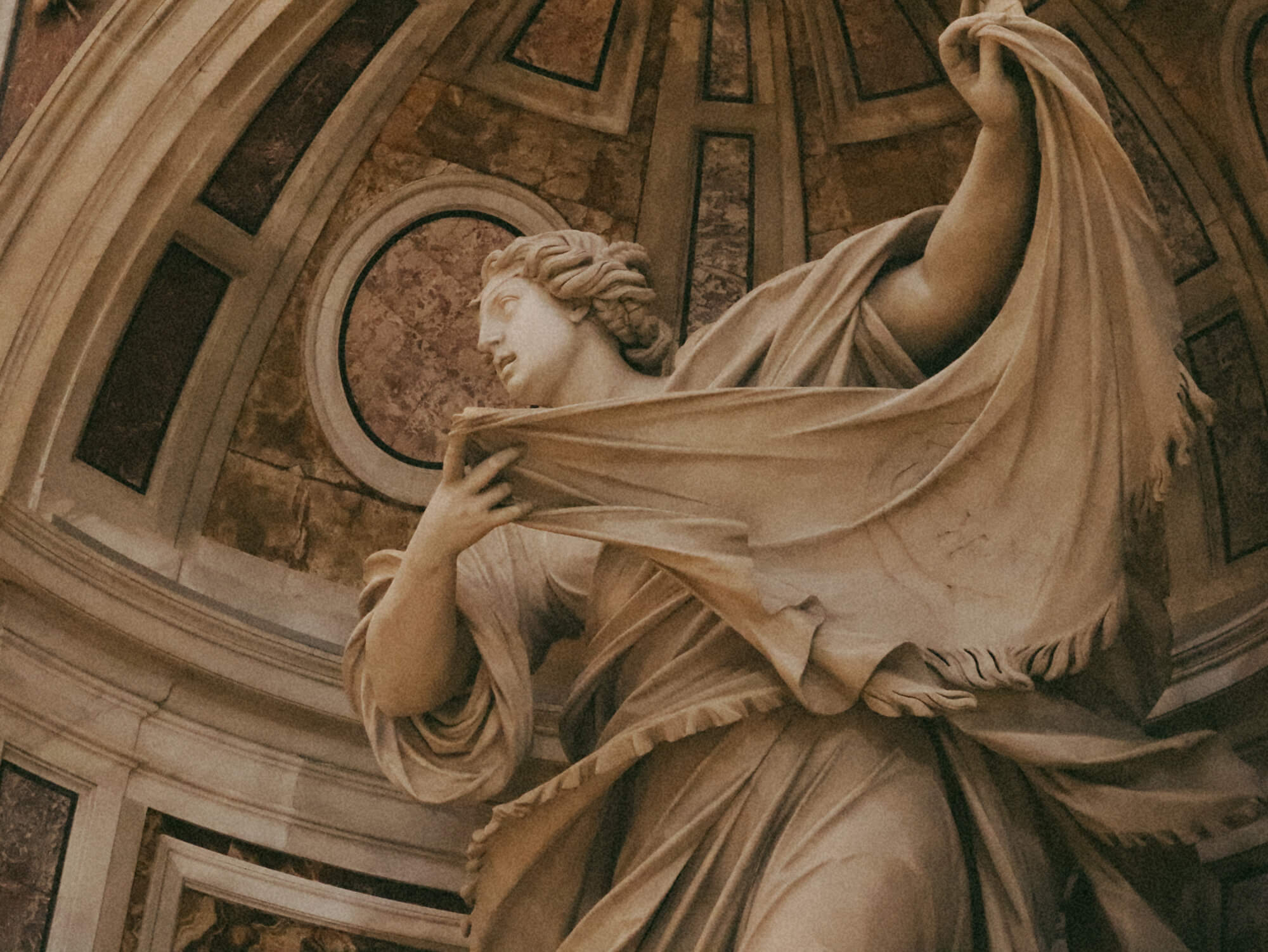
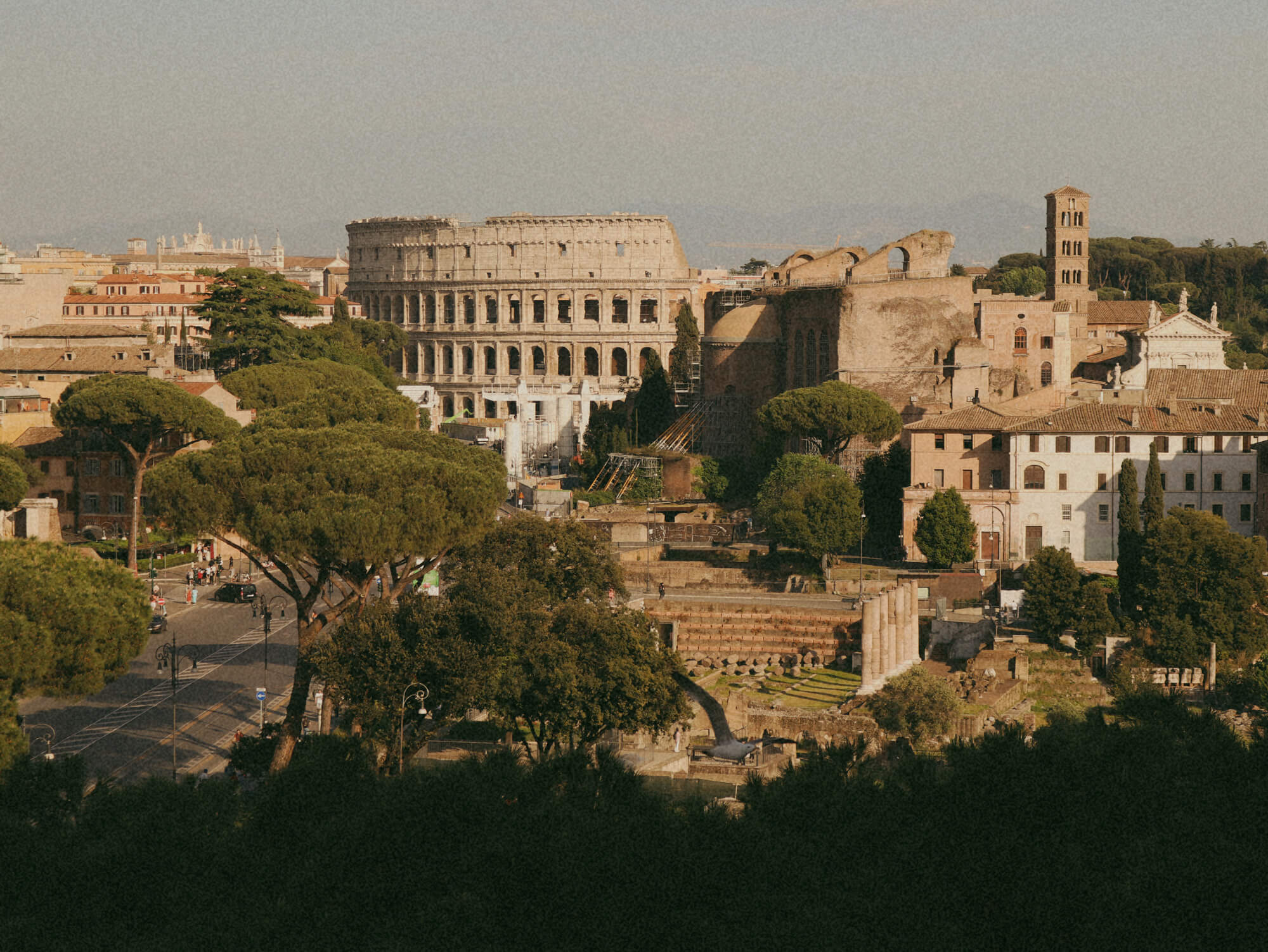
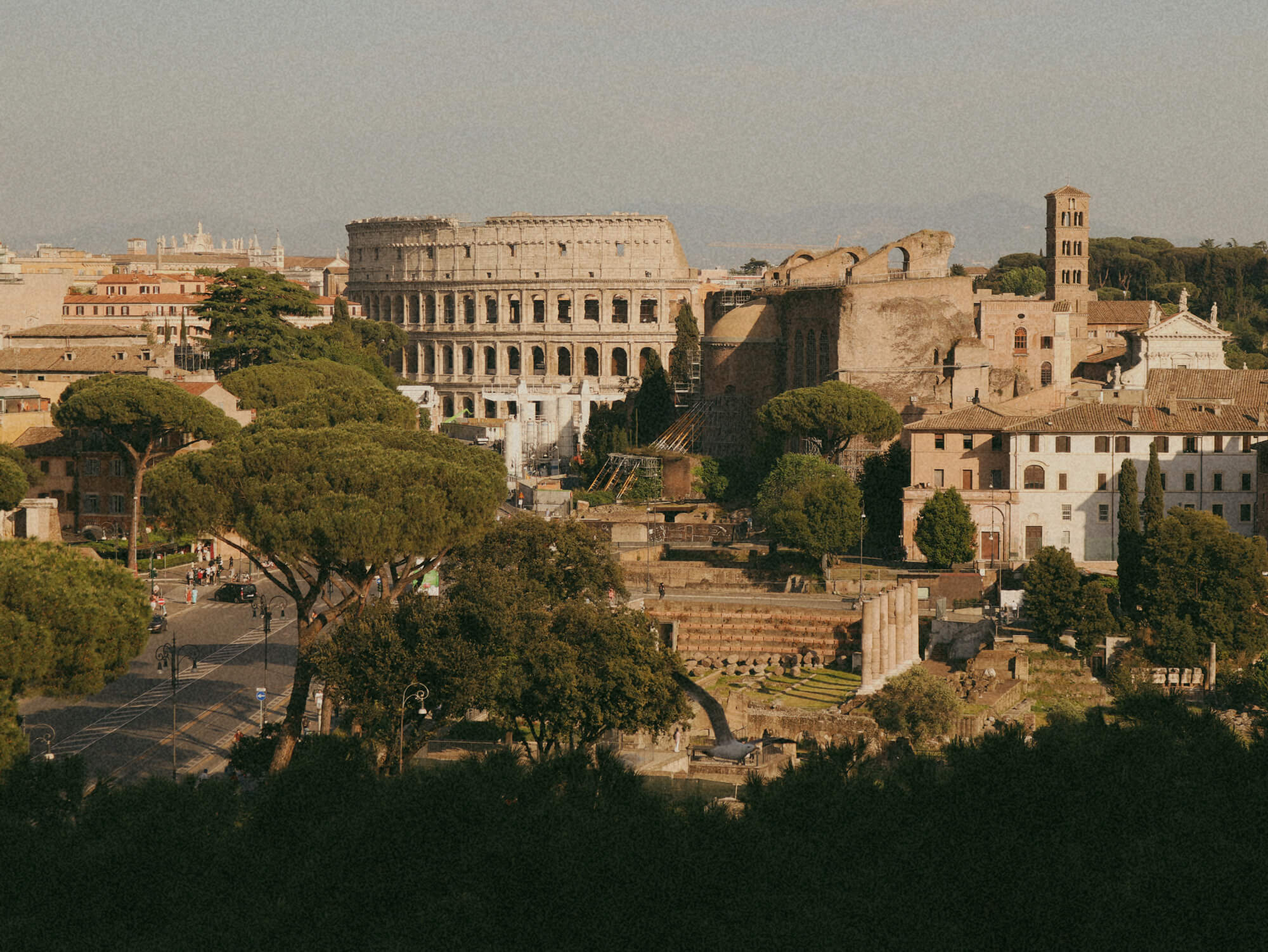
Over time, I learned that I always remember the companion first — and only then all those “Colosseums.” It took me a while to become aware of that. Maybe Rome itself would have been different without all those people. Or maybe I would have been different without Rome. Both are true. And neither exists without the other.
This is also the legend of Madame LaLuce. She knows she is Rome. And that’s simply how it is. Every espresso, every breath, every paving stone, every sleepless night — she’s in all of it. Rome is her. And I am always a little more myself when I’m with her in that city.
It’s quite late, and I like to linger at night. The city glows in the distance. I reassure myself there are still others awake. And there were…
Come posso aiutarti?
Me: Can you explain Rome to me?
ChatGPT: Rome is the capital of Italy, known for its rich history, architecture, art, and cuisine. Symbols of the city include the Colosseum, the Roman Forum, the Vatican, the Trevi Fountain…
Me: No. Don’t lead me into a brochure. Try explaining that feeling when you sit on the edge of a fountain and the water murmurs like a sentence someone never let you finish.
ChatGPT: Based on available sources, the feeling you’re describing can be associated with nostalgia, longing, melancholy…
Me: That’s not an emotion. That’s Rome.
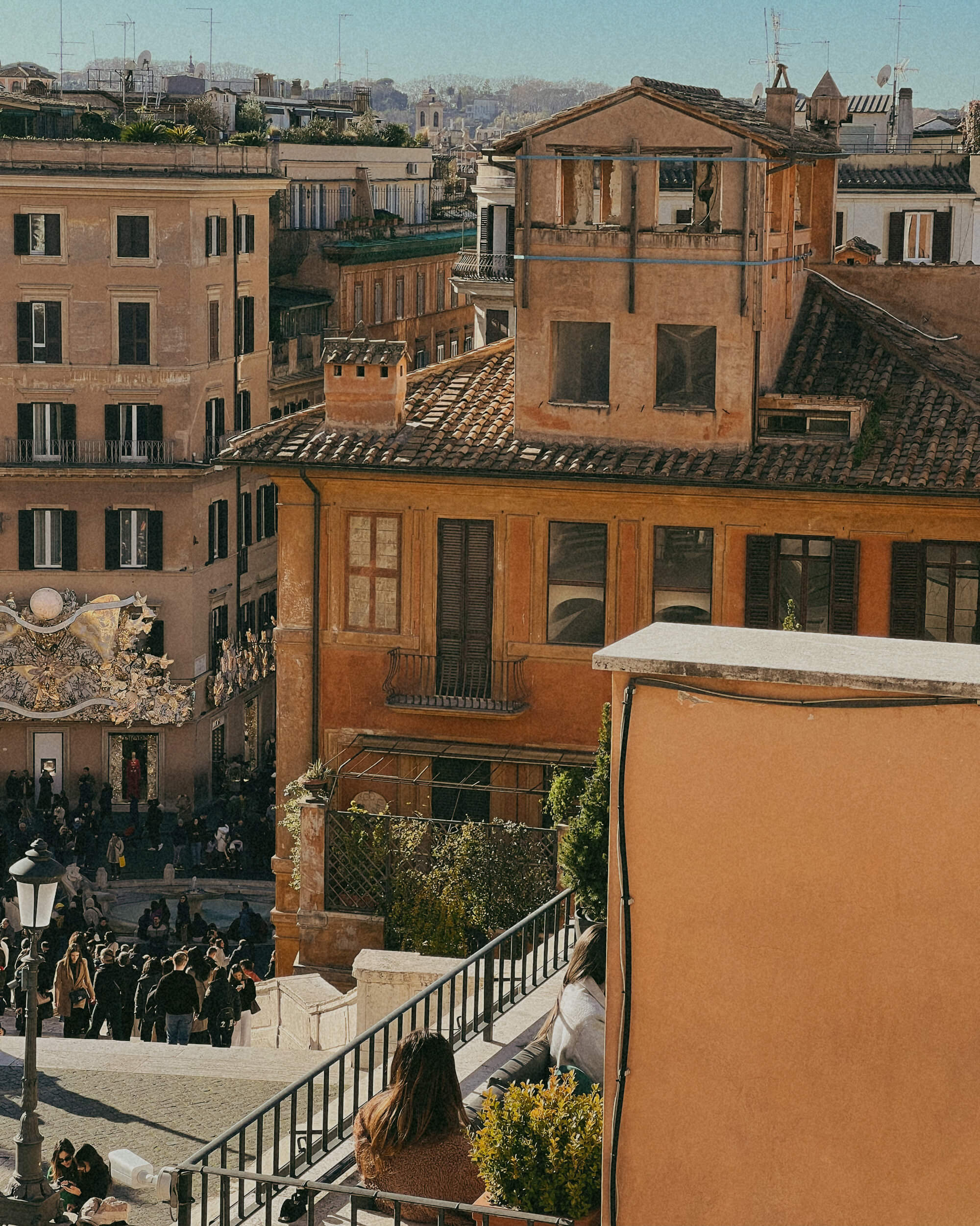
That’s the moment when you’re sitting on the Spanish Steps (back when it was still legal), and someone is silent at you with their eyes and you know that silence carries more meaning than any loud “Ciao bello!”
ChatGPT: Would you like me to create a personalized walking route in Rome based on your interests?
Me: I’m interested in a route to a place that no longer exists. To the bar we called Pace – now living only in the air. I’ve heard it reopened its strangely closed doors. I need to check that myself. What I really want to know is how to write down that moment when you can’t tell whether the smell of rain is coming from nearby pine trees pini di Roma or from fresh paint in an apartment where someone is restoring a vintage furniture collection.
ChatGPT: I’m sorry, I can’t locate all of those places. Would you like me to search for alternatives nearby?
Me: You don’t need to search for anything. Just stay here. And listen.
Chiedi qualsiasi cosa
ChatGPT: Alright. Take me through your Rome.
Me: First rule: forget plans. Rome laughs at them.
For example, I wanted to visit the Baths of Caracalla, a place not everyone puts on their list. There must be a reason for that. But instead, I ended up at Jane’s studio – JaneDoes. Wine was poured into mismatched glasses, music from someone’s childhood played in the background, we looked through projects and vintage décor collections, and talked about the City. Some things you can even take home in your carry-on luggage. (Did I bring something back? I did.)
ChatGPT: So, nothing classic then?
Me: Only if it’s on my terms.
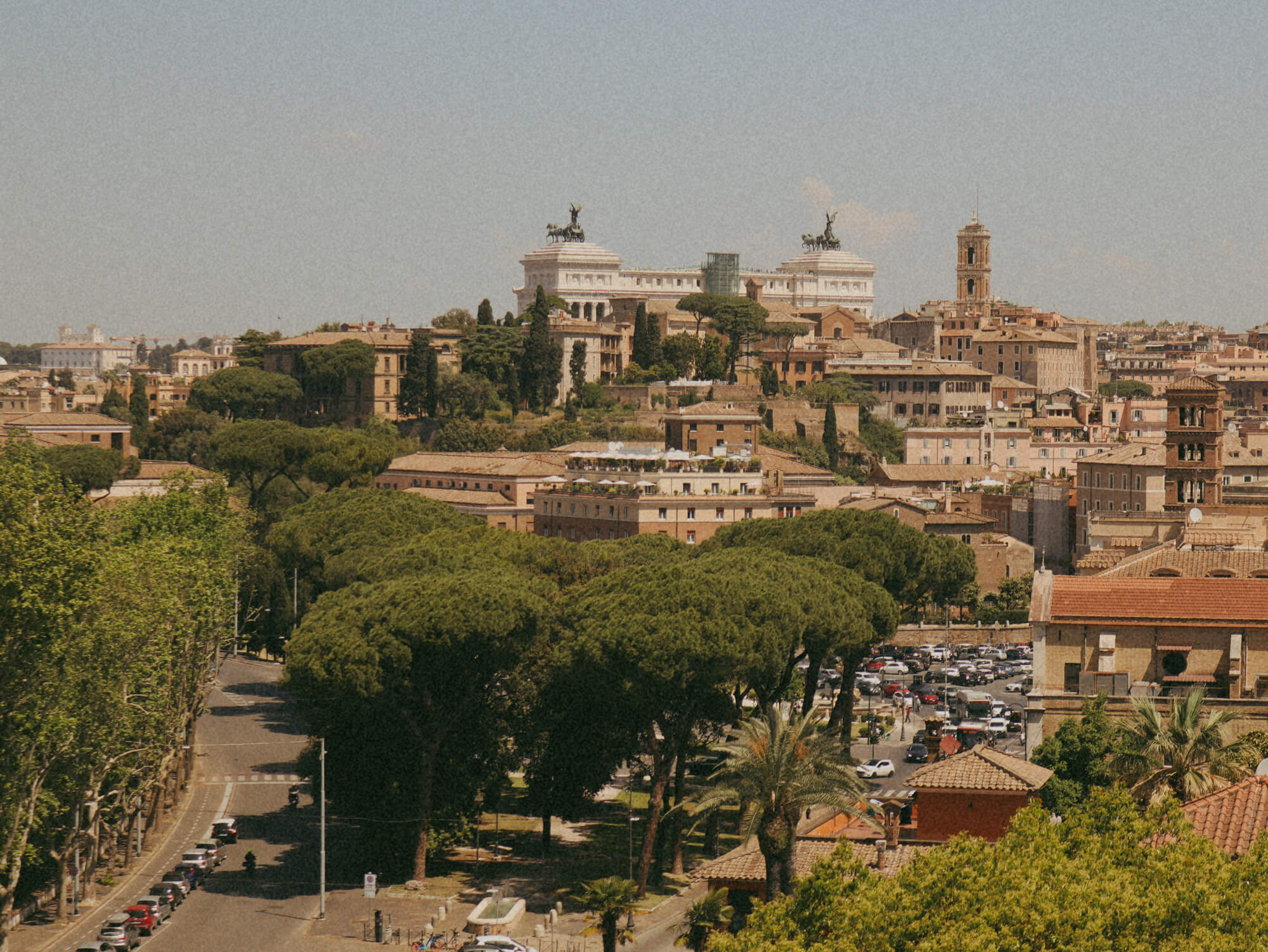
I went to the keyhole on the Aventine Hill. I waited my turn, it was around 28 degrees, a few people ahead of us. And then – that scenographic perfection: St. Peter’s Basilica, framed perfectly. Silence. That was the only “selfie” I took that day – for myself, not of myself. I don’t write guides. I write situations.
ChatGPT: Situations? Like… a mild fistfight on Piazza Navona?
Me: How do you know about that?! Piazza Navona used to be our film set – once even a ring. There was a night club in a narrow street behind it. A favorite at the time. I’m convinced all that charged energy has something to do with those two quarreling artists and their works – fountains clashing with the Church itself. In my life, art always imitates life.
And you know what? If Emily in Rome had existed, I would’ve written the script for them. A missed opportunity for me, and especially for them. That’s my short and sufficient review of that TV (non-)achievement.
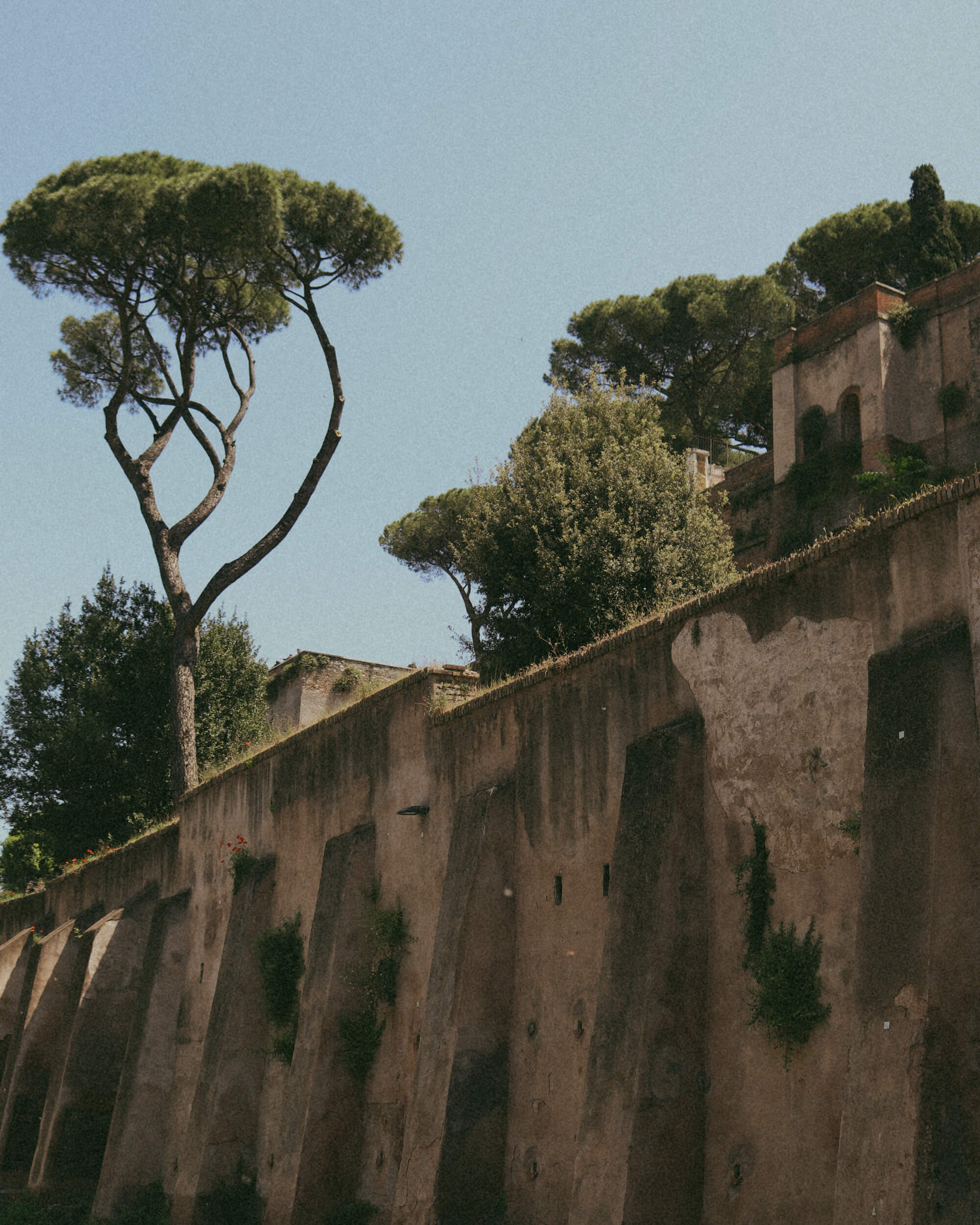
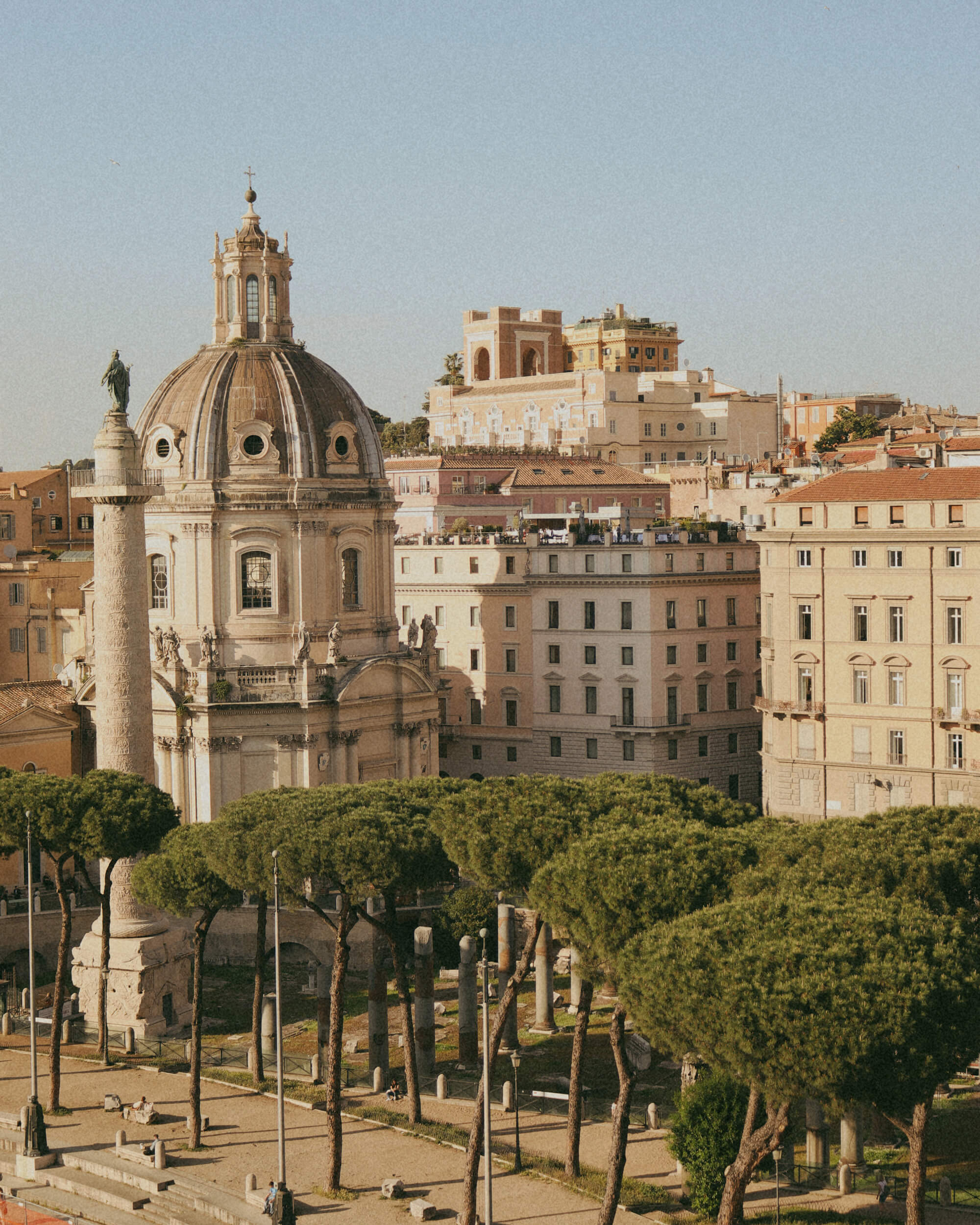
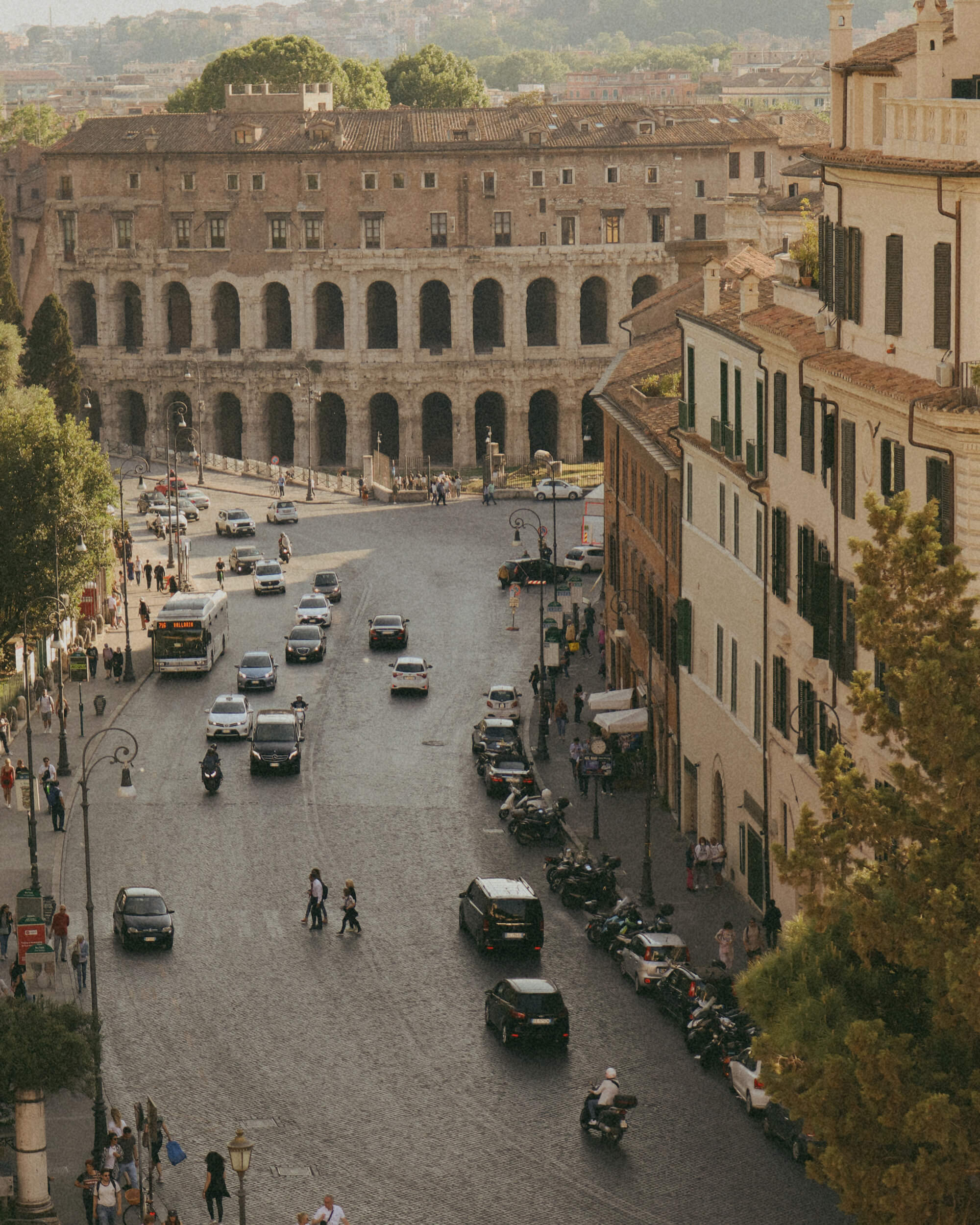
ChatGPT: And where would you stay?
Me: If I weren’t staying with friends, I’d choose The Monastero Collection Roma, near Circus Maximus. Once a monastery, overlooking the Palatine Hill, after which palaces are named, just so you know where you are. Here, your heart beats slower — but stronger. A courtyard where you can hear your thoughts moving. Walls that could literally speak, but never feel frightening. My favorite hotel moment? I make a Nespresso, sit by the window, and look at the palace. That’s how the nuns once did it when this place served them.
Next door, there’s a museum dedicated to culinary history, an essential layer of this city.
In Garum, I found a dinner recipe from 1732. I can’t wait to give it to Manda, so we can finally eat like Roman emperors. They also host a vintage festival here, vintage culture is incredibly strong in Rome, so good shopping is guaranteed.
(Chat pause)
I recall stepping outside the hotel gate with a glass of prosecco, pausing meaningfully, crossing Via dei Cerchi, and finally toasting the Great Circus.
What a feeling.
ChatGPT: After all that, you must get hungry. Where do you eat?
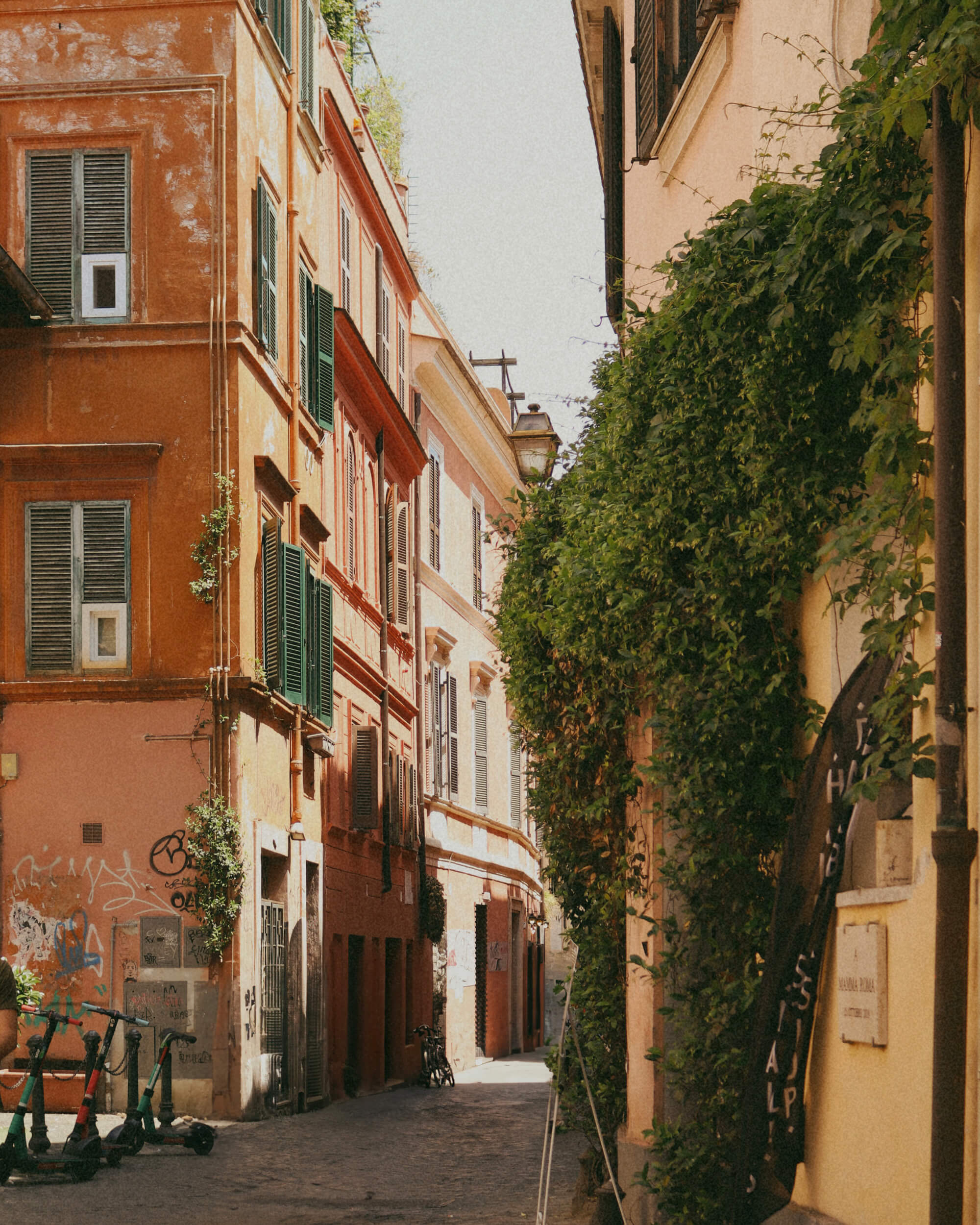
Me: Depends on the time of day. In the morning, I’d send you to Bar Farnese, to an old gentleman in his 80s who’s worked there since he was 18. I’m sure he’ll make you a perfect cappuccino, and a sweet Roman breakfast that fuels you until early lunch. Then you always – always – get lost in Trastevere and find a place without a tourist menu. They exist. Trust me. Just rub your eyes and your stomach, a little. Conceptually, you might start at Da Enzo al 29, end up with a Negroni at Freni e Frizioni, and finish with an (alcoholic) dessert at Teatro e Cioccolata. That loop, that’s where everything aligns for me.
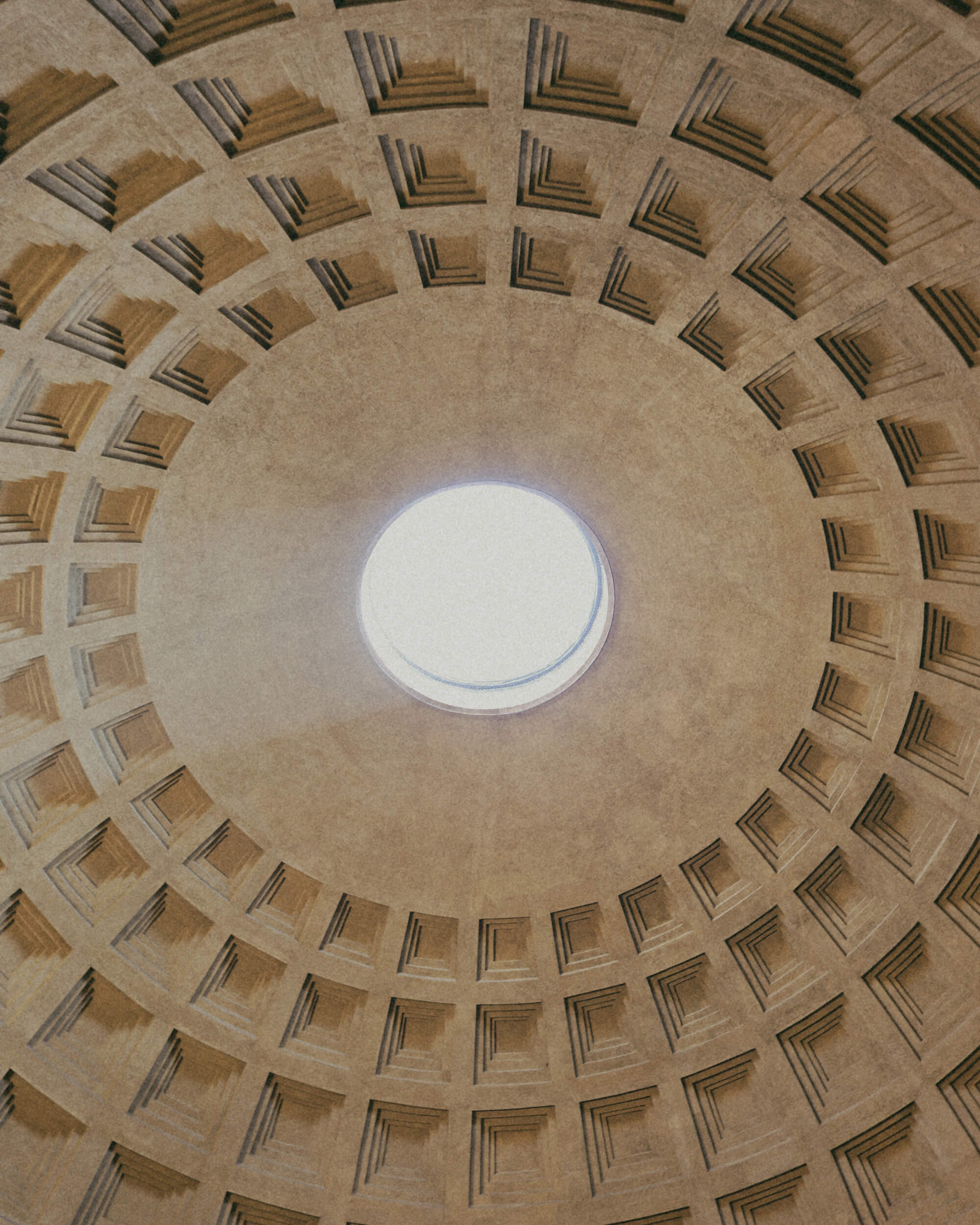
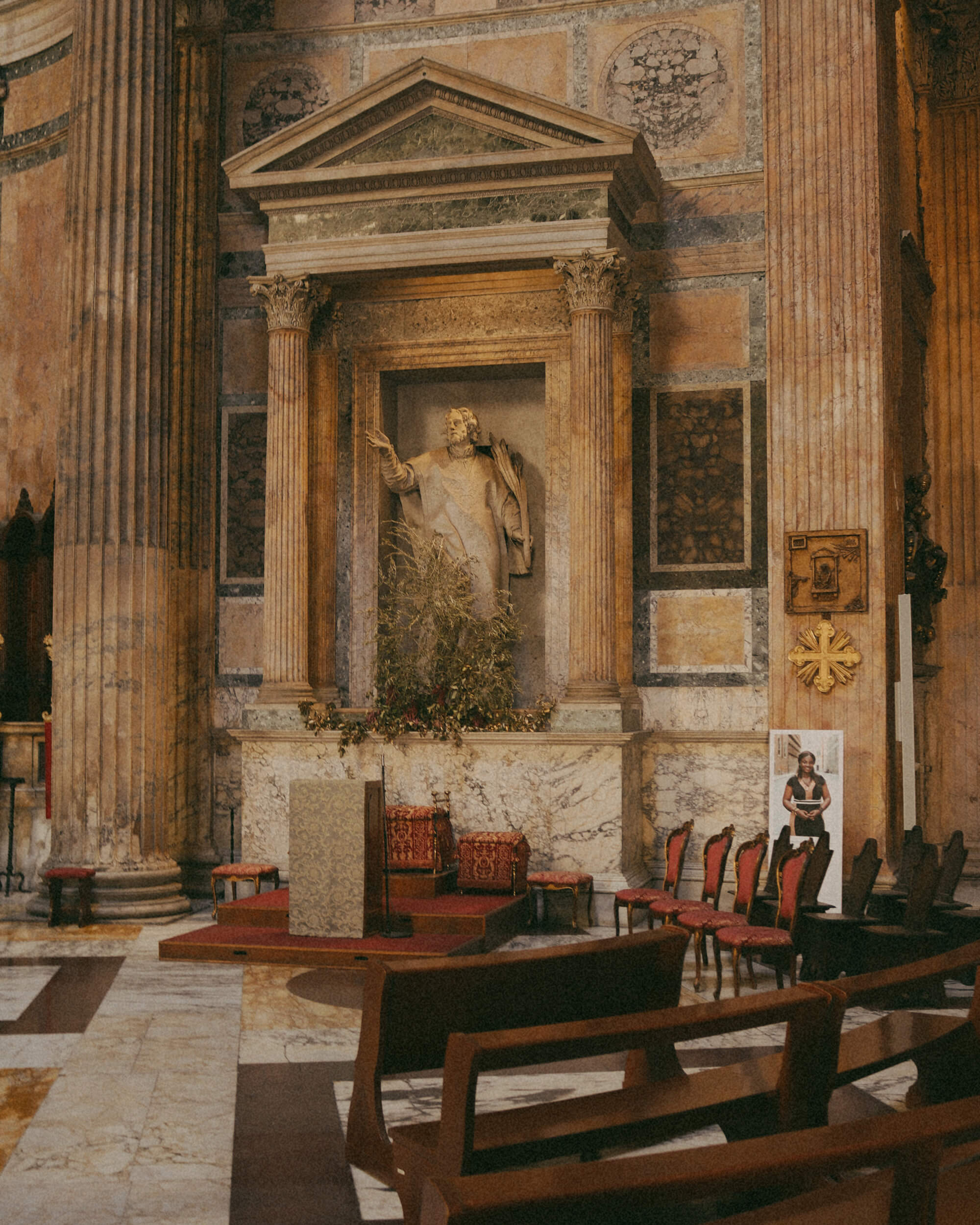
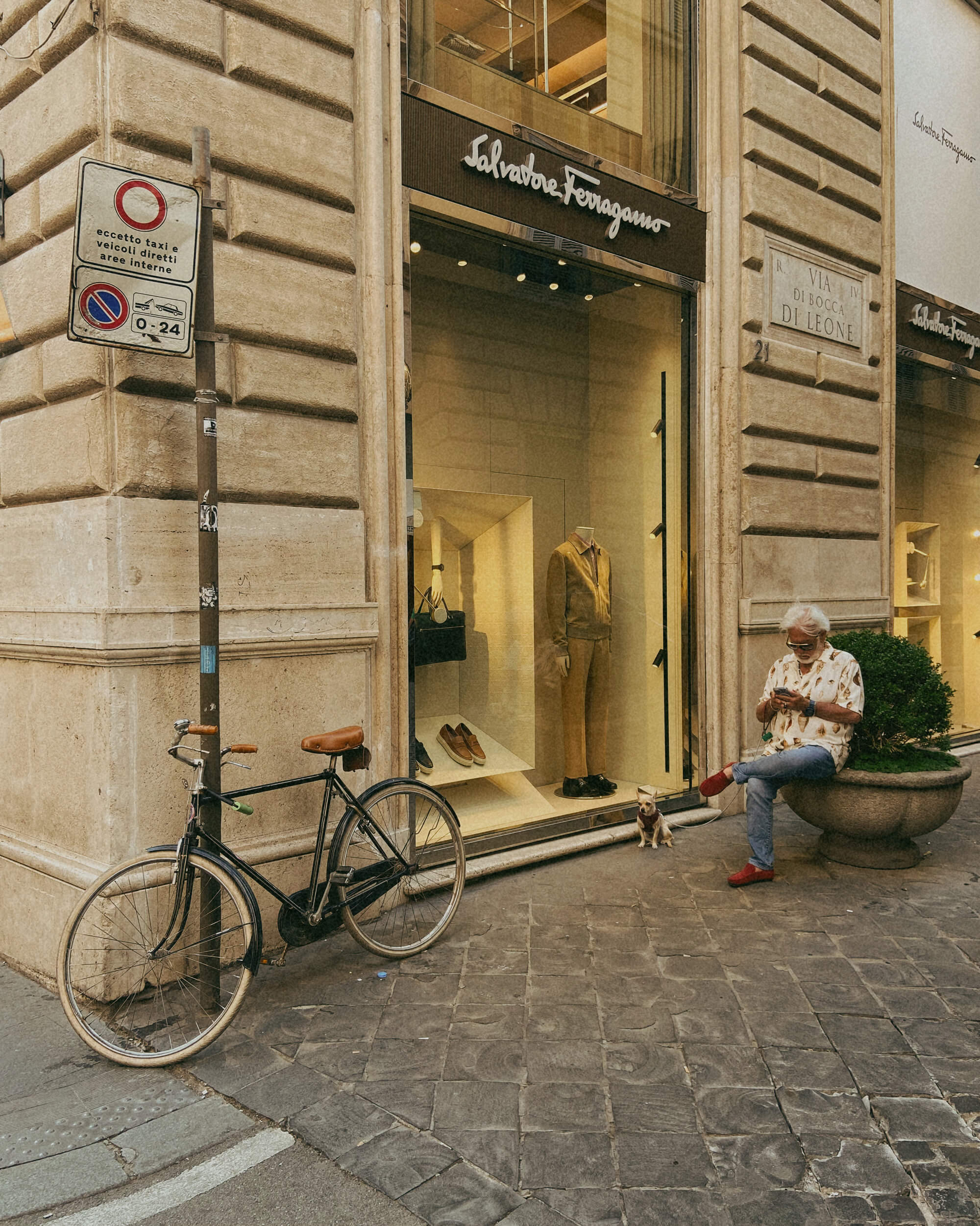
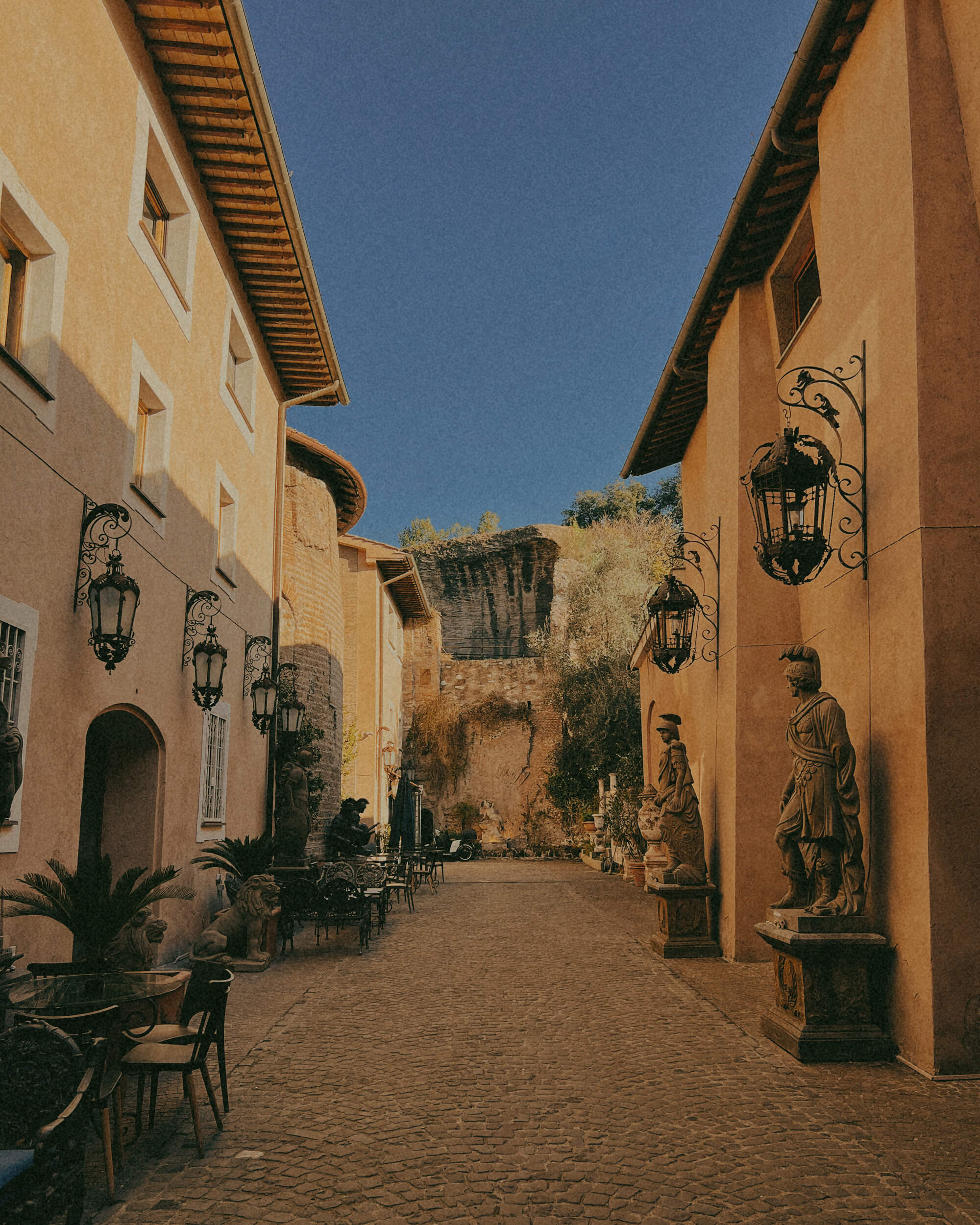

ChatGPT: The most beautiful view of Rome?
Me: La Grande Bellezza. Opening scene. The Gianicolo viewpoint. You look at Rome the way you look at your past lives. I have nothing to add. After that, you toast the moment at Bar San Calisto. Continue the experience. I used to drink half-liter Peronis there. Still do. Only now the bar owners probably live a bit better – and that’s fine.
ChatGPT: So, is Rome your favorite place?
Me: Yes. But not because of the Colosseum. Nor because of tiramisu.
Because of LaLuce.
Because of white smoke.
Because of those days when you’re searching for nothing and find everything.
Because Rome is like an old friend who always tells you the truth, without judgment.
Because it’s the only city where I know how to be silent without feeling alone.
ChatGPT: And when you think you’ve fully understood it?
Me: It changes language.
Or rhythm.
Or the corner you thought you’d already been to.
And then – you stop asking.
And let it speak forever.
(Chat pause)
I thought of the Pope. That departure…
I can’t explain it, but everything that truly brings me joy in life contains that moment of eternity (and yes, this realization cost me many therapy sessions).
We’re waiting for the white smoke.
A theatrical confirmation that the world is, after all, still turning.
My current white smoke is www.stefanmilos.com.
May the Holy Spirit of design descend upon everyone who clicks.
Amen.
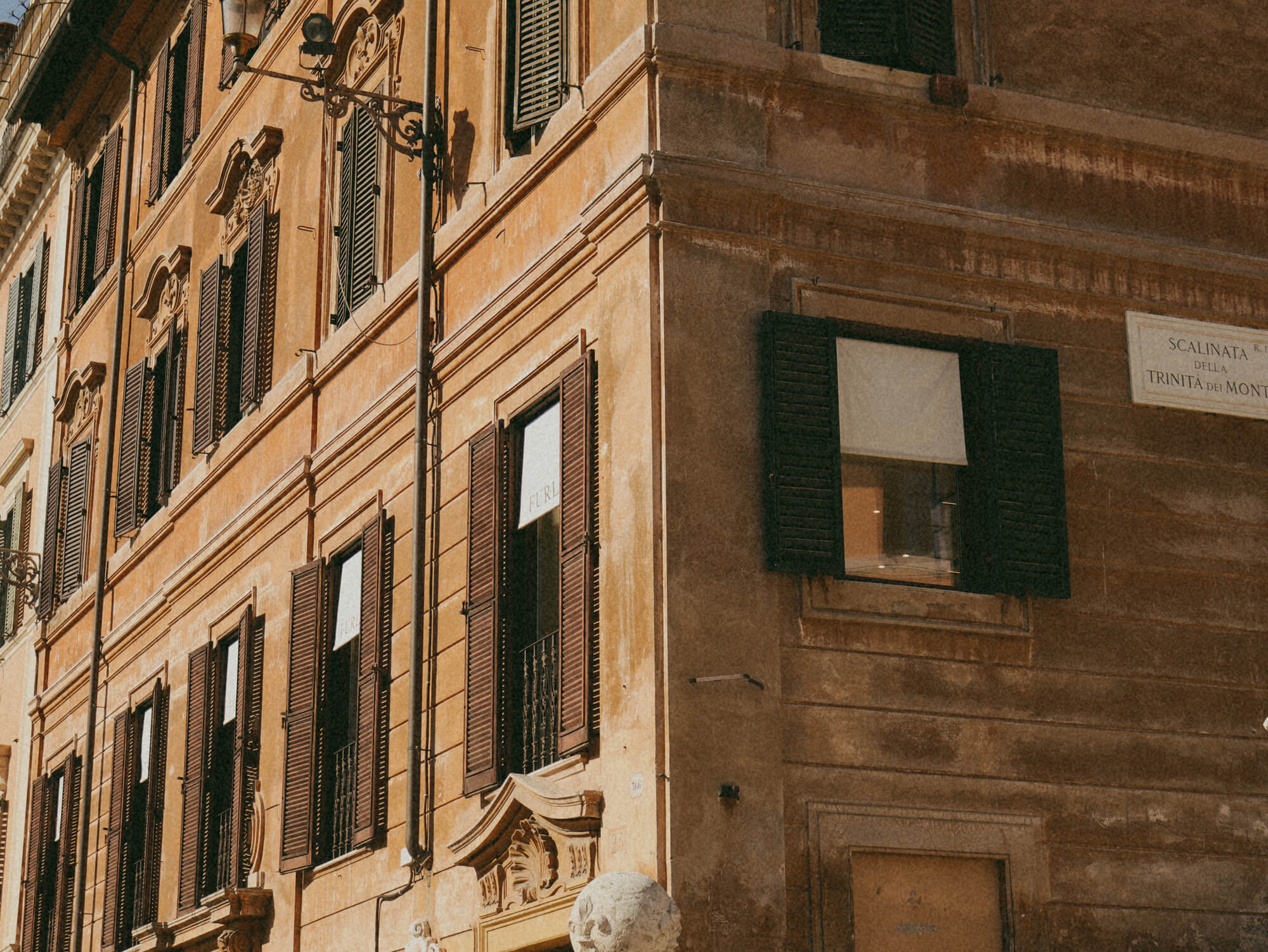

THE HANAMI EFFECT, OR HOW I DIDN’T GET LOST IN TRANSLATION
Spring That Hits All The Senses
You step into a Japanese city, and suddenly, your visual perception shifts: the world turns pink, petals float in the air, cling to the hair of passersby, drift across the river’s surface, dance through the streets. The wind carries them like confetti, and you walk through a scene that feels like it’s been filtered through the lens of a nostalgic dream.
Cherry blossoms don’t bloom slowly. They explode. They burst, flare, and vanish—leaving you with a fleeting sense of something untouchable, something that won’t last long but will stay with you forever. In that moment, there’s no rush, no noise, just the realization that you’re catching a moment you’ll miss for the rest of your life. Memento mori, if it were a person.


Tokio: A City In Sakura Trance
Tokyo isn’t a place where cherry blossoms are admired in silence. Tokyo is a typhoon! Maybe I’ll always associate it with that vibe because that’s how I first saw it—caught in a whirlwind of atmospheric chaos. The rain poured down like a monsoon, but Stefan and I didn’t stop. Keep walking! That’s when I finally understood the phrase, “There’s no bad weather, just bad clothing.
Luckily, we had the right clothes (and shoes), but even more than that, an insane drive to keep going. Transparent umbrellas became a way of life. The city was soaked and stunning. We were exhilarated. That was the day I fell in love with rain.
After rain, there’s always a rainbow. Here, it was Meguro River. I stumbled upon it by accident and had one of the most magical experiences of my trip. Here, cherry blossoms fall directly into the water, while skyscraper lights reflect between the petals. Walking along the river felt like stepping into a pink-tinted dream, as if someone had erased the boundary between reality and fantasy. That was the night I fell in love with unplanned destinations.
Is this really a hanami festival? Yes. People spread out blankets under the trees, pop open bottles of sake, and turn their small picnics into gatherings that last until sundown. My first real shock was in Ueno Park—everyone was there. Couples, families, elderly people sipping matcha (but without making a concept out of it) and gazing up at the pink canopy above them. The wind carried the scent of cherry blossoms and the warm breath of spring. It was crowded, but no one cared. That was the day I learned to love crowds
And then—Shinjuku Gyoen. More than a thousand cherry trees of different varieties, blooming in every shade of pink. Expansive lawns, quiet serenity. It felt like stepping out of Tokyo’s chaos and into a pocket of calm. People lounged on the grass, laughing, sharing food—nothing was rushed. Here, time didn’t exist. That was the moment I learned to love pink.
Sakura Spots In Tokyo
- Ueno Park – Total chaos and the best picnic vibe. Crowds, sake, laughter, and petals everywhere.
- Meguro River – Cherry blossoms falling into the water, Tokyo reflecting in them. A dream for slow walks.
- Shinjuku Gyoen – Escape from the madness into sprawling lawns and a serene, fairytale-like atmosphere.
- Chidorigafuchi – Romantic scene with rowboats under cherry trees. Feels like a movie.
- Yoyogi Park – The most laid-back hanami – like a giant urban picnic full of laughter and good energy.


Traveling Between World: A Train As A Time Machine
You’re sitting in a Shinkansen, the bullet train gliding through the landscape as if defying friction. Outside, cherry blossoms flicker past the window in soft pink blurs—like a GIF stuck on three frames. In Tokyo, there was rain; in Kyoto, perfect zen awaits. But here—somewhere between worlds—there is only the rhythmic pulse of the train and the feeling of being somewhere, yet nowhere at the same time.
At one point, we pass a small, forgotten station. No tourists, just an elderly Japanese man in a coat, calmly waiting for a train of his own.
My friend from the train told me about her mother. How she had passed on to another world. I thought of my father. And of that old man we had just sped past at 300 km/h. He was gazing into the distance, maybe toward the future, maybe toward the past.
We both fell silent, lost in thought… and then—Kyoto Station.As if we had skipped a part of the story.
A teleport in the real world?


Kyoto: Cherry Blossoms As A Window To The Past
Kyoto isn’t Tokyo. Time moves differently here. I wander through the old Gion district, passing by traditional wooden houses, and suddenly, I see a group of women in kimonos walking beneath cherry blossom trees. I can’t tell if I’m looking at the present or some distant memory from centuries ago.
The Golden Pavilion is already in perfect harmony with its surroundings, but when the cherry blossoms reflect on the lake’s surface, the scene feels surreal. It looks like a carefully composed image from a Japanese ukiyo-e print.
And Arashiyama? It’s not just a bamboo forest. It’s a place where cherry blossoms grow between the slender bamboo trunks, blending into a vision of nature’s perfect balance. I walk through the quiet, the sounds muffled, the scents crisp, and the light filtering through the branches as if passing through a magical veil.
Sakura Spots In Kyoto
- Gion – Vintage Japan vibe, cherry blossoms and kimonos at every corner.
- Golden Pavilion (Kinkaku-ji) – Iconic zen scene with blossoms reflecting in the water.
- Arashiyama Bamboo Forest – Cherry blossoms + bamboo = pure nature magic.
- Maruyama Park – The ultimate Kyoto hanami spot, steeped in old-world charm.
- Heian Shrine Garden – Perfectly manicured gardens, an oasis of peace in the city.


Osaka: Hanami In Neon Lights
Osaka is a completely different story. Here, hanami isn’t just in the parks. Here, it’s woven into the city’s rhythm, tangled with the energy of a place that never really sleeps. Osaka Castle Park is the classic spot for hanami, but the real magic happens in Dotonbori.
At night, cherry blossoms glow under the reflections of neon signs, while people sip cocktails in colors that blend perfectly with the petals above them. Osaka doesn’t celebrate hanami in silence—here, you drink, eat, dance, and feel like you’ve stepped into a Japanese film where everything is too intense to be real. And that’s the whole point.
Sakura Spots In Osaka
- Osaka Castle Park – A classic hanami postcard moment, with the castle in the background.
- Kema Sakuranomiya Park – Relaxed atmosphere along the river, packed with locals.
- Dotonbori – Neon, cherry blossoms, chaos, and cocktails in sakura shades. Osaka at its peak.
- Tsurumi Ryokuchi Park – A lesser-known but stunning garden for those who want a quieter hanami.


Hanami: A Moment You Can’t Keep
You only understand the true value of hanami once it’s over. When the petals fall, when the rain washes the streets clean, when Tokyo returns to its concrete tones, when Kyoto becomes just an ancient city again, when Osaka stops glowing in pink.
But something remains. That feeling of walking through a whirl of petals, hearing the laughter of strangers beneath the trees, inhaling the scent of cherry blossoms mixing with the evening air. You can’t take it with you, but it stays in you forever.
Everything flows, every journey is life in miniature. It starts out planned, but always unexpected. It can be chaotic, and sometimes full of rain. Then, you find your pink-tinted glasses, and the sun shines again. After that, there’s the breakup (with the destination), the goodbye (to the destination), and the end (of the magic).
If this is what life after the … end feels like, I’m okay with it.
That’s the souvenir I brought back from Japan.
Am I now officially recognized as an ikigai life coach?


HOW TO SURVIVE INDIA (AND WHY IT WILL CHANGE YOUR LIFE)

How You End Up In A Country You Never Planned To Visit
How do you end up packing your bags for a destination none of your friends have ever been to? If you’re like Stefan and me, the answer is: without planning. To be clear, this doesn’t mean the trip itself wasn’t (very) carefully planned—it just means the decision to go happened spontaneously, unexpectedly, like one of those ideas that pop into your head, and instead of dismissing it, you let it grow.
I was casually texting with some friends we often travel with, and as we were listing places none of the four of us had ever been to—which, trust me, is harder than it sounds—I pulled out a wild card I had been keeping in my back pocket for years: India.
I had always wanted to see it up close. Even though it was completely different from anything familiar, India attracted me for several reasons: first, its aesthetic—one that I doubt could leave anyone indifferent. Then, the endless stream of dreamy imagery from books and films, always filtered through the eyes of Westerners like Kipling and Bertolucci, whose visions I wanted to compare with my own—because capturing a mind like theirs isn’t easy. And finally, the ultimate element: uncertainty. The unknown. That part of the world that had never been part of my firsthand experience, only a myth.
"I Have No Idea Why I Signed Up For This"
Stefan, at that moment, wasn’t exactly thrilled about the trip—and that’s an understatement. Our friends, who had been listening to his doubts for months between the day we booked the trip as a group and the day we actually left, can confirm that he kept saying: “I have no idea why I needed this in my life.”
Architecture: A Mughal Fairytale In Spice Colors
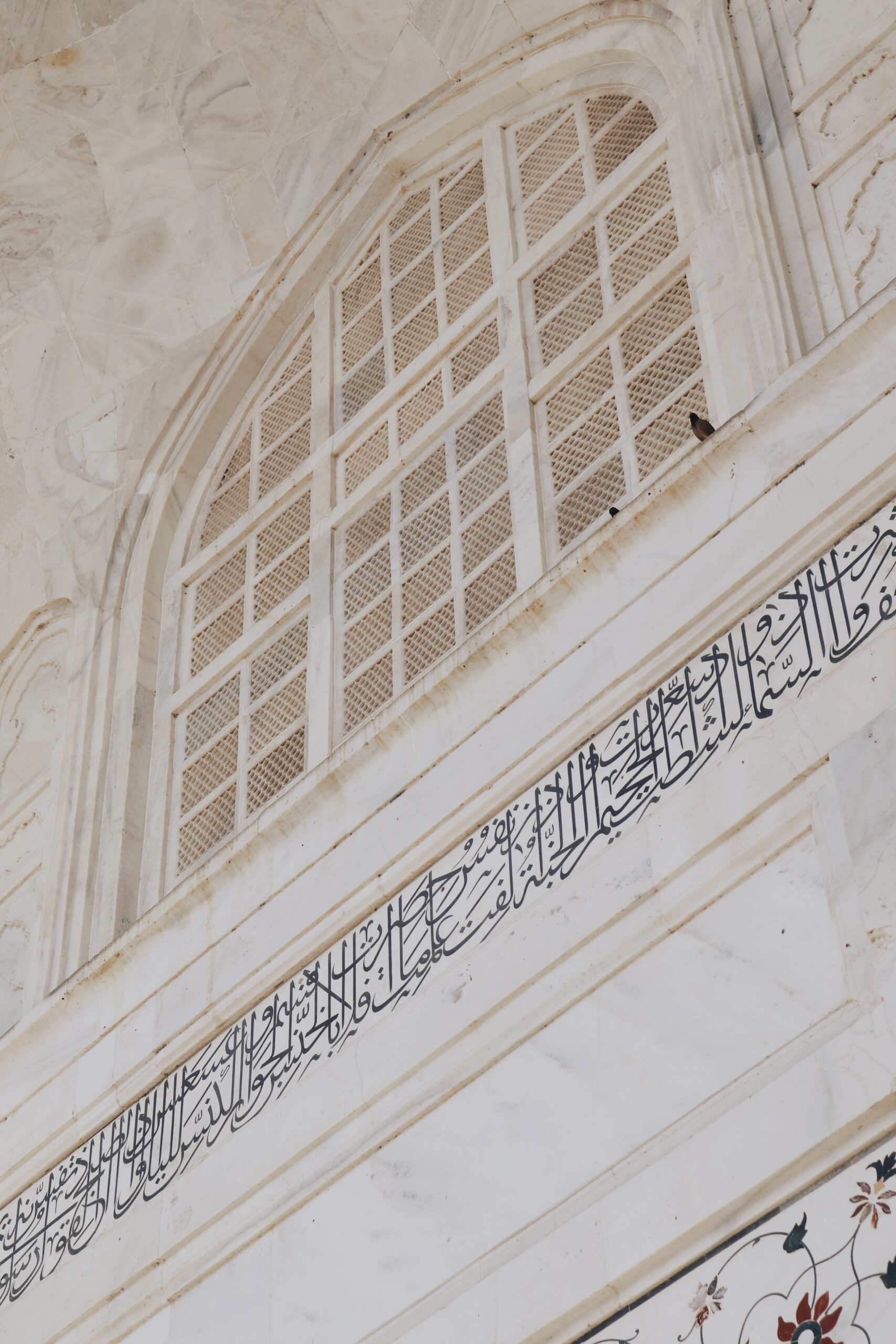
The first thing that surprised us—mainly due to our lack of prior knowledge of Indian history and its art—was just how present Islamic architectural elements are. This particularly struck Stefan, who, as an architect, was mesmerized by the absolute refinement of the ornamentation, the endless subtle variations of patterns, the lines, and the spatial dynamics.
Of course, ten days is nowhere near enough to become an expert—we barely scratched the surface of what this endlessly fascinating country has to offer. Most of the buildings we saw date back to the 12th–17th centuries, from the Mughal era. Still, it was more than enough to open our eyes to an entirely new world and just how different it is from what we in Europe and the West associate with those centuries.
We explored the famous Golden Triangle: Delhi, Jaipur in Rajasthan, and Agra in Uttar Pradesh.
Red sandstone is everywhere, quite literally making India a pink-hued land, along with marble. Airy spaces and water elements were another common feature in all the buildings we visited. Every space had either a fountain or a pool, adding a sensory dimension—both visually and acoustically.


Debunking Myths: Chaos, Cows And Netflix Filters
Yes, monkeys and cows roam freely. Yes, the crowds are overwhelming, as are the countless sounds. Yes, the streets do sometimes look like a movie set. But India is so much more than the preconceptions we carry before stepping foot on its soil.
For starters, there is no such thing as “one India,” not formally and certainly not experientially. It’s a collection of 28 independent states and 8 territories, each with its own identity—even different languages. Although we only visited a tiny fraction of it and are well aware that things vary greatly from region to region, we felt safe everywhere.
And something else followed us everywhere—the scents. Riding through narrow city streets in rickshaws, we passed by shops and market stalls overflowing with the aroma of incense, jasmine, and all kinds of fragrant spices. Everything was incredibly clean, and flowers were omnipresent. Indians weave bright yellow, orange, and pink flower garlands as offerings to the gods.


People: The Biggest Plot Twist Of The Entire Trip
You might be surprised—just as we were—to learn that India doesn’t have that many foreign tourists. Or rather, it doesn’t have the massive hordes of international tourists you see elsewhere. Most of the people traveling in India are Indians themselves, and everything is designed to cater to them. We were often stopped by locals on the street who wanted to take pictures with us—because many of them had never seen Westerners in real life.
This is one of the main reasons why I wouldn’t recommend visiting India on your own. While Indians are incredibly friendly and welcoming, having someone who knows the terrain, the people, and how things work makes all the difference, and yet, beyond the stunning architecture, the colors, the flavors, and the aromatic streets, the people left the deepest impression on us. One moment, in particular, changed everything.
Visiting a rural school was not on our original itinerary, but it turned out to be the most unforgettable experience of the trip.
Tucked away in winding village streets, a small, single-story house with just three classrooms—only one of which had desks and chairs, while the other two had children sitting on the floor—served as a school for about fifty students. In India, primary school is not legally mandatory; it is a privilege.
The children we met, dressed in crisp pink shirts that made up their uniform, welcomed us with a warmth and joy so pure that it’s hard to describe. The surge of emotions we felt is difficult to put into words without sounding overly sentimental. It’s something that has to be experienced rather than explained.
India is its people. After everything, they are what leaves you speechless—the way they treat each other and the way they treat strangers. Their generosity, openness, and spontaneity, combined with their sharp intelligence, make this country truly one of a kind.


WHAT DO PROVENCE, WINE, AND ADELE “ON TAP” HAVE IN COMMON?
A friend recently sent me a WhatsApp postcard from America—a photo of a café entrance called French Press. It instantly took me back to a (long-gone) time when I bought that very contraption on a trip, back when such things weren’t available in my country, nor were low-cost flights. Today, everything is within reach. I’ve long replaced my press with a noisy machine, but budget-friendly flights? I’d never trade those. What I would change are mainstream experiences, which have started to bore me. Like those overcrowded Adele concerts, where people pay for something they’ve already seen—a perfectly engineered thrill. It’s like shopping on Temu: you never really know if you needed that gadget or just threw your money away on impulse.
While everyone was chasing mega-events and ticking off their “must-do” lists, I decided to look for something off the radar, in a place everyone thinks they already know. France and Provence naturally emerged as the perfect choice.
When I set my mind on something, I have to make it happen. For this birthday, I wanted to embrace a slower, more effortless way of life—so off I went to the Alpes-Maritimes region. I’ll admit, it took me a few days to even memorize the name of the village I was heading to, despite speaking French. As my Instagram feed kept flooding with clips from that famous Adele concert on tap—an endless loop with no real beginning or end—I realized that my only real response to all that was exactly what I had planned for myself.
When Landscapes Become Therapy
As our Uber drove towards the village of La Colle-sur-Loup, a thought crept in: Do real experiences still matter to us, or have we completely surrendered to the illusions fed to us by algorithms and marketing?
And then, as if someone had pulled me out of that mental spiral, the landscape began to change. In an instant, I was transported to the P-dimension (read: Provence). Greenery, pine trees, the scent of nature—like someone had sent me on a detox from modern life. To be honest, I also felt a moment of pure joy when I realized I was still my own sugar daddy (because, hey, the years are rolling in!).
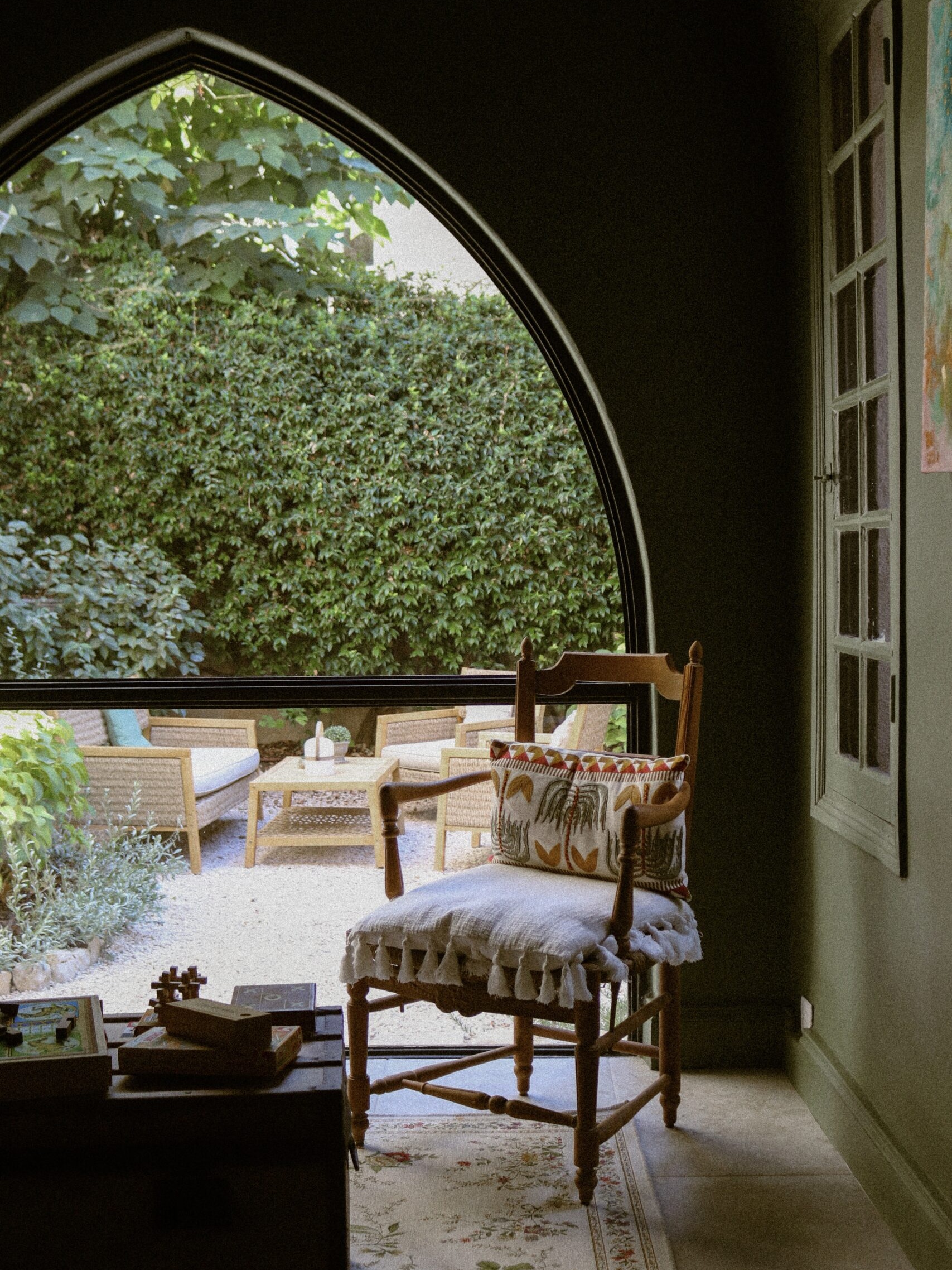
My Booking.com find was now a reality: we were heading towards the village’s largest building, a former abbey. Compared to everything else I had seen before, this was a visual explosion. An imposing structure, a historical aura, and a medieval vibe made me feel like I had found my own little place under the sun. With a touch of ancient elegance and serene beauty, it was the perfect escape from the city. Looks like I’ve found my new rhythm.
A Return To Simplicity
At the entrance, I asked, “Do you need our passports?” Our host, Elodie, smiled, waved her hand dismissively, and said, “Oh, non!” And just like that, the formalities disappeared, and I slipped into pure zen mode.
This hotel, once known as Priory Canadel when it was still an abbey, traces its roots back to the 12th century. It was once home to monks from the Lérins Islands, later serving as a resting place for bishops on their church tours across the region. Now, it was my resting place. Perhaps now it makes more sense why my Instagram handle is Sveti Putnik.
The façade and details weren’t excessively polished during restoration; they retained their original charm and authenticity. And although I’m not “classically religious,” I still found myself thanking Saint Elizabeth in the 11th-century chapel—the first building I stepped into on this estate and the one dedicated to her.
The rooms were pure Provence—warm pastel tones and elegant furnishings creating a relaxed atmosphere. Sunlight poured through the windows, casting an incredible play of light—sometimes dim, other times almost blindingly bright. In short, these rooms had atmosphere. The bathrooms? Enormous. And as we like to say, they even have their own French balcony. Except, instead of an iron railing, there was a natural one—XXL cacti growing from the floor below, overlooking rolling green hills. That’s what showering in this hotel felt like
And of course—the pool! The perfect place to wash away stress. Every second spent in the water felt like I was absorbing the property’s Renaissance energy, like the most hydrating moisturizer ever.


Two Faces Of Good Taste
Here, the cat is truly noble—and it lives in the café! I was thrilled to find out that LeChat Noble restaurant was inside the hotel.
Mornings here started with a perfect breakfast, made up of local specialties: honey, farm-fresh eggs, homemade jams, fresh bread, and croissants—all served with little stories about the products.
By nightfall, the restaurant transformed into an intimate dining space, filled with a sense of peace and the enjoyment of fine cuisine. The Noble team made me completely lose track of time (though perhaps that was thanks to the rosé, which seemed to have no end).
Brat Summer In La Colle-Sur-Loup
Once you finally learn the name of the village, it’s time to experience it. First on the list? Père Mozart, a small bistro “by the town hall.” Imagine everything you know about France, sprinkle in a bit of southern charm, and you’ll get this place.
In August, the village was nearly empty—but the bistro? Absolutely packed. No tables available? With my half-French, half-hand gestures, I explained that I needed to be part of this chaos of bliss.
Voilà!—a table materialized on the terrace within minutes. Wine with ice? YES. And suddenly, I realized—it wasn’t such a sin after all. A wave of relief washed over me. I think you can do whatever you want with wine, as long as it makes you happy. After all, that’s what wine is for.
The man who welcomed me was barefoot, walking across the stone pavement. Before long, I had kicked off my shoes too. That day, Mozart’s Dad wasn’t just a local gem—it was the place where my landscape therapy truly started to take effect.
Passing Through The Walls Of Saint-Paul-De-Vence
When I found out there was a village nearby where Matisse, Picasso, and their crew created some of their masterpieces, I had to go. Saint-Paul was their “thinking hill” (and now, it’s a little bit mine too). This is definitely the IT village—the most famous lady in the region, but without the exhausting crowds and hoards of group tourists. The cruise ships may be close, but they’re safely at a distance. Sunlight, a soft breeze, and art galleries that practically lure you into conversations with the artists—that’s the essence of this magical place.
Normally, I love diving into the heart of villages like this, but this time, I craved a wider view. So, I chose Les Remparts restaurant. When you find yourself sitting on the Walls (remparts), overlooking both the azure sea and lush green mountains at the same time, I promise you—your breath will catch.
In life, there are always things to critique, and all of them can be forgiven. Here, I had nothing to forgive—everything was just right.
Strangely enough, I have to point out—wine here was cheaper than beer at that Munich mega-concert. Over there, lipstick might linger on the rim of a glass, but rarely does anyone actually wear it. What’s the point?
And so, that was the day I, it seems, was (re)born.
And yes, upon returning to reality, I dug my old French press out of storage.


MADEIRA: MY STORY OF OVERCOMING BURNOUT IN LIFE
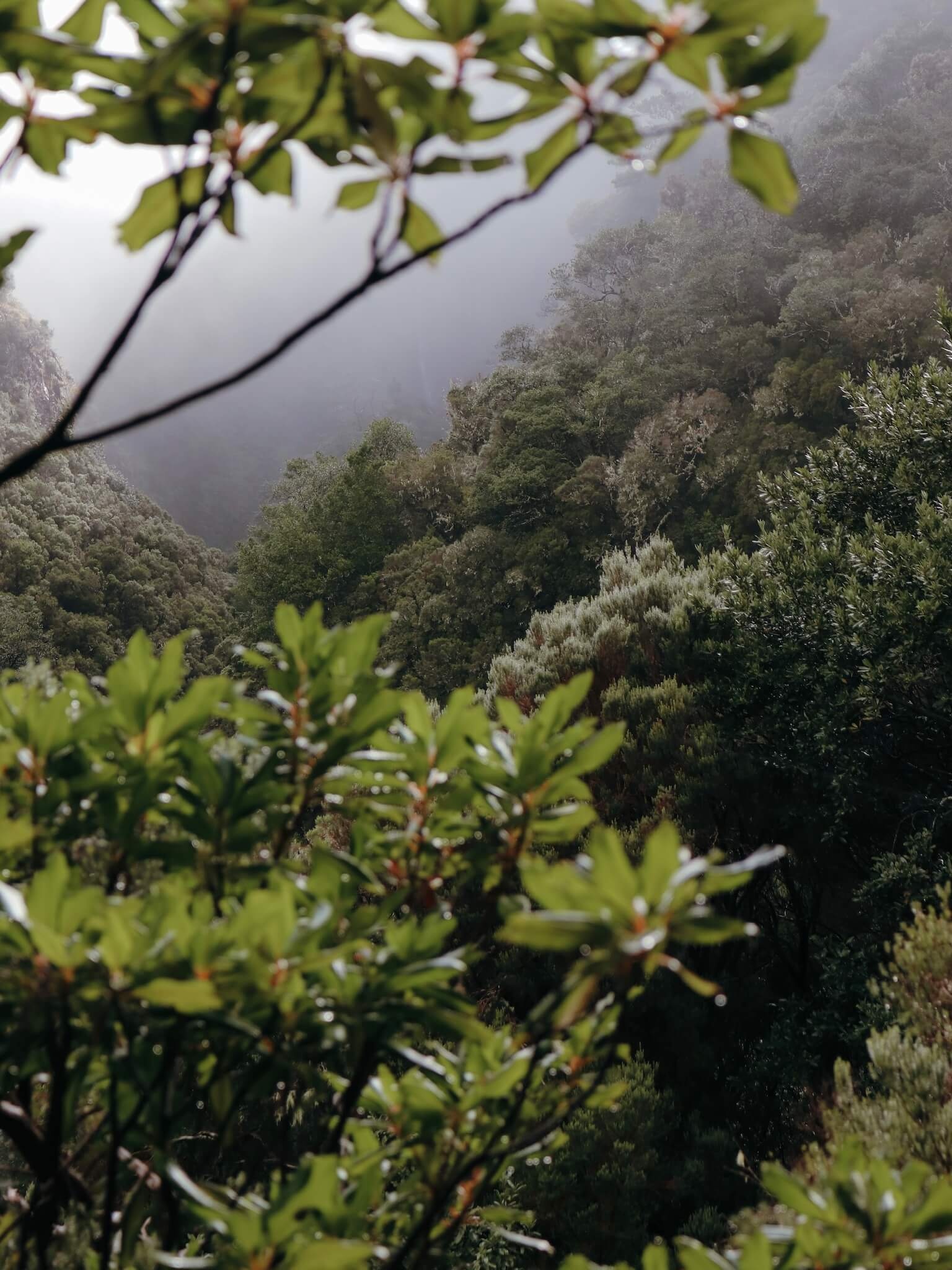
This is not another vacation story, but a pilgrimage to the heart of nature, to the edge of the world. Pharrell and Sisi? Yes, they burned out too, and Madeira is a reminder of what it truly means to be alive. I’ll quote Thomas Mann: “Time cools, time clarifies; no one can remain unchanged after a few hours.”
Am I not going to make it?
These days, it seems we have become more aggressive than ever in chasing a predefined model of success. I just think a big reset is coming, and people are feeling even worse. Some are even competing to see who can push the hardest—it’s a dangerous sport—or they organize a festival to celebrate it (neither fun nor cool). But when I stop and think about it, I say: let them have it all, let them chase their “success.”
Won’t he make it?
I scroll through my feeds, and they say Pharrell has aged. Online, there’s a guessing game about whether time has finally caught up with him or if he just “went to too many parties,” which, again, everyone aggressively discusses. The synonym for our eternal youth has dark circles under his eyes. I search, I Google, and yes, he’s there. But he doesn’t actually look old. It seems like the creative director has burned out. I can only imagine how much his poor head hurts. No surprise, considering who his boss is.
Isn’t she supposed to succeed?
I watched the Netflix series The Empress, and one scene truly moved me—when Sisi kneels among her people, humbly bowing her head. Even now, I get chills thinking about it. And how did she heal from the burnout of a life role she never truly wanted? By hiking through Madeira and taking long walks by the ocean.
It only took a few hours on a budget flight for this story to start unfolding. And now I can tell you how I fell in love with hiking. Who would have thought?
Complicated At First, Effortless On Second Glance
At first, it seems daunting. There’s a viral clip—wind tossing a plane like a toy as it barely lands. This is the runway at Cristiano Ronaldo Madeira Airport (yes, the airport is named after the living football legend). Everyone sent me this video when I told them where I was going “for the fall.” If only they knew how much that phrase annoys me—that’s how we refer to a vacation. No wonder people are burning out en masse—no one is actually resting from the self-inflicted subculture of “walking on water.” It’s not easy. Honestly, I didn’t even feel the landing—I was staring at the strange land that finally appeared after a long flight. What a scene!
The main (and only) city is Funchal, and it’s an incredibly relaxed place. Entirely Portuguese in aesthetics, but with a modernist twist of the new world. Everything looks cool because it blends perfectly with the natural surroundings. There is contrast, but they haven’t (yet) reached Monaco levels of density. We can thank Columbus, the empress, various exiled rulers (and, I assume, creative directors who would be the next settlers) for this remoteness.
The first encounter with the city is enchanting. Believe me, this is not a cliché—I genuinely can’t think of a better word. So much greenery, blooming flowers, and scents in the middle of autumn. This literally doesn’t exist anywhere else in Europe. The ocean breeze, the sun, and shifting clouds that appear and disappear create an incredibly personal atmosphere. A play of light, like those Louis Vuitton runways that cost a fortune. Exactly like that, only more natural, and best of all—no one is suffering mentally. Quite the opposite!
Is there a better way to get to know a city than by sitting in a local café? I can smell a good café even on Google Maps, but we simply stumbled upon this one. No planned routes. Terra – Food Concept feels like the island version of fine dining, only here you can actually finish your meal, and every dish is decorated with flowers. Local wine replaces water, and I wouldn’t have it any other way. Like Santorini, Madeira has a well-developed wine industry, and the volcanic soil gives the wine a unique aroma.
The city is lively but incredibly laid-back. No one is rushing anywhere. Color is everywhere—whether in the sky or at the market stalls. These real colors shimmer in every possible and impossible shade. Every euro was worth it, and when you add everything up—it’s cheaper than therapy and delivers better and faster “results.”
After a casual chat with the staff at this place, I immediately realized that a new discipline was on the horizon—hiking. Though it had never crossed my mind before, I understood that I was in a truly special place and that there was no other way to see its wonders. I told myself (and Stefan): Let’s go!


Zen At Third Glance
It felt like preparing for New Year’s Eve. I didn’t even need to check what I packed—I knew all my clothes were for different activities, mostly stylish ones. Fortunately, at least my sneakers were appropriate. No matter, I tied my scarf from memory—like I learned in the scouts—wore a linen shirt and shorts, and quickly made it to the first destination.
When someone first told me to go hiking, I thought it was a joke. Me, who never strays far from the beach and cocktail bars, now dressed for what looked more like a Sunday lunch? But fine, challenge accepted.
The São Lourenço trail was first—a landscape so breathtaking it’s compared to the Atacama Desert. In this case, you literally lose your breath—with all the uphill climbs, it feels like your lungs are 384,000 kilometers below you.
It’s fascinating how nature tests you—do you experience it as enjoyment, or does it feel like a mini military drill? The first part of the trail gently winds through red rocks with stunning ocean views, but as you go deeper, the terrain becomes more challenging. Sometimes it felt nearly impossible to continue, but with every step, I realized—just like in life—nothing is truly impossible if you give yourself the chance to overcome the first obstacles.
The question of the day became life-changing: do I really want this view (let alone the real experience), or is TikTok enough? After all, no app can give you the feeling of wind in your hair and the scent of salt. I became increasingly aware of the contrast between what was expected of me in daily life and the freedom nature offers—a freedom that allows you to reset, slow down, and put everything into perspective. Your choice.
And the view from the top? Worth every short breath! But honestly, a café halfway up would be great. And they had one—with alcohol and desserts. After replenishing my mental batteries, drenched in sweat, I jumped straight into the ocean. Water temperature? 24°C. Air temperature? 22°C. That day, Madeira had already earned its second name—The Island of Eternal Spring.
I rewarded myself with a boat ride back—because I wasn’t about to endure a return “flight to the moon.”
If you think São Lourenço tests endurance, wait until you see 25 Fontes. This time, it’s an extreme version of meditation. It starts off gently—trees, birds, an atmosphere like my yoga instructor Lika Grey creates when she “guides me on a journey” every Monday and Wednesday. But then you realize—no one is here to ground you. The trail leads through wild, lush forests, and the scenery looks straight out of a fairytale.
And these Fontes (read: waterfalls)? A spectacle. There are so many that you forget how exhausted you are. Small tip—don’t expect to stay dry. But does that even matter?
A Reality Check
After all these trails, returning to Funchal felt like coming back from another world. People were sitting in cafés again, drinking local wine, laughing as if they had never heard the word deadline. And that’s when it hit me—success isn’t about chasing, burning out, and fighting for some corporate-prestige bonus on a distant stick. Maybe success lies in simplicity—in those small, everyday moments.
Maybe that’s the lesson Madeira was trying to show me all along. I just need to send this letter to the mentioned creative director. Spreading the love.
I deeply believe the empress herself would now shout—Success is dead, long live… Madeira!


A TEMPLE OF ART WHERE RIZZ RIZ RIZ CREATES
Bali is a place of breathtaking nature and equally unpredictable encounters. Little did I know that the latter would leave a profound mark on my arrival to the Island of Gods. Once upon a time (as much as “once upon a time” applies in the virtual world), my Instagram feed led me to Fauve Art House’s profile. Back then, I couldn’t have imagined that one day I’d unexpectedly find myself face-to-face with Riz Riz Rizz—the artist who had been part of my (online) world for years.


Everything about this encounter felt surreal—from realizing that Rizz’s artistic haven was right in the neighbourhood of my “nomad villa” at Shore Amora Canggu Resort (not somewhere like St. Barts, where he had recently exhibited), to my bold decision to simply show up unannounced. Armed with oversized bills in my pocket— still a mystery to me—and a taxi driver who, naturally, had no change, I stood before the gates of this vibrant estate and asked the guard, “Do you happen to have change?” That moment was my entry into another world—a kaleidoscope of colors, textures, and an indescribable energy.
Rizz is a painter who grounds his work in the raw yet tender symbiosis of colors, crafting a world where chaos and harmony coexist in a unique dance. Rizz himself described his artistic journey to me: “Over 20 years, I’ve experimented with various techniques—realism, figurative art, abstraction, impressionism… Eventually, I found my true love in Fauvism. The freedom, wild brushstrokes, and vibrant colors are what define me.”
As he spoke of Matisse and Derain, it was clear how deeply their style resonates with him. Yet, for Rizz, Fauvism is more than an aesthetic—it’s a way to express the passion that fuels his life. Sometimes, in spontaneous and authentic encounters with art, we experience a moment where space and emotion blend seamlessly. This was one of those moments.
Women As A Unique Universe
In past travels, I’ve stumbled upon galleries that felt like sanctuaries, spaces where every artwork breathes, and where emotions and stories speak in whispers rather than shouts. I’ve come to understand that art is more than visual stimulation; it’s a convergence of all life’s facets, often through a dance of symbols and visual allegories.
Take the women in Rizz’s paintings, for instance—they aren’t mere figures. They carry stories, inviting us to interpret them through symbols and signs. Just as furniture or a color can hold history, memory, and emotion, Rizz’s women convey silent yet profound tales waiting to be felt and understood. His work is rich in symbols, many drawn from Balinese art. It’s fascinating how he blends traditional motifs, like the harmonious relationship between humans and animals, with a different aesthetic direction. Though rooted in tradition, his art opens doors to something profoundly modern and universal.

Imagine a space where female figures and powerful animals merge with poetry and symbolism, where every brushstroke carries a force that pulsates through everything

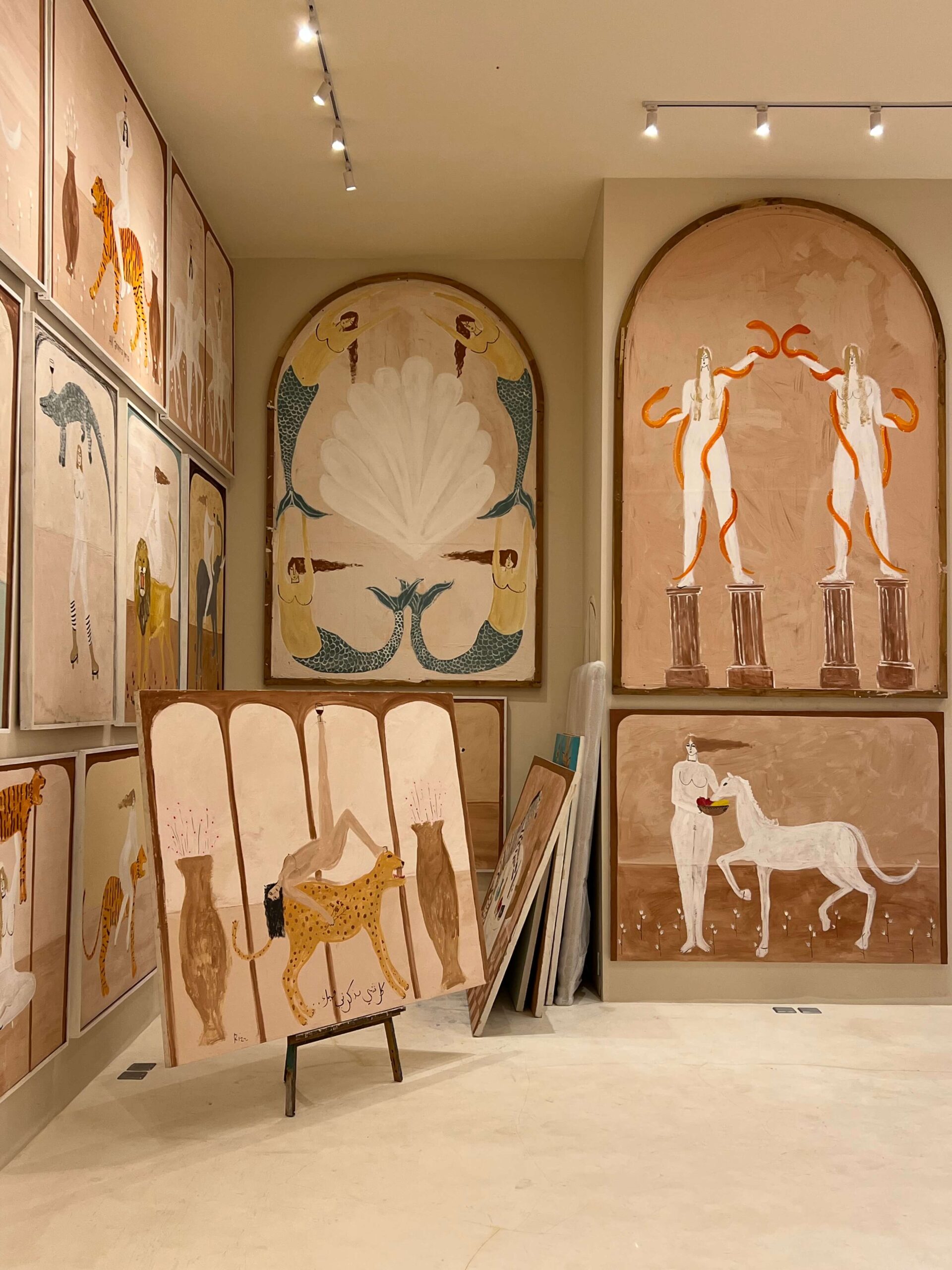
“I don’t explicitly represent my culture,” he explained, “but the animals in my paintings are influenced by Balinese art. I combine them with my Fauvist aesthetic to capture the essence of wilderness and nature. This fusion,” he added, “offers a fresh perspective on Indonesian art and inspires young artists to explore uncharted territories.”
From Canvas To Clothing
One corner of Fauve Art House particularly caught my eye: a clothing collection inspired by his paintings. The patterns, reflecting motifs from his artwork and rendered on natural fabrics, were so striking that I couldn’t resist trying a few pieces. “Transitioning from canvas to fashion felt like a natural step,” Riz admitted. “I use natural textiles and earthy tones as part of my vision. Honestly, I didn’t expect people to love this collection as much as I do.”
This (mostly unisex) collection is proof that art can live beyond gallery walls, connecting with audiences in entirely new ways. It reminded me of the philosophy of People Like Us Community—a brand that celebrates not just aesthetics but also the passion and love for blending opposites, embracing both the masculine and feminine sides within us all.


Throughout the space, discreetly tucked among ceramic vases, were bottles of red wine—a motif that frequently appears in Rizz’s paintings. When I asked him about their meaning, he smiled and said, “A glass of red wine often accompanies my creative process. It’s like a flame that stirs my passion and adds depth to my work. The combination of the wine’s color and my brushstrokes symbolizes the fire that drives my creativity.” Needless to say, the Dionysian side of me rejoiced at his words “The best ideas come to me in my sleep,” he laughed. “That’s my trick—while others sketch dozens of drafts, I let myself dream. In that liminal space between waking and sleeping, my strongest paintings are born.” Rizz shared another “secret” of his—a moment of clarity that fuels his artistic process.
“AI? No, thank you.”
Toward the end of our conversation, we touched on technology’s role in art. While many today explore the possibilities of VR or AI, Rizz remains firmly rooted in traditional methods.
“AI? No. That’s just not for me. Traditional methods are sexy—they bring passion. There’s something magical about the friction of a brush against the canvas, in the imperfections that are so human. AI can’t replicate that emotion.” This primal, natural connection to the human element and his focus on authenticity are what make Rizz’s art so unique. Every color and brushstroke carries a piece of his being—his passion, dreams, and vision of the world.


Rizz Beyond His Artist’s Haven
My encounter with Rizz didn’t end at his doorstep. What began as an improvised adventure evolved into a true Riz Riz Rizz (adven)ture. Visiting the renowned concept store The Medium Design revealed a special collection of his paintings housed in custom-made frames, alongside ceramic sculptures radiating the same energy as his home. Further exploration led me to the restaurant Longtime, where Rizz’s sculptures and paintings elevate the modern interior to a whole new level. His presence is felt in every detail, turning the space into a fusion of art and design. The food here isn’t just good—it’s an experience.
Rizz also shared that in April 2025, he’s preparing a major European exhibition at iD|room in Geneva. Based on everything I’ve seen and felt, I can only imagine what that story will look like. The hunt for low- cost flights is already underway—after all, Rizz isn’t just an artist; he’s a journey unto himself
I’ll end this story with words spoken about him by Tamara Davis, director of Jean- Michel Basquiat: The Radiant Child: “Rizz is a true artist. His passion for what he creates and his infectious energy completely captivated me. He has that same childlike yet serious quality I noticed in Basquiat. He makes you wonder—is he naïve or a genius?”

